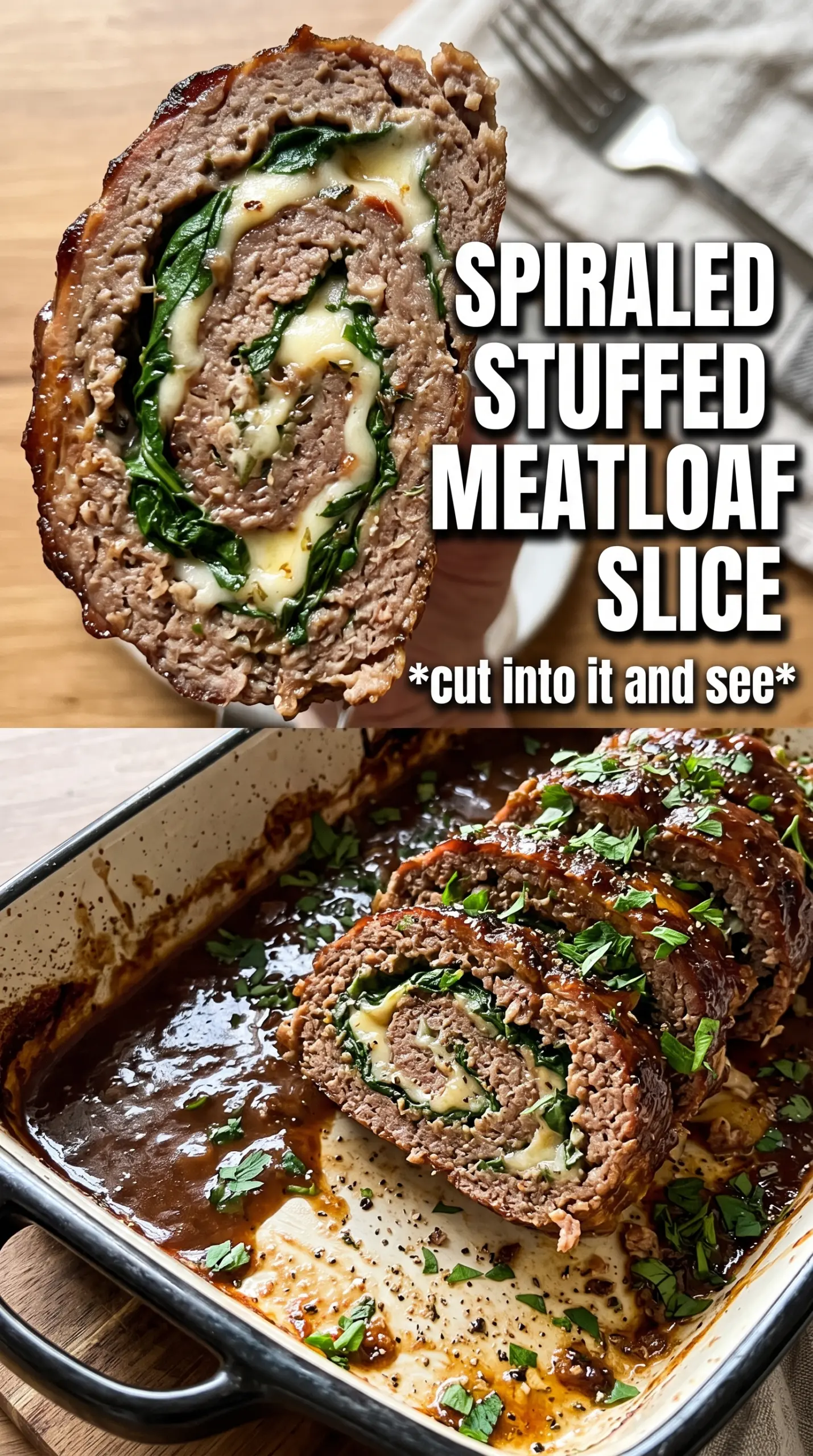
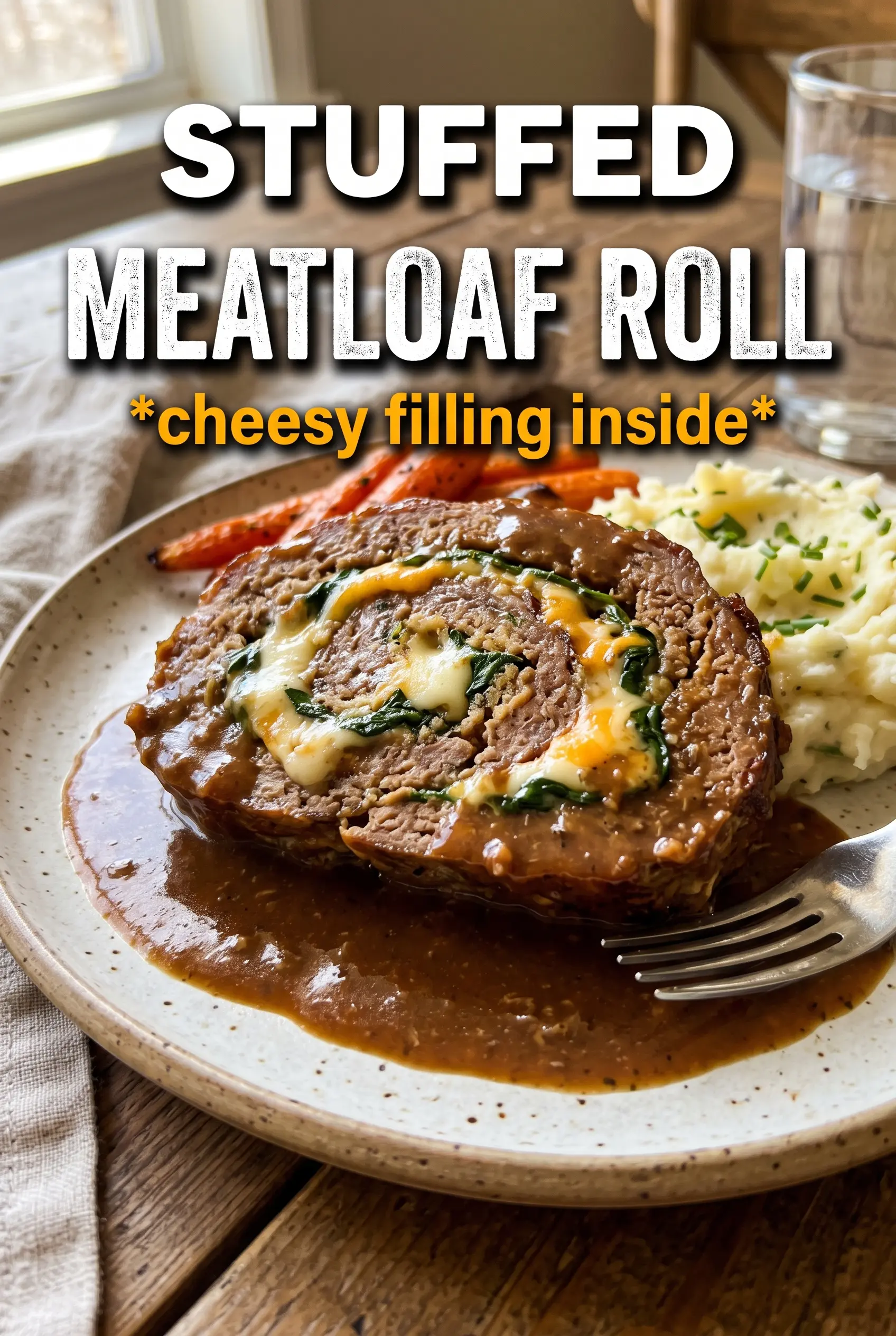
Stuffed Meatloaf Roll slices cleanly into a tight spiral of melted cheese, roasted peppers, and spinach, which is exactly why it earns a place at the center of the table. You get all the comfort of a classic meatloaf, but each slice looks a little more special and tastes layered instead of flat. The marinara glaze keeps the outside savory and glossy, and the filling stays tucked inside instead of leaking into the pan.
What makes this version work is the balance. The beef mixture needs enough binder to roll without cracking, but not so much that it turns bready. Patting the roasted peppers dry and squeezing the spinach hard keeps the filling from steaming the loaf apart, and rolling it tightly from the start gives you that neat spiral when you slice it.
Below, I’ve laid out the small details that matter most, from getting the log tight enough to hold its shape to the one resting step that keeps the cheese from running everywhere the second you cut in.
The roll held together beautifully and the cheese stayed in the center instead of oozing out. I patted the peppers dry like you said, and the slices came out neat enough for company.
Save this stuffed meatloaf roll for the night you want a dramatic slice with mozzarella, peppers, and spinach in every bite.
The Reason Most Meatloaf Rolls Crack Before They Bake
The biggest mistake with a stuffed meatloaf roll is building the log too dry or rolling it too loosely. Dry meat mixture tears when you try to fold it, and a loose roll leaves gaps that open up in the oven. You want the mixture tacky enough to hold together when pressed, not wet enough to slump. That balance is what gives you the clean spiral instead of a split seam.
The filling matters just as much. Cheese needs to stay in a solid layer, while the peppers and spinach need their moisture removed first. If the vegetables are still damp, the center turns slippery and the log won’t seal properly. A tight roll, a good seam, and a short rest after baking are what keep those slices neat.
What Each Ingredient Is Actually Doing In This Roll
- Ground beef — Use a beef blend with some fat, not extra-lean meat. Fat keeps the roll juicy and helps it slice without turning dry and crumbly.
- Italian breadcrumbs, eggs, milk, and parmesan — This is the structure. Breadcrumbs and eggs bind, milk softens the mixture, and parmesan adds salt and depth. If you skip the milk, the loaf can feel tight and dense.
- Garlic, Italian seasoning, Worcestershire sauce — These season the meat from the inside out. Worcestershire adds the savory backbone that keeps the filling from tasting separate from the meat.
- Provolone or mozzarella — Provolone gives a little more flavor; mozzarella melts more softly. Either one works, but use slices or a solid layer so the center stays defined.
- Roasted red peppers — Jarred peppers are fine here, but they need to be patted dry. That step keeps the roll from slipping and keeps the spiral sharp when you cut it.
- Spinach — Wilt it first, then squeeze it hard. Fresh spinach brings color and a little freshness, but only if the water is gone.
- Marinara and olive oil — The glaze gives the top a glossy finish and keeps the surface from drying out. Don’t use too much or it’ll run off instead of staying on the loaf.
Rolling It Tight So The Center Stays Put
Mixing The Meat Without Overworking It
Combine the meatloaf ingredients just until everything is evenly mixed. If you knead it like bread, the texture turns springy and tight instead of tender. The mixture should hold together when you press it, and it should feel damp enough to spread without tearing. If it looks shaggy and dry, add a splash more milk before you try to shape it.
Layering The Filling In A Clean Rectangle
Press the meat into a 10×14-inch rectangle on plastic wrap and keep the thickness even, especially at the edges. Uneven spots make the roll bulge and split while baking. Leave a 1-inch border all the way around so the filling doesn’t squeeze out when you roll it up. The cheese goes down first, then the peppers, then the spinach, which helps everything stay stacked instead of sliding.
Sealing The Log Before It Hits The Oven
Use the plastic wrap to lift and roll the meat into a tight log, then pinch the ends shut like you’re sealing a package. Place it seam-side down in the baking dish so gravity helps hold it together. Brush the glaze over the top in a thin layer; a thick coating slides off before it has time to set. Bake until the center reaches 160°F, not just until the outside looks done, because the middle is what needs the heat.
Letting The Slice Set Before You Cut
Rest the baked roll for 10 minutes before slicing. That pause keeps the cheese from spilling out and gives the juices time to settle back into the meat. If you cut too soon, the spiral will slump and the slices won’t hold their shape. Use a sharp knife and a gentle sawing motion for the cleanest rounds.
How To Adapt This When You Want A Different Finish
Dairy-Free Version
Swap the provolone or mozzarella for a good melting dairy-free slice and use an unsweetened plant milk in the meat mixture. The flavor will be a little less rich, but the structure still works as long as the cheese substitute can soften without turning oily.
Gluten-Free Swap
Use gluten-free breadcrumbs in the meat mixture and keep the rest of the method the same. The loaf may feel a touch more delicate when raw, so press it into the rectangle with a light hand and move it with the plastic wrap instead of your fingers.
Meat Swap For A Leaner Roll
You can use a mix of ground beef and ground turkey, but keep at least some beef in the blend or the roll loses flavor and dries out faster. If you go leaner, watch the baking time closely and pull it as soon as it hits 160°F.
Make-Ahead Assembly
You can assemble the roll a few hours ahead, cover it, and refrigerate it before baking. That actually helps it hold its shape, but bring the dish closer to room temperature while the oven preheats so the center doesn’t need a huge jump in heat.
Storage and Reheating
- Refrigerator: Store leftovers covered for up to 4 days. The slices hold their shape well, and the filling stays creamy.
- Freezer: Freeze sliced or whole, wrapped tightly, for up to 2 months. Thaw overnight in the fridge before reheating so the center warms evenly.
- Reheating: Reheat covered in a 325°F oven with a splash of marinara in the dish until warmed through. The common mistake is blasting it in the microwave, which pushes the cheese out and dries the edges before the center heats.
Answers To The Questions Worth Asking
Stuffed Meatloaf Roll
Ingredients
Equipment
Method
- Preheat the oven to 350°F and grease a baking dish for the roll.
- Mix all meatloaf ingredients until combined, then press the mixture into a 10x14 inch rectangle on a large sheet of plastic wrap.
- Layer the cheese, roasted red peppers, and wilted spinach over the meat, leaving a 1-inch border.
- Roll tightly using the plastic wrap into a tight log, then seal the ends firmly to keep the spiral intact.
- Place the roll seam-side down in the greased baking dish.
- Brush the top with the marinara-olive oil glaze.
- Bake for 60–70 minutes at 350°F until the internal temperature reaches 160°F.
- Rest for 10 minutes before slicing into dramatic rounds.