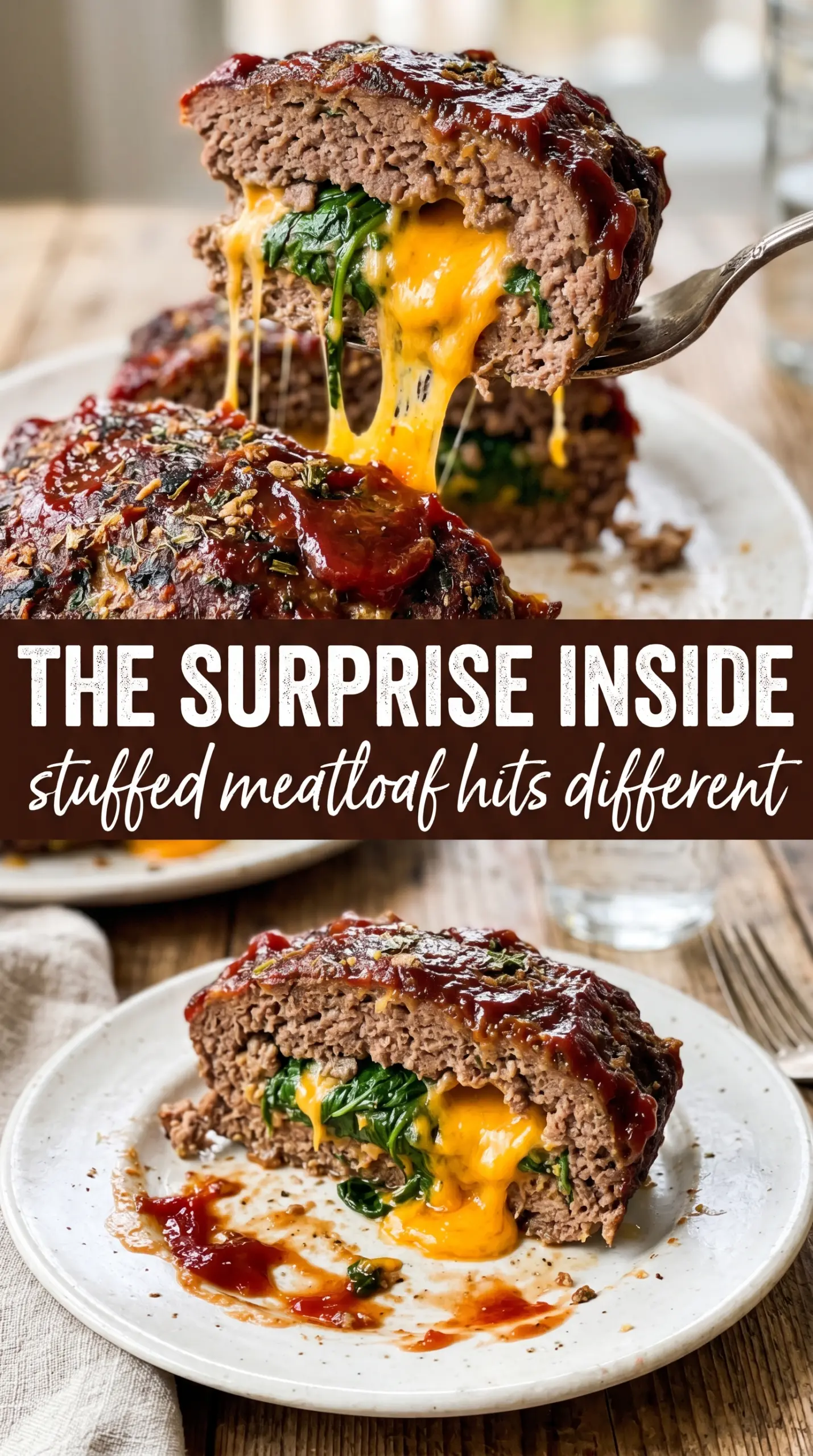
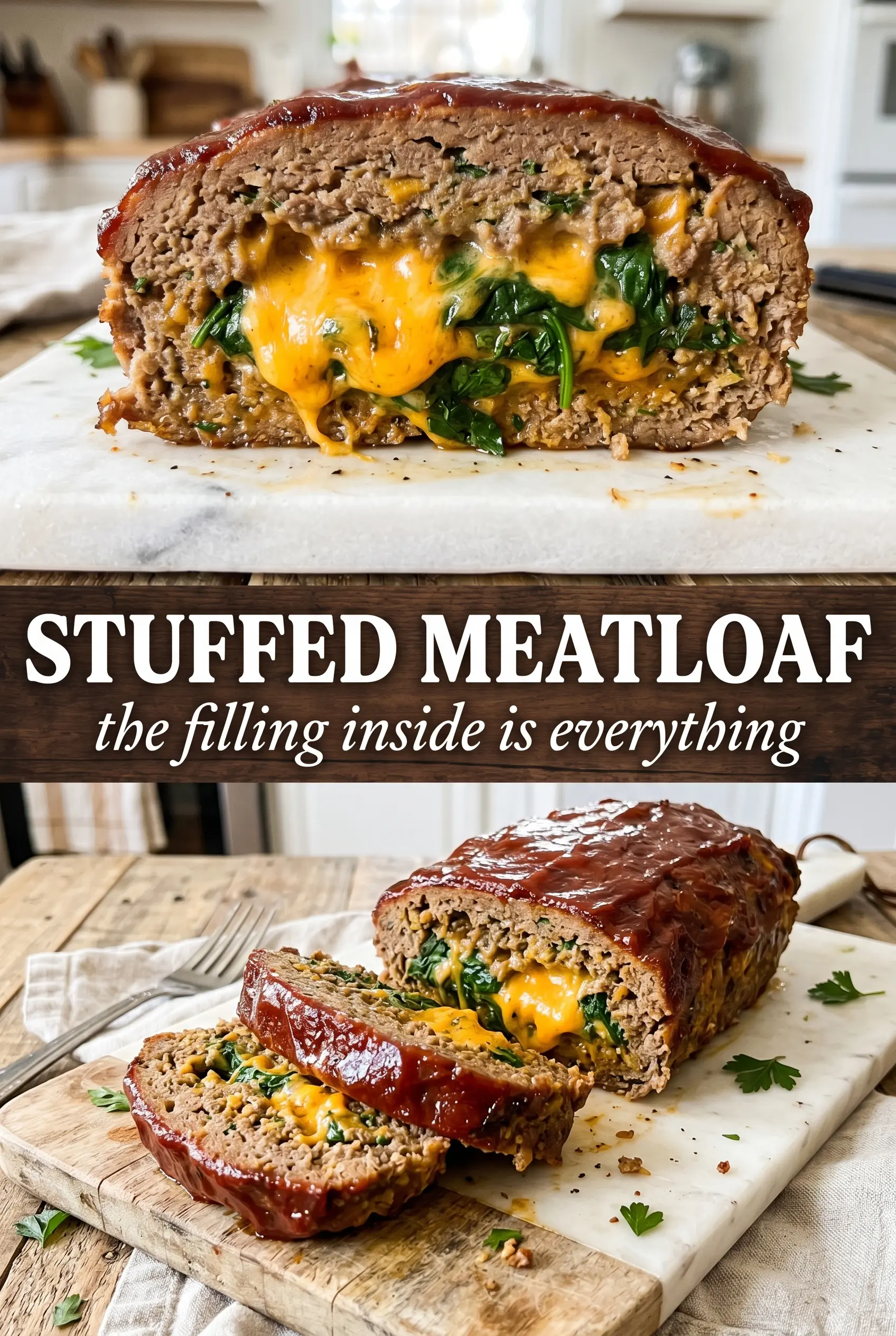
Stuffed meatloaf earns its place at the table the second you slice into it and see that spiral of melted mozzarella, spinach, and roasted red pepper running through the center. The outside stays deeply savory and sliceable, while the inside turns tender and rich without falling apart. It feels a little more special than a standard meatloaf, but it still eats like comfort food.
The trick is treating the meat mixture like a thin, workable blanket instead of packing it into a dense loaf. Grating the onion keeps the texture soft and helps it disappear into the beef, while the breadcrumbs and milk hold everything together without making it heavy. The filling also needs to be dry before it goes in the roll, or the loaf can leak and the center gets muddy instead of defined.
Below, you’ll find the exact point where the roll needs to be tight, not crushed, plus a few smart swaps if you want to adjust the filling or make the whole thing ahead.
The meatloaf sliced cleanly and the filling stayed put instead of oozing out. I dried the roasted peppers like you said, and the spiral came out picture-perfect.
Save this stuffed meatloaf with its spinach, roasted red pepper, and mozzarella spiral for a dinner that looks impressive but slices up like a dream.
The Roll Is Only As Good As the Filling You Dry First
Stuffed meatloaf fails most often for one simple reason: the filling adds steam. Spinach holds more water than it looks like it should, roasted red peppers are often packed with extra moisture, and both will loosen the center if you skip the drying step. That’s when the loaf splits, the spiral blurs, and the bottom turns soft instead of tidy.
The fix is straightforward. Wilt the spinach, squeeze it hard, then pat the peppers dry before they go onto the meat. You want the filling to stay distinct during baking, not turn into a sauce inside the loaf. That clean spiral is what makes each slice hold together.
- Ground beef — Use an 80/20 blend if you can. Leaner beef works, but it bakes up drier and the loaf can feel tight once it cools.
- Breadcrumbs, eggs, and milk — This is the binder that keeps the loaf tender and sliceable. If you only have crushed crackers or panko, use them, but don’t skip the milk or the texture gets dense.
- Onion and garlic — Grating the onion is worth the extra minute because it melts into the meat instead of leaving crunchy bits. Minced garlic gives you the savory backbone that keeps the loaf from tasting flat.
- Mozzarella — Shred it yourself if you want the cleanest melt. Pre-shredded cheese works, but it doesn’t melt quite as smoothly because of the anti-caking coating.
- Roasted red peppers — Pat them dry well. They bring sweetness and color, but excess moisture is what turns the center watery.
What Each Ingredient Is Actually Doing in This Meatloaf or Meatballs
- Ground meat (the protein foundation) — Use 80/20 so it stays moist. Handle gently to keep texture tender instead of dense.
- Breadcrumbs or fillers (the binder) — These hold the meat together without making it dense. Soak in milk first so they add moisture.
- Egg (the structural binding agent) — This holds everything together during cooking. One egg per pound of meat is the right ratio.
- Onion and aromatics (the base flavor) — Mince finely so they distribute evenly. Raw onion softens as it cooks and becomes part of the texture.
- Seasonings (salt, pepper, Worcestershire, spices) — Build flavor boldly. The meat mixture carries the entire flavor profile.
- Milk or liquid (the moisture keeper) — This keeps the meatloaf tender instead of dense and dry. Don’t skip this step.
- Glaze or sauce (ketchup-based or other) — This adds sweetness, moisture, and flavor to the exterior. Apply strategically so it caramelizes.
- Resting time (the final step) — Let the meatloaf rest 10 minutes so it sets and slices cleanly. Cutting too soon makes it fall apart.
Getting the Spiral Tight Without Squeezing Out the Filling
Mix the meat just until it holds
Combine the beef, breadcrumbs, eggs, milk, onion, garlic, Worcestershire, Italian seasoning, salt, and pepper with a light hand. Stop as soon as the mixture looks even and holds together. If you work it like bread dough, the loaf turns tough and bouncy instead of tender. Cold hands help here because the fat stays relaxed and the mixture doesn’t smear.
Shape the rectangle on parchment or plastic wrap
Press the mixture into a roughly 10×12-inch rectangle in an even layer. Don’t leave thin edges, because those edges dry out first and crack when you roll. The goal is a uniform sheet that can wrap around the filling without tearing. If the meat sticks to your hands, lightly wet them rather than adding more breadcrumbs.
Layer, roll, and seal the seam
Scatter the spinach, peppers, and mozzarella over the surface, leaving a 1-inch border around the edges. Roll the loaf tightly from the long side using the wrap to guide it, but stop short of compressing the filling so hard that it disappears. Place it seam-side down in the loaf pan so it holds its shape, then seal any open ends by pinching the meat together. A loose roll leaks; an overpacked roll bursts.
Glaze and bake until the center reaches temperature
Spread the ketchup and brown sugar glaze over the top before baking. The glaze should look shiny and tacky, not thick like frosting. Bake at 350°F until the center reaches 160°F, which usually takes 60 to 70 minutes depending on your loaf shape and pan. If the top browns too fast, tent it loosely with foil for the last part of the bake.
Make It Gluten-Free
Swap the breadcrumbs for gluten-free breadcrumbs or crushed gluten-free crackers in the same amount. The texture stays close to the original as long as you keep the milk and eggs in place, which prevent the loaf from drying out.
Use Provolone or Cheddar Instead of Mozzarella
Mozzarella gives you the best pull and the mildest flavor, but provolone adds a little more savory edge and cheddar brings sharper flavor. Both melt well, though cheddar can feel heavier in the center and won’t give quite the same stretchy slice.
Swap the Filling for a Different Color Combo
Sautéed mushrooms, spinach, and provolone make an earthier version, while caramelized onions and Swiss give you a sweeter, gentler center. Keep the filling fairly dry no matter what you choose, or the loaf won’t hold a clean spiral.
Make Ahead and Bake Later
You can assemble the loaf, cover it, and refrigerate it up to 24 hours before baking. That resting time helps the shape hold, but don’t add the glaze until just before it goes into the oven or it can slide off and darken too quickly.
Storage and Reheating
- Refrigerator: Store leftovers in an airtight container for up to 4 days. The slices hold together well, though the cheese will set up more firmly when cold.
- Freezer: It freezes well if you slice it first and wrap the pieces tightly. Thaw overnight in the refrigerator for the cleanest reheating.
- Reheating: Warm slices covered in a 325°F oven with a splash of water or broth for 15 to 20 minutes. Microwaving works in a pinch, but it can make the cheese rubbery and the meat dry at the edges.
Answers to the Questions Worth Asking
Stuffed Meatloaf
Ingredients
Equipment
Method
- Preheat the oven to 350°F.
- In a large bowl, mix ground beef, breadcrumbs, eggs, milk, grated onion, minced garlic, Worcestershire sauce, Italian seasoning, salt, and pepper until evenly combined.
- On plastic wrap or parchment, press the meat mixture into a 10x12 inch rectangle.
- Layer the spinach, roasted red peppers, and shredded mozzarella over the surface, leaving a 1-inch border.
- Roll tightly using the plastic wrap into a log, seal the ends, and place seam-side down in a loaf pan.
- Spread the glaze (ketchup and brown sugar) over the top.
- Bake at 350°F for 60–70 minutes, until the internal temperature reaches 160°F, then pull the loaf from the oven.
- Rest the stuffed meatloaf for 10 minutes before slicing, so the spiral holds together.