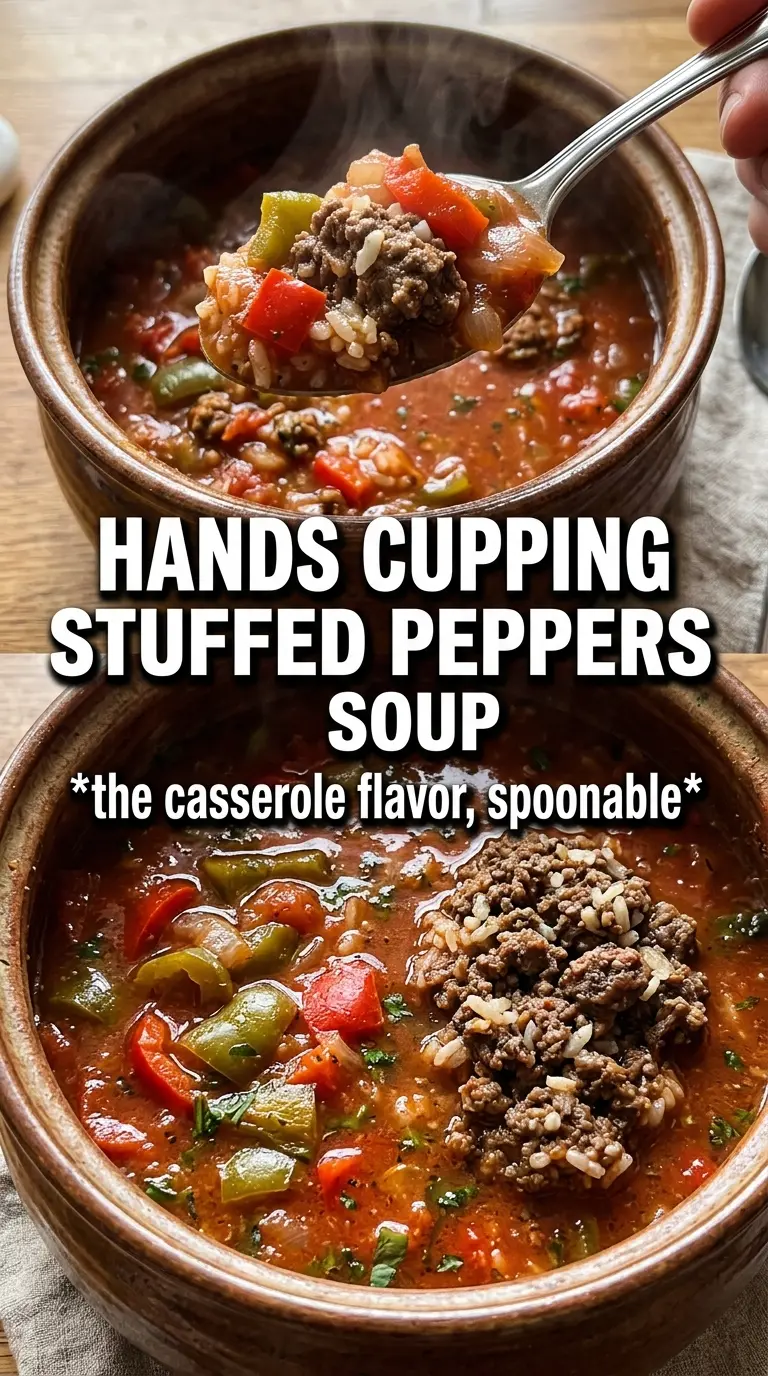
Stuffed peppers soup has all the comfort of the classic casserole, but it lands in a bowl with less fuss and a lot more weeknight practicality. You get the same sweet bell peppers, savory beef, tomato-rich broth, and tender rice, but the whole thing cooks in one pot and eats like a full meal. The best part is the texture: the rice turns plump without going mushy, the peppers soften just enough to keep their shape, and the broth stays hearty instead of turning thick and heavy.
What makes this version work is the layering. Browning the beef first gives you a deeper base, and cooking the tomato paste with the onions, peppers, and garlic takes away that raw canned taste before the broth goes in. The rice goes in uncooked, which means it absorbs the tomato broth as it simmers and helps the soup feel satisfying without needing cream or a roux.
Below, I’ve included the timing that keeps the rice from overcooking, the ingredient swaps that still make sense, and the one storage note that matters if you want the leftovers to stay spoonable the next day.
The rice cooked up tender without disappearing, and the tomato broth tasted even better the next day. My husband kept going back for another bowl because it tasted like stuffed peppers but was easier to eat.
Like stuffed peppers soup? Save this one for a one-pot dinner with beef, rice, and a tomato broth that tastes like the classic casserole in spoonable form.
The Part Most Stuffed Pepper Soups Get Wrong: The Rice
The rice is what makes this soup satisfying, but it’s also the ingredient most likely to go off the rails. If you cook it too long, it turns soft and swells until the broth disappears. If you add cooked rice at the start, it can go chalky and overdone by the time the soup finishes. The cleanest result comes from simmering uncooked long-grain white rice right in the broth for the last stretch of cooking, then stopping as soon as the grains are tender and the soup still looks loose enough to ladle.
That broth-to-rice balance matters here. This soup should feel hearty and spoonable, not like a pot of thick rice stew. Long-grain white rice holds its shape better than short-grain or instant rice, and it doesn’t dump starch into the pot as aggressively.
- Long grain white rice — This is the best choice because it stays distinct and absorbs the broth without collapsing. Brown rice needs a longer simmer and more liquid, and instant rice goes too soft too fast.
- Tomato paste — Cooking it with the vegetables deepens the broth and gives the soup the cooked-down stuffed pepper taste. If you skip this step, the tomato flavor reads flatter and more acidic.
- Beef broth — Use a broth you’d actually drink on its own. A good broth gives the soup body, while a weak one makes the rice taste bland even if the seasoning is right.
- Bell peppers — Fresh diced peppers matter here because they hold their shape and bring sweetness. Frozen peppers will work in a pinch, but they soften faster and lose some of that fresh pepper flavor.
What Each Ingredient Is Actually Doing in This Recipe
- Primary ingredient (the star) — Quality matters most. Choose the best you can find.
- Cooking medium (oil, butter, or broth) — This carries flavors and prevents dryness.
- Seasonings (salt, pepper, spices, herbs) — Layer flavors so nothing overpowers. Build depth gradually.
- Aromatics (garlic, onion, herbs) — Cook with fat to bloom flavors. Become the foundation.
- Supporting ingredients — Complement the main ingredient without overpowering it.
- Sauce or liquid (if applicable) — Brings flavors together. Balance richness with acid.
- Acid (lemon, vinegar, wine, or other) — Brightens and prevents flat-tasting results.
- Final finish (garnish, glaze, or sauce) — Prevents one-dimensional taste and adds visual appeal.
How to Build the Soup So the Rice Stays Tender, Not Mushy
Brown the Beef First
Start by browning the ground beef in a large pot until there’s no pink left and you see caramelized bits on the bottom. Drain off the excess fat, but leave a thin coating in the pot for flavor. If the meat steams instead of browns, the soup loses depth, so give it enough room and heat for the edges to actually color.
Cook the Vegetables Until They Smell Sweet
Add the onion and diced peppers and cook them for 4 to 5 minutes, just until they soften and smell sweet. Stir in the garlic and tomato paste and let them cook for 2 minutes; the paste should darken slightly and stop looking raw. If you rush this stage, the soup can taste like canned tomatoes plus beef instead of stuffed peppers in broth.
Simmer the Rice at the End
Pour in the crushed tomatoes, diced tomatoes, broth, and seasonings, then bring everything to a boil before adding the uncooked rice. Once the rice is in, cover the pot and lower the heat to a steady simmer. Check at 18 minutes; the grains should be tender with a little bite, and the soup should still be brothy. If it looks too thick before the rice is done, add a splash more broth.
Finish With the Bowl Toppings
Season with salt and pepper only after the rice has cooked, since the broth reduces slightly and concentrates as it simmers. Ladle into bowls and top with shredded cheddar and fresh parsley. The cheese melts best over hot soup, and the parsley gives the bowl a fresh edge that keeps the tomato broth from tasting heavy.
Small Changes That Still Keep the Soup in the Same Lane
Make it with ground turkey
Ground turkey works well if you want a lighter version, but it needs a little help. Add a drizzle of oil when browning and season it well, since turkey has less built-in richness than beef. The soup will still taste like stuffed peppers, just a little cleaner and less beefy.
Make it gluten-free
This recipe is naturally gluten-free as long as your broth is certified gluten-free. The rice does the thickening here, so you don’t need flour or any other binder. Just check the label on the broth if you’re cooking for someone with a sensitivity.
Swap in brown rice
Brown rice adds a nuttier bite, but it won’t cook in the same window. You’ll need more broth and a longer simmer, and the soup will thicken more as it sits. I only use it when I want a heartier texture and I’m fine with a little extra monitoring near the end.
Storage and Reheating
- Refrigerator: Store for up to 4 days. The rice will keep absorbing liquid, so the soup thickens as it sits.
- Freezer: It freezes well, but the rice softens a bit after thawing. For the best texture, freeze in portions and leave a little headspace in the container.
- Reheating: Warm it gently on the stove over medium-low heat with a splash of broth or water. Don’t boil it hard, or the rice can break down and turn pasty.
Questions I Get Asked About This Recipe
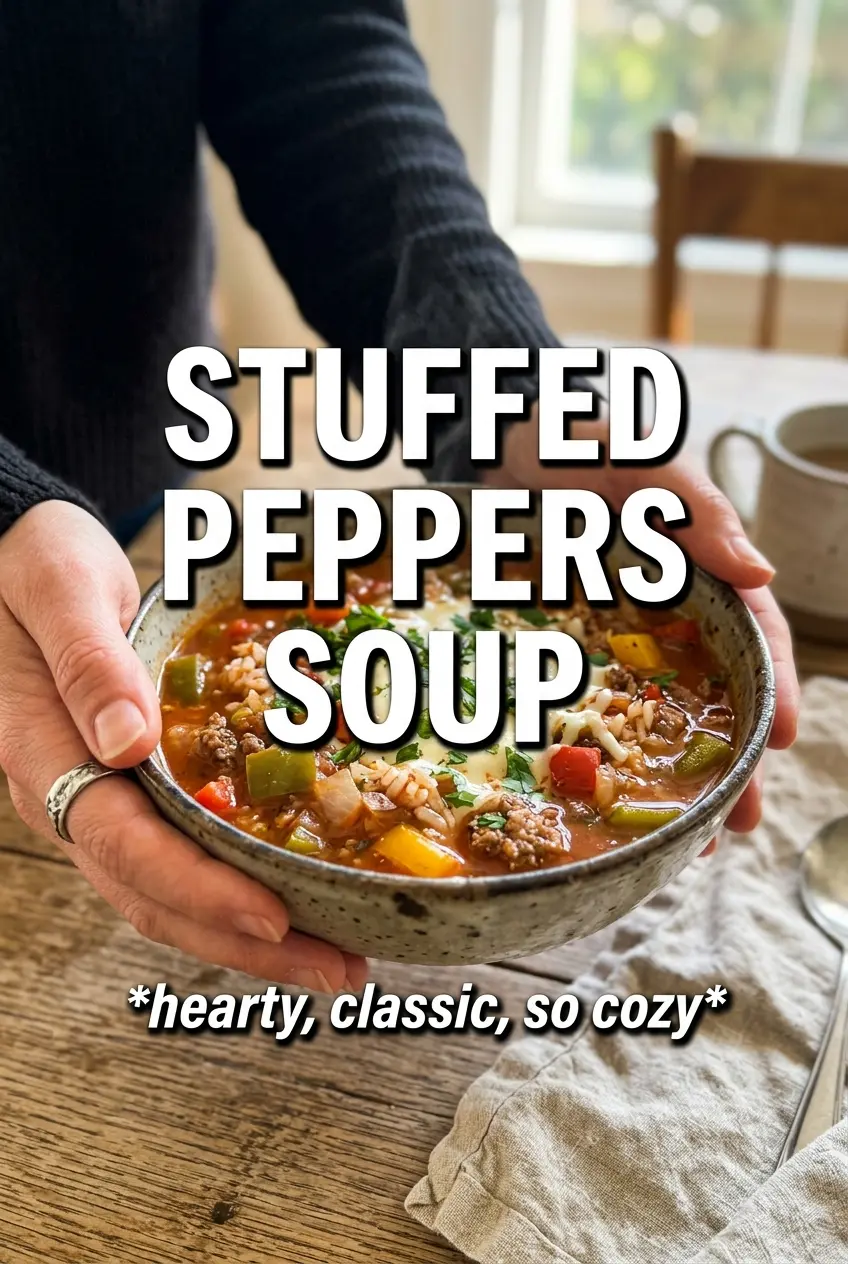
Stuffed Peppers Soup
Ingredients
Equipment
Method
- Brown the ground beef in a large pot over medium-high heat, breaking it apart as it cooks, then drain the fat.
- Sauté the onion and all bell peppers for 4-5 minutes, until softened, then add the garlic and cook 2 minutes.
- Add the crushed tomatoes, diced tomatoes, beef broth, Italian seasoning, garlic powder, and smoked paprika, then bring the mixture to a boil.
- Stir in the uncooked long grain white rice, cover the pot, and simmer for 18-20 minutes until the rice is cooked.
- Season with salt and pepper to taste, then serve topped with shredded cheddar and fresh parsley.


