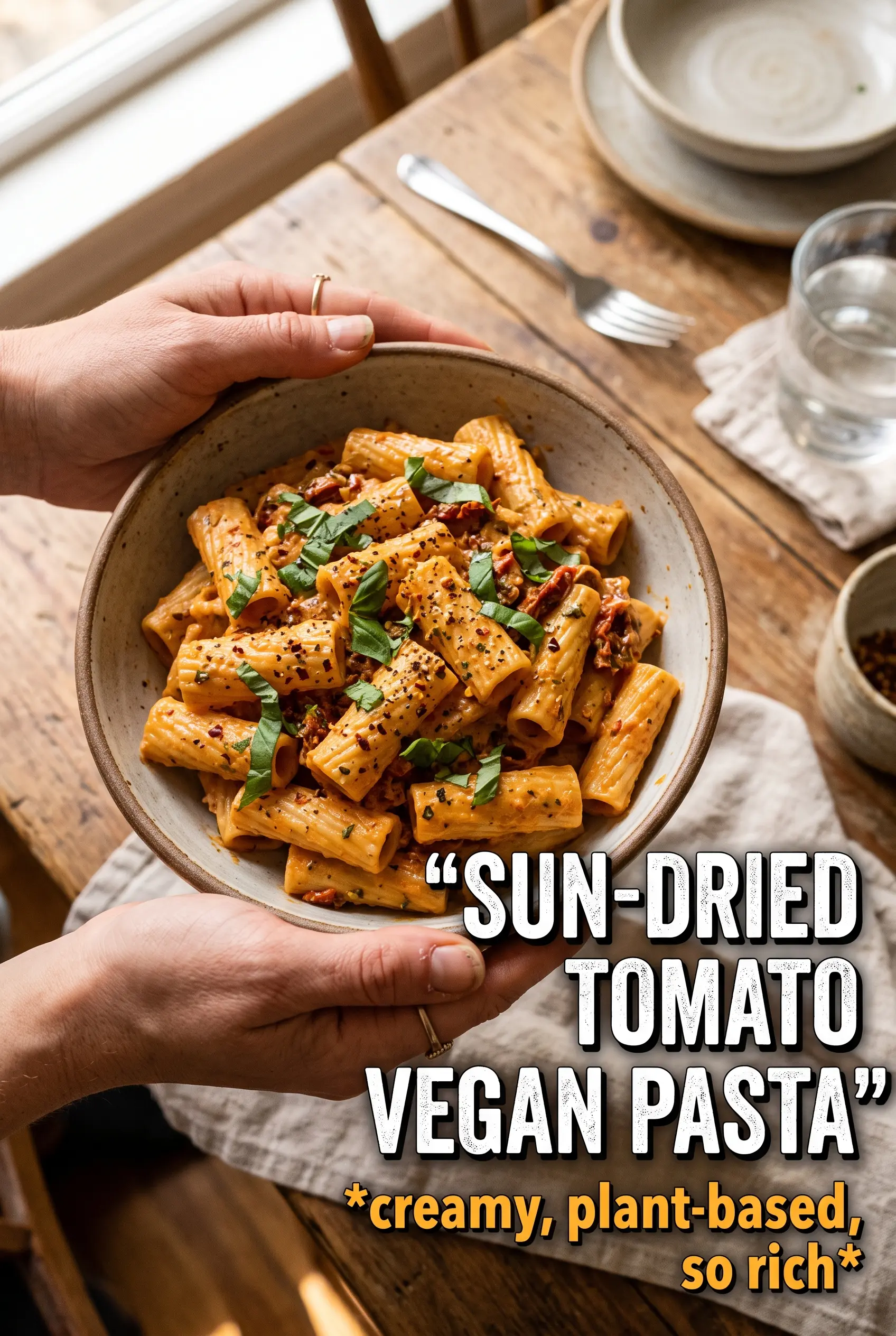
Rigatoni coated in a creamy sun-dried tomato sauce has a way of tasting like it took a lot more effort than it did. This version stays rich without dairy, clings to every piece of pasta, and finishes with that salty, savory lift from nutritional yeast and basil. The spinach folds in at the end so it stays bright instead of disappearing into the sauce.
What makes this work is the sequence. The sun-dried tomato oil carries flavor from the first minute, the tomato paste gets cooked long enough to lose its raw edge, and the coconut cream simmers just until it thickens enough to coat the pasta. Pasta water is the piece that keeps everything glossy and helps the sauce settle into a proper cling instead of turning heavy.
Below you’ll find the small details that matter here: how to keep the sauce smooth, when to add the spinach, and the best swap if you want a different pasta shape. None of it is complicated, but each part changes the final bowl.
The sauce turned silky and coated the rigatoni instead of pooling at the bottom, and the sun-dried tomato oil gave it a deeper flavor than I expected. My husband kept going back for “just one more bite” until the pan was empty.
Creamy Sun-Dried Tomato Vegan Pasta belongs on your save list for the nights when you want a fast, dairy-free dinner with a sauce that actually clings.
The Sauce Fails When the Pasta Goes In Too Early
The biggest mistake with a creamy vegan pasta like this is rushing the pan. If the tomato paste doesn’t cook for a full minute, it tastes flat and slightly raw, and if the coconut cream goes in before the garlic and tomatoes have had a chance to bloom, the whole dish can taste one-note. Let each layer do its job. That short stretch of stovetop time is where the pasta gets its depth.
The other place people lose the texture is by skipping pasta water or adding too much at once. You want enough starchy water to loosen the sauce and help it coat the rigatoni, but not so much that the sauce turns thin and slips off the noodles. Add it a splash at a time until the sauce looks glossy and just barely loose enough to move.
- Sun-dried tomatoes in oil — The oil and the tomatoes both matter here. The oil helps start the sauce with flavor, and the tomatoes bring the concentrated sweet-tart bite that defines the dish. If yours are packed dry, soak them in hot water for 10 minutes, then add a tablespoon of olive oil to the pan.
- Full-fat coconut cream — This gives the sauce body without needing flour or dairy. Light coconut milk won’t thicken the same way and can leave the sauce watery. If you use canned coconut milk, chill it first and scoop the thickest part from the top, though the sauce will be a little less rich.
- Nutritional yeast — This adds the savory, parmesan-like note that makes the sauce taste finished. There isn’t a perfect replacement, but a small spoonful of white miso can add similar depth if you’re willing to adjust salt carefully.
- Pasta water — Don’t skip the starchy water. It helps emulsify the coconut cream and tomato paste so the sauce coats instead of separating. Reserve more than you think you’ll need so you can loosen the pan at the end without overwatering it.
What Each Ingredient Is Actually Doing in This Bowl
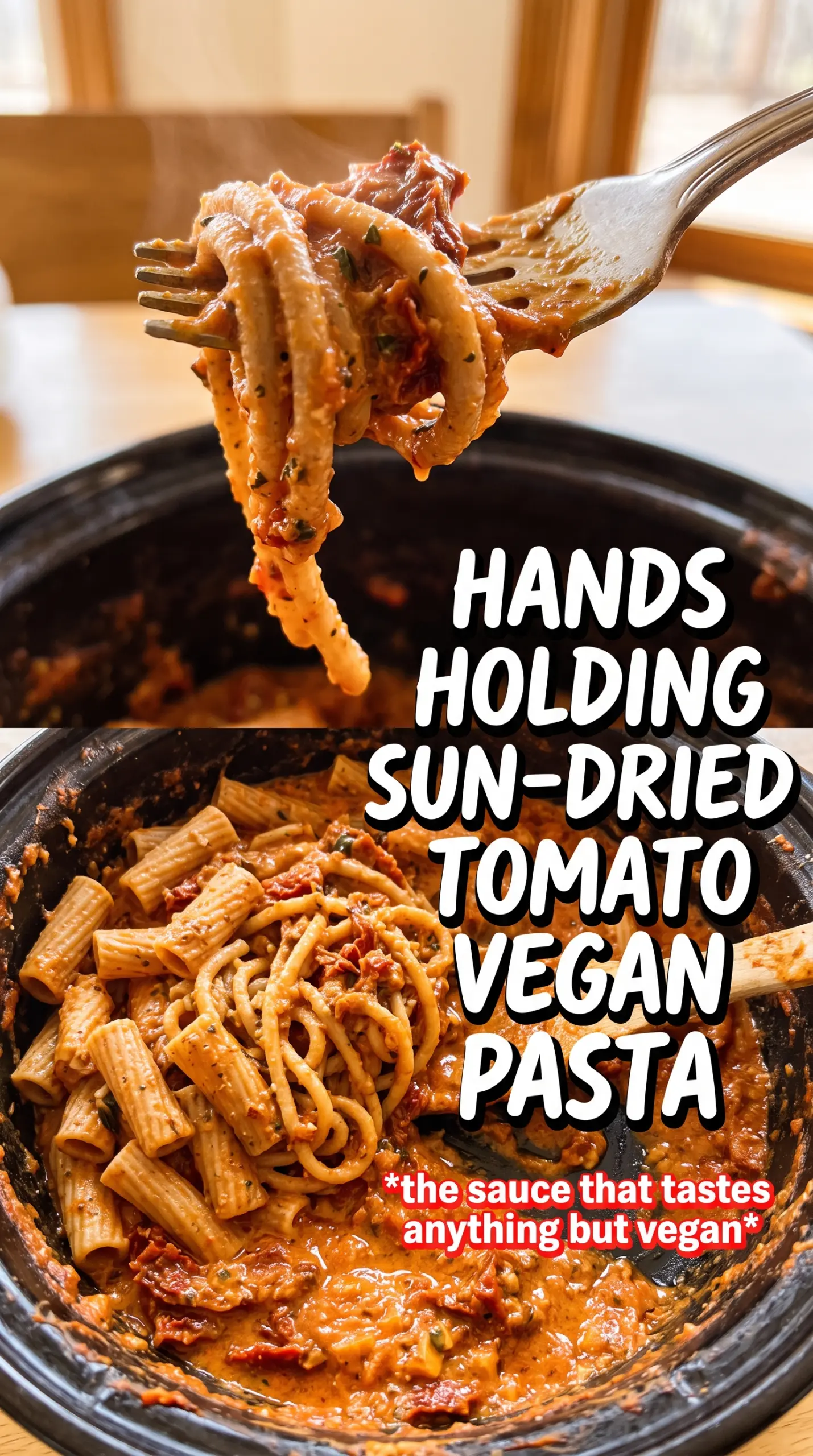
- Rigatoni or penne — Short pasta with ridges gives the sauce something to grip. Smooth pasta works in a pinch, but it won’t hold the creamy tomato coating as well.
- Tomato paste — This deepens the tomato flavor and adds a little body to the sauce. Cook it for a full minute so it darkens slightly and loses that metallic edge.
- Garlic — Fresh minced garlic is worth using here because it’s one of the main flavor drivers. Keep the heat moderate so it softens in the oil instead of browning, or it will turn bitter.
- Baby spinach and basil — Spinach adds color and a soft, fresh finish, while basil gives the bowl its final lift. Add both late so they stay vivid instead of fading into the sauce.
Building the Sauce So It Stays Creamy, Not Heavy
Start With the Oil and Aromatics
Warm the sun-dried tomato oil first, then add the garlic and chopped tomatoes. You want the garlic fragrant and just softened, not browned. The tomatoes should sizzle gently and release a little color into the oil. If the pan is too hot, the garlic burns before the sauce has any chance to develop.
Cook Out the Tomato Paste
Stir in the tomato paste and let it cook for about a minute until it darkens slightly and looks sticky against the pan. This step matters because raw tomato paste tastes sharp and tinny. Once it has cooked, it blends into the coconut cream instead of sitting on top of it in a separate layer.
Simmer the Cream Until It Clings
Add the coconut cream, Italian seasoning, red pepper flakes, and nutritional yeast, then let the sauce simmer gently. You want small bubbles around the edges, not a hard boil. A hard boil can make the sauce taste split or greasy. After a few minutes, it should look smooth, glossy, and thick enough to coat a spoon.
Finish With Pasta Water and Greens
Toss in the drained pasta and add reserved pasta water a splash at a time until the sauce loosens just enough to move around the pan. The spinach goes in last so it wilts from the heat of the sauce without turning dull. Once everything is coated, taste for salt and pepper. The final seasoning matters more than people think because coconut cream softens flavor as it cooks.
Three Ways to Bend This Pasta Without Breaking It
Gluten-Free Version With the Same Sauce
Use your favorite gluten-free rigatoni or penne and cook it just to al dente, because gluten-free pasta can go soft fast once it hits the hot sauce. The sauce itself stays unchanged and naturally gluten-free. Keep some extra pasta water back, since gluten-free pasta water can be a little less starchy and you may need one more splash to help the sauce cling.
Make It Less Rich Without Losing the Creamy Finish
Swap half of the coconut cream for unsweetened oat cream or a thick cashew cream if you want a lighter finish. The sauce won’t be as plush, but it will taste a little cleaner and less coconut-forward. Keep the tomato paste and pasta water in the mix so the texture still feels silky instead of thin.
Add Protein Without Changing the Sauce
Stir in white beans, chickpeas, or browned vegan sausage after the sauce has thickened and before the pasta goes in. That keeps the sauce from getting overloaded and lets the protein pick up the tomato-garlic flavor. If you’re using sausage, brown it separately first so it doesn’t steam in the sauce.
Storage and Reheating
- Refrigerator: Store leftovers in an airtight container for up to 4 days. The sauce will thicken as it sits, and the pasta will absorb some of it.
- Freezer: It freezes well for about 2 months, though the spinach will soften and the sauce may separate a little when thawed. Freeze in single portions for the easiest reheating.
- Reheating: Warm it gently on the stove or in the microwave with a splash of water or unsweetened plant milk. The most common mistake is blasting it on high heat, which can make the sauce look broken before it has a chance to loosen.