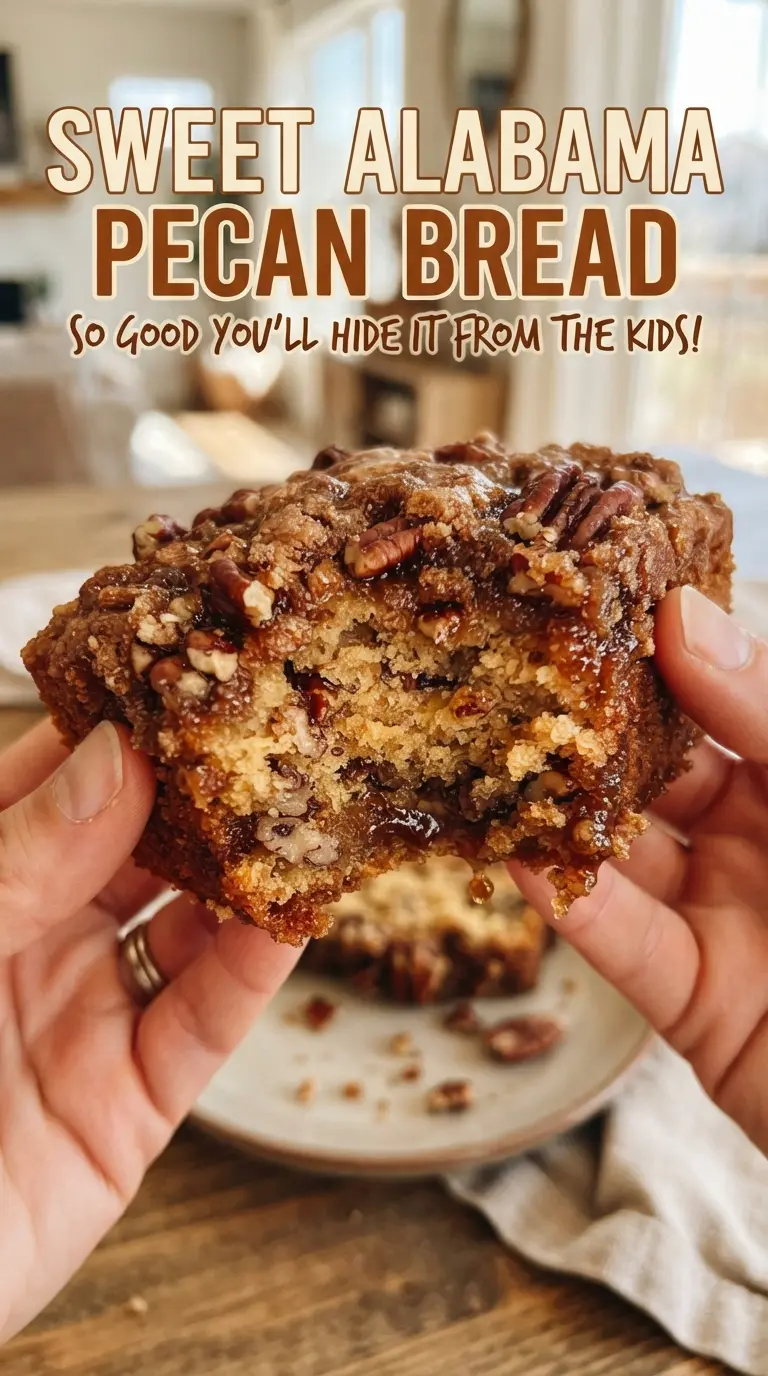
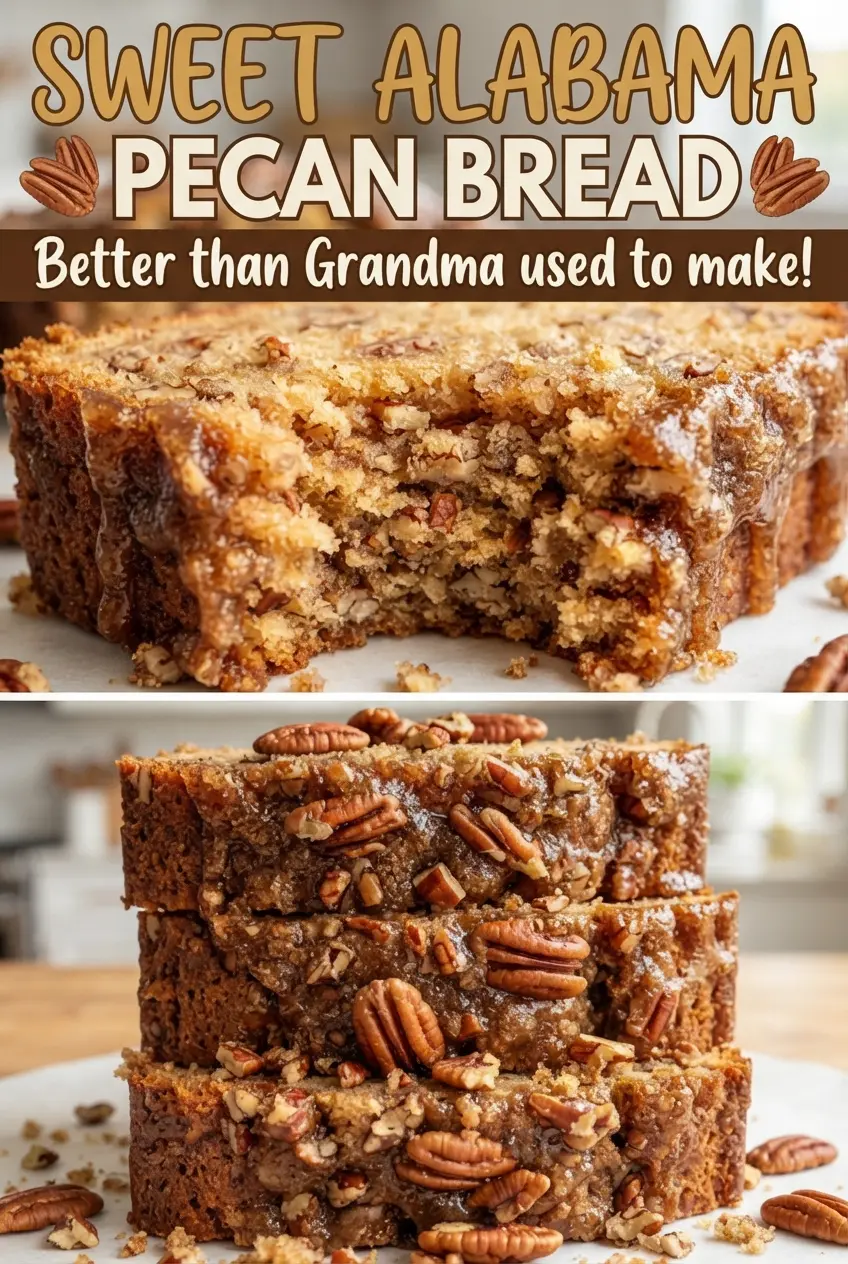
Sweet Alabama pecan bread bakes up with a tender, buttery crumb and a crackly brown sugar top that tastes like it came straight from a Southern bakery case. The toasted pecans stay front and center, not buried in the batter, and every slice holds together cleanly while still feeling soft and rich. It’s the kind of loaf that works for breakfast, dessert, or that quiet afternoon slice eaten over the sink before anyone else gets home.
What makes this version work is the balance: enough brown sugar for deep caramel notes, but not so much that the loaf turns sticky or heavy. Buttermilk keeps the crumb moist and gives the baking soda something to work against, which is what helps the bread rise without tasting dense. Toasting the pecans first matters too. It wakes up their flavor and keeps the nutty crunch from getting lost in the batter.
Below, I’ve included the small timing and texture cues that keep the loaf from sinking or drying out, plus a few practical swaps if you need to work with what’s already in your pantry.
The loaf rose evenly and the pecan topping turned crisp instead of sinking into the batter. I sliced it after 15 minutes, and the crumb stayed moist for days.
Save this Sweet Alabama Pecan Bread for the days when you want a buttery loaf with a crisp pecan crown and a soft, moist crumb.
The part that keeps this loaf from turning heavy
The biggest mistake with pecan bread is treating it like a quick cake and beating the batter too long once the flour goes in. That’s how you end up with a tight, chewy loaf instead of a tender slice that still feels rich. Here, the butter and brown sugar get fully aerated first, then the dry ingredients and buttermilk go in alternately, just until the flour disappears. That keeps the crumb soft and keeps the loaf from collapsing in the middle.
The other thing that matters is the topping. The brown sugar and chopped pecans on top melt and toast into a thin crust instead of disappearing into the batter, which gives each slice that crackly finish. If your loaf looks done on top but still feels soft in the center, give it a few more minutes and cover loosely with foil if needed so the top doesn’t darken too fast.
What each ingredient is actually doing in this bread
- Butter — This is where the rich, bakery-style flavor comes from. Softened butter traps air when beaten with the brown sugar, which helps the loaf rise with a lighter crumb. Cold butter won’t cream properly, so let it sit out until it yields easily when pressed.
- Brown sugar — It brings moisture and that caramel note that white sugar can’t match here. Packed brown sugar also helps the loaf stay tender for a couple of days. Light or dark both work; dark brown sugar gives a deeper molasses edge.
- Buttermilk — This keeps the bread moist and gives the baking soda something to react with for lift. If you don’t have buttermilk, mix 1 cup milk with 1 tablespoon lemon juice or vinegar and let it sit for 5 minutes. The texture won’t be identical, but it gets close enough for home baking.
- Toasted pecans — Toasting is worth the extra few minutes because it deepens the flavor and keeps the nuts from tasting flat in the finished loaf. Chop them after toasting so you keep a mix of fine bits and larger pieces for texture. If you skip the toasting, the bread still works, but it loses some of its signature warmth.
- Cinnamon — It doesn’t make the bread taste like spice cake; it just rounds out the brown sugar and pecans. The loaf tastes fuller with it than without it.
Getting the loaf tender, not tough
Creaming the butter and sugar
Beat the softened butter and brown sugar until the mixture looks fluffy and a shade lighter in color. That step builds the structure that keeps the loaf from turning flat. If the butter is too warm, the mixture will look greasy instead of airy, and the bread will bake up denser.
Adding the eggs and vanilla
Work in the eggs one at a time, mixing after each addition until the batter looks smooth before adding the next. This helps the batter stay emulsified instead of curdling. The vanilla doesn’t dominate, but it softens the sharpness of the brown sugar and makes the pecans taste rounder.
Bringing the batter together
Add the flour mixture and buttermilk alternately, ending with the flour, and stop mixing as soon as the batter comes together. You’re looking for a thick, spoonable batter with no dry streaks, not a whipped cake batter. Overmixing at this stage is the fastest way to make the loaf tough.
Finishing the top and baking through
Fold in one cup of the pecans, pour the batter into the prepared pan, then scatter the remaining pecans and brown sugar over the top. Bake until a toothpick comes out clean or with just a few moist crumbs, and the center springs back when lightly pressed. Let it cool in the pan for 15 minutes before turning it out; cutting too early can make the middle crumble and smear.
Three ways to make this pecan bread fit what you need
Make it dairy-free
Swap the butter for a good plant-based baking stick and use a homemade buttermilk substitute with unsweetened non-dairy milk plus lemon juice or vinegar. The loaf will still be tender, but the flavor will be a little less rich and the crumb a touch less velvety.
Use walnuts instead of pecans
Walnuts work if that’s what you have, but they bring a sharper, slightly more bitter edge. Toast them the same way you would pecans so the flavor stays deep and the texture still stands up in the loaf.
Make it gluten-free
A 1:1 gluten-free baking blend can replace the flour here, and the loaf will still hold together well because of the eggs and butter. Let the batter rest for 10 minutes before baking so the flour has time to hydrate, which helps avoid a gritty texture.
Storage and Reheating
- Refrigerator: Store tightly wrapped for up to 4 days. The crumb stays moist, but the topping softens a little after day one.
- Freezer: This loaf freezes well. Wrap individual slices or the whole cooled loaf tightly, then freeze for up to 2 months.
- Reheating: Warm slices in a 300F oven for 8–10 minutes or toast them lightly. Don’t microwave for too long or the pecans can turn soft and the crumb can get rubbery.
Questions I Get Asked About This Recipe
Sweet Alabama Pecan Bread
Ingredients
Equipment
Method
- Preheat the oven to 350F, then grease and line a 9x5-inch loaf pan.
- Visually check that the loaf pan is fully lined and the oven is fully preheated before mixing.
- Whisk the all-purpose flour, baking powder, baking soda, salt, and ground cinnamon until evenly combined.
- Pause when there are no visible streaks of cinnamon or baking soda and the mixture looks uniform.
- Beat the butter and packed brown sugar until fluffy.
- Beat in the eggs one at a time, then add the vanilla extract and mix until smooth.
- Add the dry ingredients alternately with the buttermilk, mixing just until combined.
- Stop mixing as soon as no dry flour remains so the crumb stays tender.
- Fold in 1 cup of the pecans, then pour the batter into the loaf pan.
- Top the loaf with the remaining pecans and the 2 tablespoons of brown sugar for topping.
- Bake for 55-60 minutes at 350F until a toothpick comes out clean.
- Cool for 15 minutes in the pan before slicing, so the crumb sets and the pecan topping holds.