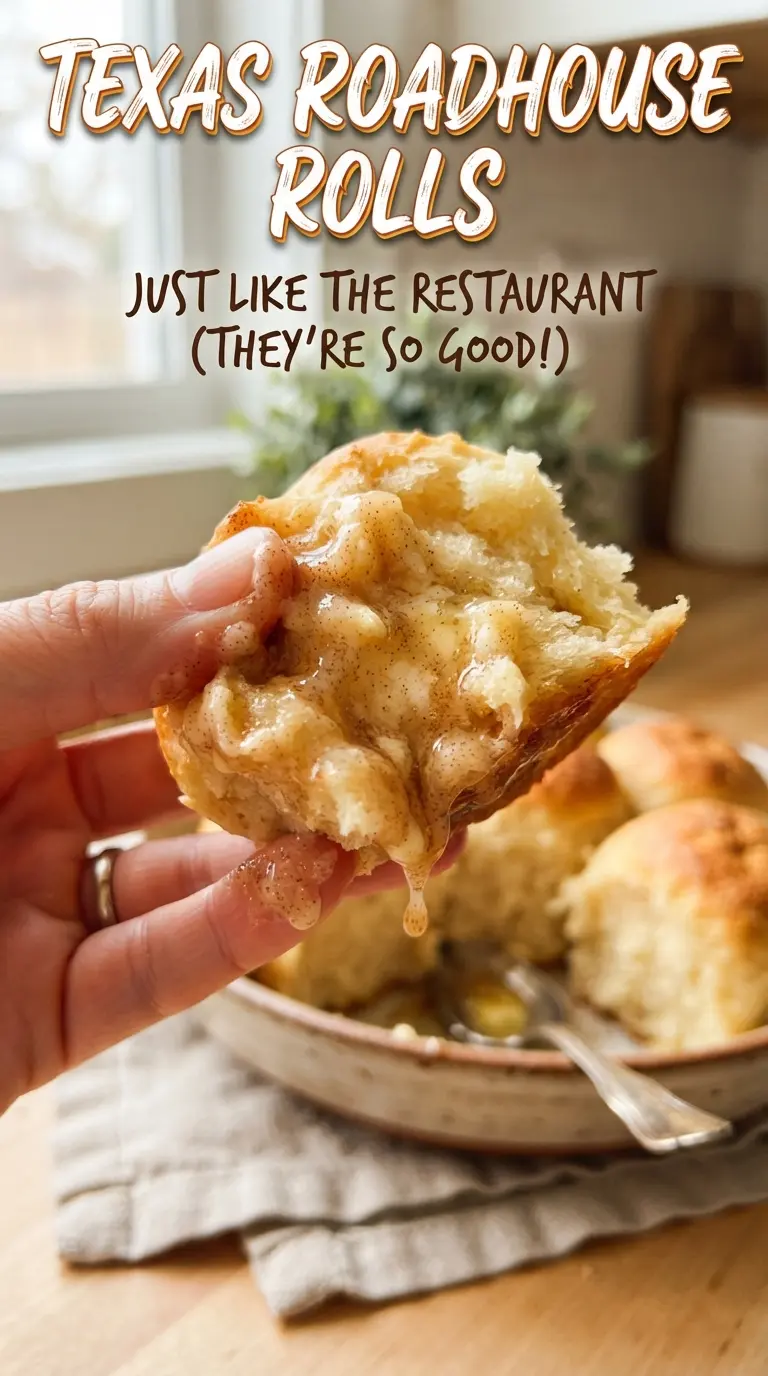
Texas Roadhouse rolls bake up soft, pillowy, and just a little sweet, with that shiny buttered top that makes them hard to leave alone. The dough stays tender enough to pull apart with your fingers, but it still has enough structure to hold up to a thick smear of cinnamon honey butter. That balance is what makes these rolls worth copying at home.
The secret is in the dough handling. A full knead develops enough gluten for a light rise, but the dough still needs to stay soft and slightly tacky so the rolls don’t bake up dry. Brushing them with butter as soon as they come out of the oven keeps the crust tender, and the cinnamon honey butter gets whipped until fluffy so it melts into every warm corner.
Below, I’ll walk through the parts that matter most: how to keep the dough from turning dense, how to cut the squares so they rise evenly, and how to get that butter on at exactly the right moment.
The rolls came out incredibly soft and fluffy, and the cinnamon honey butter was spot on. I brushed them right after baking, and they stayed tender even the next day.
Save these Texas Roadhouse Rolls for the softest homemade dinner rolls and that whipped cinnamon honey butter.
The Dough Needs Time to Go from Sticky to Silky
This dough starts out soft, and that’s exactly what you want. If you keep adding flour until it feels firm in the bowl, the rolls will bake up tight instead of airy. After kneading, it should be smooth and elastic, with a little give when you press it. That softness is what carries the light crumb through the final bake.
The first rise does the heavy lifting here. If your kitchen is cool, the dough may need a little longer than an hour, and that’s fine. What matters is volume: the dough should look doubled and feel full of air. If it hasn’t risen enough, the cut rolls won’t puff properly in the oven and you’ll lose that cloudlike texture.
What the Milk, Butter, and Sugar Are Really Doing
- Whole milk — The fat in whole milk keeps the crumb tender and helps the rolls brown. Warm it to about 110°F; too hot and it can kill the yeast, too cool and the dough will rise sluggishly.
- Active dry yeast — This gives the rolls their lift and that soft, bakery-style texture. If it doesn’t foam after sitting with the milk, water, and sugar, start over before you waste the flour.
- Butter — Melted butter goes into the dough for richness, and the brushed butter at the end keeps the crust soft. Use real butter here; margarine won’t give the same flavor or finish.
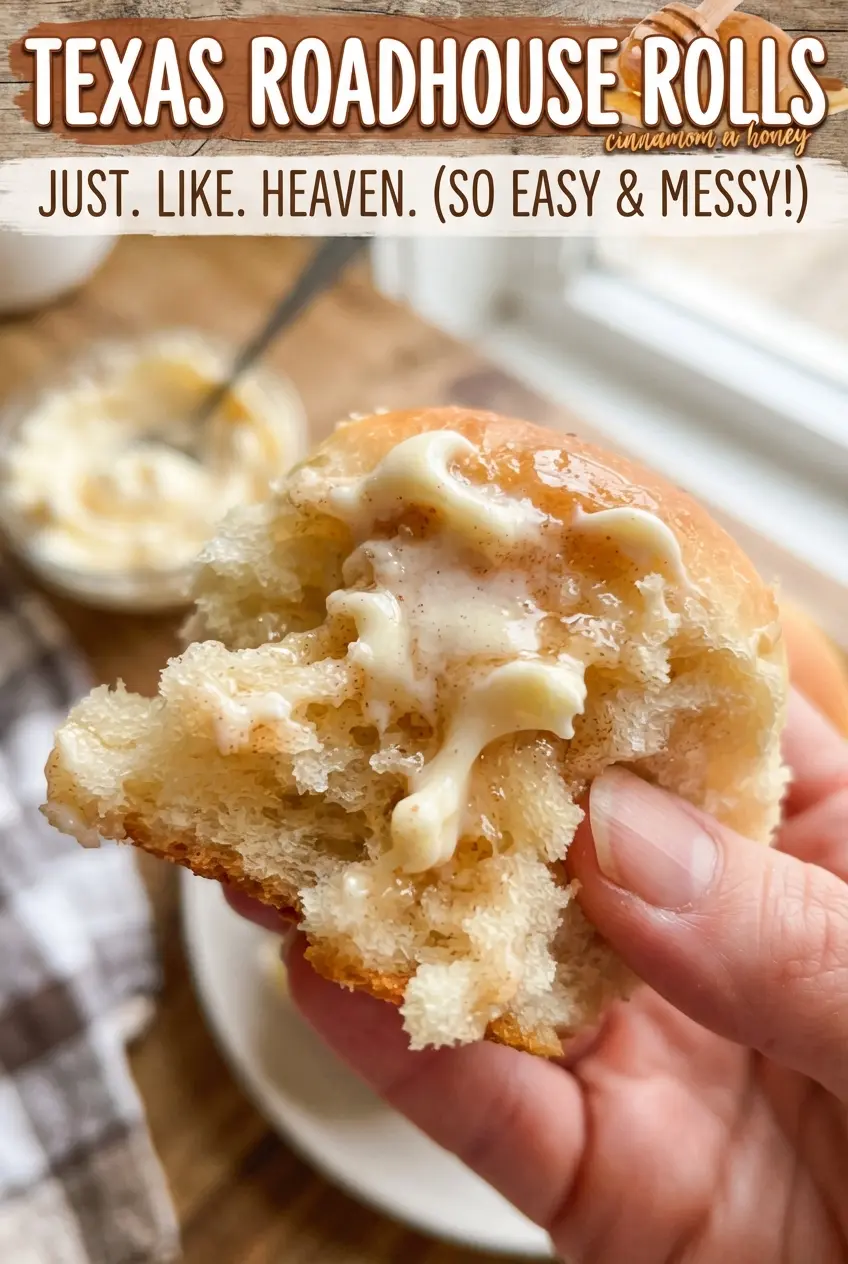
- Powdered sugar, honey, and cinnamon — These make the whipped butter light, spreadable, and sweet enough to melt into the warm rolls. The powdered sugar blends in smoothly, while granulated sugar would leave it gritty.
Cutting the Dough So the Rolls Rise Evenly
Mixing and Kneading
Combine the warm milk, water, yeast, and a spoonful of sugar first, then wait until the top looks foamy. That foam tells you the yeast is alive and ready. Once the remaining ingredients go in, knead until the dough is soft and smooth, not sticky and shaggy. If it tears instead of stretching, it needs a few more minutes of kneading.
First Rise
Cover the bowl and let the dough rise until doubled. Don’t rush this stage by putting it in a hot oven or on a radiator; that can make the outside rise faster than the inside and give you a coarse texture. A steady, patient rise gives the rolls their fine, tender crumb.
Shaping and Second Rise
Roll the dough into a rectangle about 1/2-inch thick, fold it in half, and cut it into squares. The fold creates layers that help the rolls puff, and the square shape keeps them rustic and easy. Space them just a little apart on the pan, then cover and let them rise until puffy. If they go into the oven underproofed, they’ll spring less and stay dense.
Baking and Buttering
Bake until the tops are golden and the sides look set, not pale and doughy. Brush them with melted butter the second they come out of the oven so it soaks into the crust instead of sitting on top. That final brush is what gives the rolls their soft, bakery-style finish.
How to Adapt These Rolls Without Losing the Soft Crumb
Make-ahead for dinner parties
Shape the rolls and place them on the baking sheet, then cover tightly and refrigerate overnight. The next day, let them sit at room temperature until puffy before baking. This keeps the schedule easy and still gives you that fresh-baked texture.
Dairy-free version
Use a neutral plant milk with a little fat, like oat milk, and swap in dairy-free butter for both the dough and the finish. The rolls will still be soft, but the flavor will be a touch less rich and the cinnamon butter won’t taste quite as bakery-like.
Honey butter without cinnamon
Leave out the cinnamon and beat the butter with just honey and powdered sugar for a smoother, milder spread. It still melts beautifully into the warm rolls, but the flavor leans more toward classic sweet dinner roll than copycat steakhouse style.
Freezing baked rolls
Bake the rolls, cool them completely, then freeze in an airtight bag. Thaw at room temperature and warm in a low oven until soft again. Freezing the unbaked dough is possible, but baked rolls hold their texture better and reheat more predictably.
Storage and Reheating
- Refrigerator: Store in an airtight container for up to 4 days. They’ll firm up a little in the fridge, but they soften again when warmed.
- Freezer: Freeze baked rolls for up to 2 months. Wrap well so they don’t dry out.
- Reheating: Warm in a 300°F oven for about 8 minutes, covered loosely with foil if needed. The biggest mistake is blasting them in the microwave for too long, which turns the crumb rubbery.
Answers to the Questions Worth Asking
Texas Roadhouse Rolls
Ingredients
Equipment
Method
- Combine whole milk, warm water, active dry yeast, and 1 tablespoon sugar in a bowl, then let stand 5 minutes until foamy. Look for bubbles across the surface before continuing.
- Add the remaining sugar, large egg, melted butter, salt, and all-purpose flour, then knead 8 minutes until soft and smooth. Stop when the dough looks elastic and slightly tacky but cohesive.
- Cover the dough and let rise 1 hour until doubled. The dough should puff up visibly and feel lighter when pressed.
- Roll the dough into a 1/2-inch thick rectangle, then fold it in half and cut into 2-inch squares. Use an even thickness so the squares bake uniformly.
- Place the squares on a parchment-lined sheet, cover, and rise 1 hour until puffy. They should look slightly swollen and more airy than at shaping.
- Preheat the oven to 350F, then bake 12-15 minutes until golden. Watch for a light brown top and set edges.
- Brush the hot rolls with melted butter right after baking. Use a light, even coat so the tops shine.
- Whip softened butter, powdered sugar, honey, and ground cinnamon until fluffy. Aim for a pale, spreadable texture that holds ridges briefly on the whisk.
- Serve the whipped cinnamon honey butter with the warm rolls. Let it melt into the center for each bite.