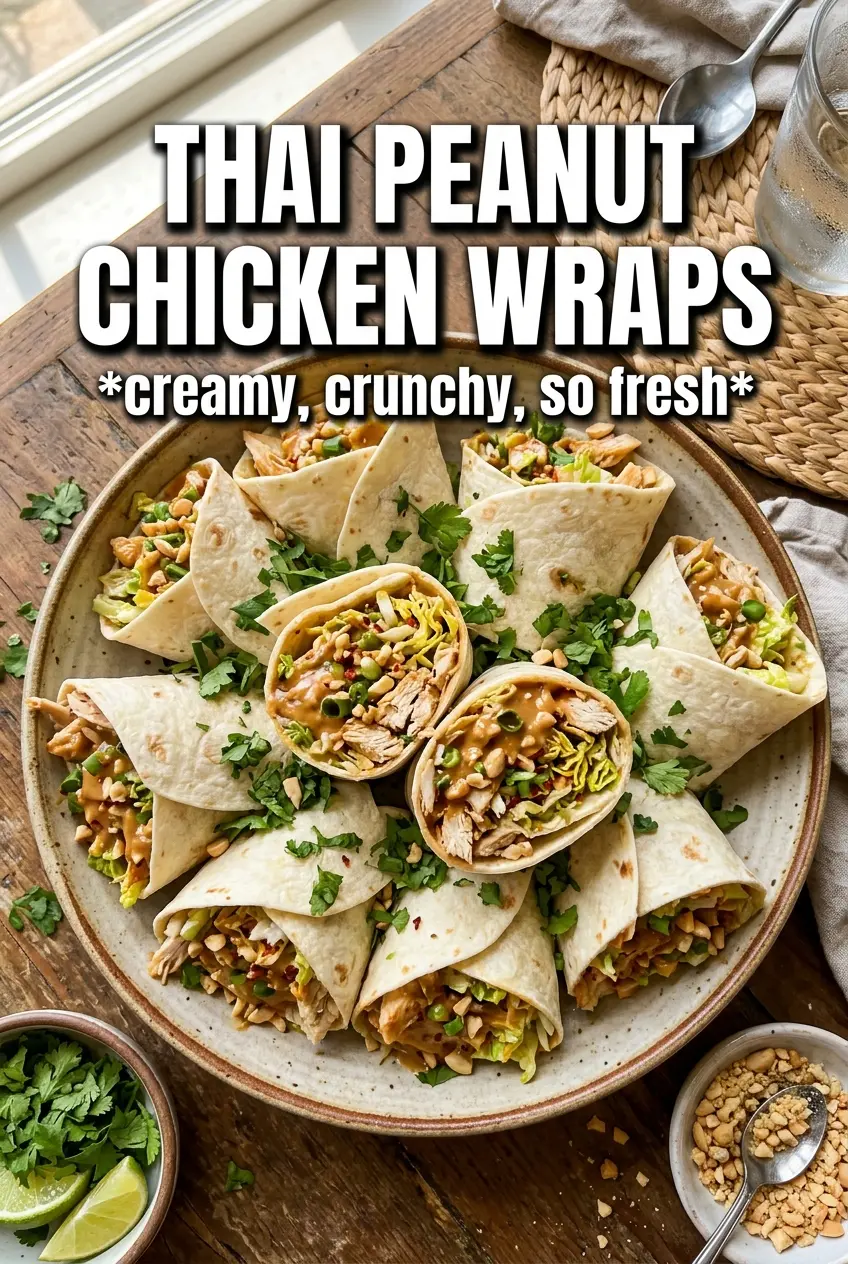
Thai peanut chicken wraps hit that sweet spot between fresh and filling: warm tortillas, juicy sliced chicken, crunchy vegetables, and a peanut sauce that clings to everything without turning the wrap soggy. The first bite gives you creamy, salty, tangy, and just enough heat, and the textures stay distinct instead of collapsing into one soft mess.
What makes this version work is balance. The sauce is thick enough to stay put inside the tortilla, but loose enough to drizzle over the filling and use for dipping. The vegetables are chosen for crunch and freshness, which keeps each bite lively against the richness of the peanut sauce. Warm tortillas matter here too; a cold tortilla cracks before you even get the wrap rolled.
Below, you’ll find the small details that keep the wraps neat, the best way to thin the sauce without making it watery, and a few variations if you want to change the protein or make them gluten-free.
The peanut sauce came together smooth and thick, and it stayed tucked inside the wrap instead of soaking through the tortilla. I added extra lime at the end and the whole thing tasted bright, crunchy, and fresh.
Save these Thai peanut chicken wraps for a fast lunch or dinner with creamy peanut sauce, crisp vegetables, and no soggy tortilla.
The Trick to Keeping These Wraps Tight Instead of Messy
The failure point with any loaded wrap is usually the same: too much sauce in the wrong place, or filling piled all the way to the edges. The tortilla needs a clean center lane so it can fold over the filling and grip it without tearing. If you smear sauce edge to edge, it acts like a slip layer and the whole wrap starts sliding as soon as you pick it up.
Keep the chicken sliced thin and layer the cabbage, carrots, and cucumber in a compact line down the middle. The crunch matters, but so does restraint. These wraps hold together best when the filling is tall enough to feel generous and narrow enough to roll once without fighting the tortilla.
- Chicken breast — Grilled or pan-cooked chicken gives the wraps the right lean, savory backbone. Thigh meat works too if you want more richness, but slice it thin so it doesn’t make the wrap bulky.
- Peanut butter — This is the base of the sauce, so use a smooth peanut butter for the cleanest texture. Natural peanut butter works, but stir it well first; separated oil will make the sauce hard to balance.
- Rice vinegar and lime juice — These keep the sauce from tasting heavy. The lime gives a fresher edge, while the vinegar brings the gentle tang that makes the peanut flavor pop.
- Flour tortillas — Large, soft tortillas roll best. If yours are stiff, warm them until flexible before filling or they’ll crack at the seam.
What Each Ingredient Is Actually Doing in This Recipe
- Primary ingredient (the star) — Quality matters most. Choose the best you can find.
- Cooking medium (oil, butter, or broth) — This carries flavors and prevents dryness.
- Seasonings (salt, pepper, spices, herbs) — Layer flavors so nothing overpowers. Build depth gradually.
- Aromatics (garlic, onion, herbs) — Cook with fat to bloom flavors. Become the foundation.
- Supporting ingredients — Complement the main ingredient without overpowering it.
- Sauce or liquid (if applicable) — Brings flavors together. Balance richness with acid.
- Acid (lemon, vinegar, wine, or other) — Brightens and prevents flat-tasting results.
- Final finish (garnish, glaze, or sauce) — Prevents one-dimensional taste and adds visual appeal.
Building the Peanut Sauce So It Stays Creamy, Not Gloppy
Start with the sauce before anything else, because it needs a minute to smooth out and thicken. Whisk the peanut butter with soy sauce, honey, rice vinegar, lime juice, and sriracha until it looks glossy, then add water a little at a time. If you dump in too much water at once, the sauce can turn thin fast and won’t cling to the chicken and vegetables the way it should.
The sauce should spoon easily but still fall in a ribbon. That texture matters because wraps need spreadable sauce for the tortilla and a slightly thicker drizzle for the filling. If it tightens as it sits, stir in another teaspoon or two of water and whisk again until it loosens. Peanut sauce is forgiving, but only if you adjust it gradually.
Mixing the Sauce Until It Loosens
Whisk everything together in a bowl until the peanut butter fully disappears into the soy sauce and citrus. At first it may look broken or streaky, and that’s normal. Keep whisking; the emulsified texture comes together once the ingredients are fully combined.
Warming the Tortillas
Warm the tortillas in a dry skillet or microwave until they bend without cracking. A cold tortilla is the fastest way to end up with a split seam and filling on the plate. You want them soft and pliable, not hot enough to dry out.
Layering for a Clean Roll
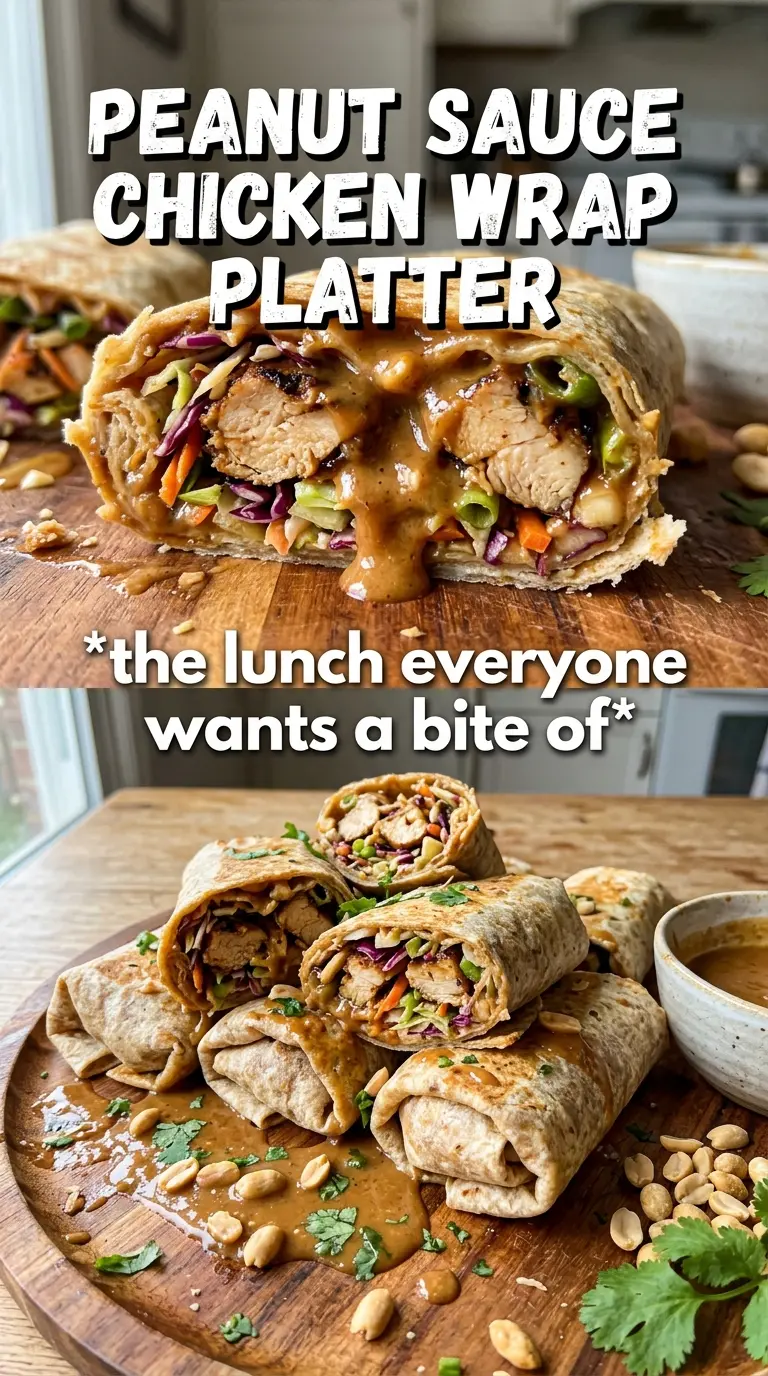
Spread a thin layer of sauce down the center, then pile the chicken and vegetables in a narrow strip. Leave space at the edges so you can fold the sides in before rolling. If the filling goes all the way to the rim, the wrap will burst when you try to close it.
Rolling and Slicing
Roll the tortilla tightly, tucking in the sides as you go so the filling stays compact. Rest the seam side down for a minute if the tortilla feels slippery from sauce. Use a sharp knife to cut the wrap in half with one clean motion so the filling doesn’t get dragged out.
Three Smart Ways to Adapt These Wraps
Make Them Gluten-Free
Use certified gluten-free tortillas and swap the soy sauce for tamari. The flavor stays close to the original, but tamari gives you the same savory depth without the wheat. Check your sriracha too, since some brands include vinegar or additives that can matter for strict gluten-free cooking.
Turn It Vegetarian
Replace the chicken with pan-seared tofu or roasted tempeh. Tofu soaks up the peanut sauce beautifully, while tempeh gives you a firmer, nuttier bite. Press the tofu well first or it will release water and dilute the filling.
Make It Lower-Carb
Skip the tortillas and build these as lettuce wraps or grain bowls. You’ll lose the chew of the tortilla, but you’ll keep the same peanut-chicken-cucumber crunch in a lighter format. Romaine hearts or butter lettuce hold the filling best without collapsing.
Storage and Reheating
- Refrigerator: Store the components separately for up to 3 days. Fully assembled wraps soften quickly, especially once the sauce hits the tortilla.
- Freezer: I don’t recommend freezing assembled wraps. The cucumber and cabbage lose their crunch and the sauce turns watery after thawing.
- Reheating: Reheat the chicken on its own in a skillet or microwave, then build fresh wraps. If you warm an already assembled wrap, the tortilla goes gummy and the vegetables wilt.
Questions I Get Asked About This Recipe
Thai Peanut Chicken Wraps
Ingredients
Equipment
Method
- Whisk the peanut butter, soy sauce, honey, rice vinegar, lime juice, and sriracha with the water until smooth, adding more water only if needed. Stop when the sauce looks glossy and pourable.
- Warm the flour tortillas in a dry skillet over medium heat for 20–30 seconds per side until pliable and lightly speckled. Keep them warm so they roll without cracking.
- Spread 2 tablespoons of Thai peanut sauce over each warm tortilla, leaving a border at the edges. Aim for an even layer so every bite gets sauce.
- Layer sliced chicken down the center of each tortilla. Arrange it in a straight line so you can roll tightly.
- Top the chicken with shredded purple cabbage, shredded carrots, and julienned cucumber in a compact mound. Lightly press so the filling stays put while rolling.
- Add fresh cilantro and sliced green onions over the filling. The top should look fresh and vibrant.
- Drizzle extra peanut sauce over the filling, then sprinkle sesame seeds on top. Look for a visible trail of sauce through the center.
- Roll the tortillas tightly, tucking in the sides as you go. The seam should land underneath so the wrap holds together.
- Slice each wrap in half and serve with extra peanut sauce for dipping. Serve immediately so the tortillas stay warm and flexible.