Juicy grilled chicken starts long before the meat hits the grates. This marinade gives you that deep savory flavor, a little brightness from lemon, and the kind of tenderness that makes even plain chicken breasts taste like you planned dinner ahead of time. The sugar helps the edges pick up color on the grill, while the mustard and Worcestershire round everything out so the flavor lands balanced instead of sharp.
The trick here is restraint. Too much acid for too long can push chicken toward stringy and dry, especially with thinner cuts, so the timing matters as much as the ingredients. The olive oil carries the seasonings, the soy sauce seasons all the way through, and the garlic and herbs stay present without burning into bitterness on the grill.
Below, I’ll walk through the ingredient choices, the grilling cues that matter, and a few smart swaps if you’re working with different cuts or need to adjust for what’s in your kitchen.
The chicken came off the grill juicy with perfect char marks, and the marinade didn’t burn even with the brown sugar in it. I used thighs and they were done in about 22 minutes.
Save this grilled chicken marinade for juicy chicken with bold, balanced flavor and clean grill marks.
The Reason This Marinade Stays Bold Without Overpowering the Chicken
Grilled chicken marinades can go wrong in two opposite ways: they’re either flat and forgettable, or they’re so aggressive that the chicken tastes salted from the outside in and sour by the time it’s cooked. This one lands in the middle because each ingredient has a job. The soy sauce and Worcestershire bring salt and depth, the lemon wakes everything up, and the oil keeps the mixture clinging to the chicken instead of sliding off in a puddle.
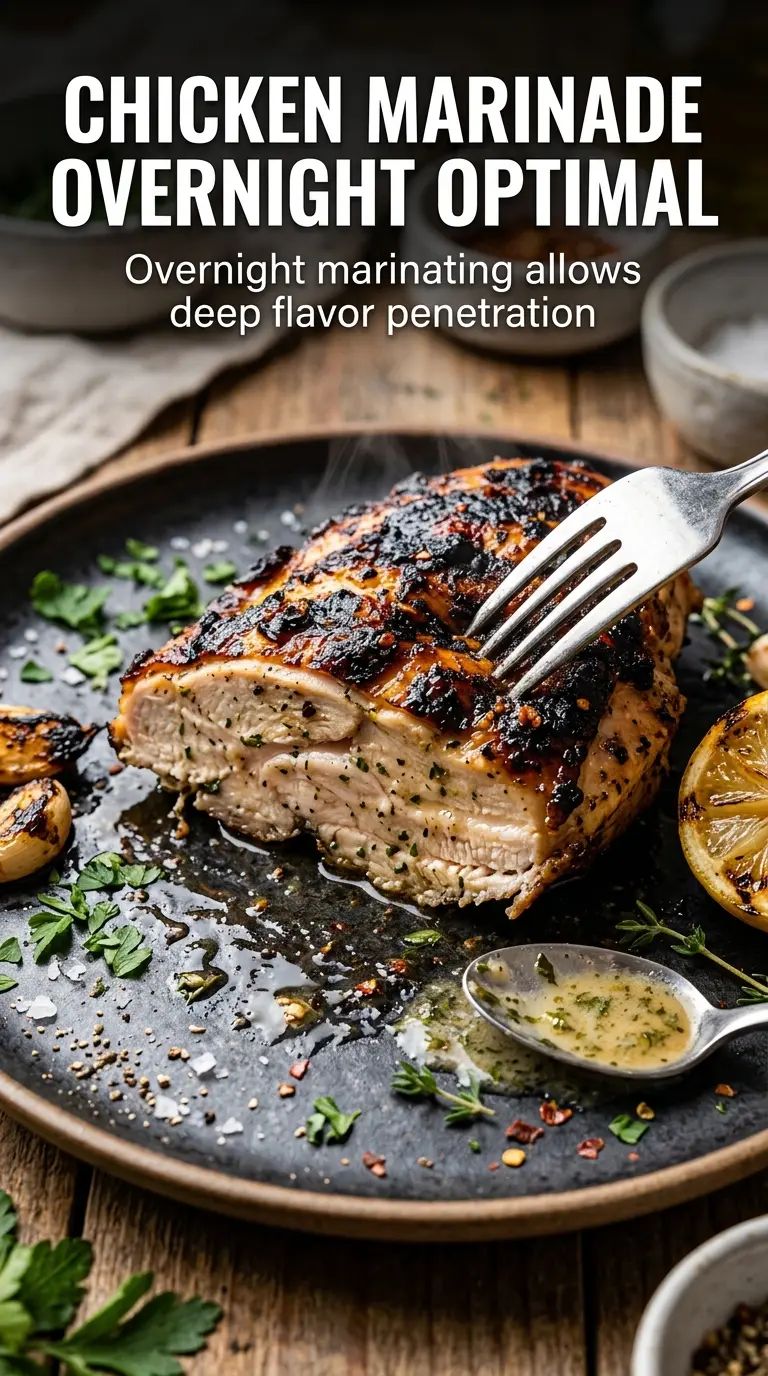
The other reason it works is timing. Chicken doesn’t need days in acid to taste seasoned, and too much marinating can give you mushy edges, especially on thinner cuts. Four to six hours is the sweet spot for most pieces, though darker meat can handle longer. If you’ve ever had grilled chicken that looked good but ate dry, the issue was probably overcooking after a marinade that never had enough fat or balance to protect it.
What Each Ingredient Is Doing in the Marinade
- Olive oil — This helps the marinade coat the chicken and promotes better browning on the grill. A standard olive oil works fine here; save the expensive finishing oil for the table.
- Soy sauce — This is the backbone of the seasoning. It seasons deep into the meat and gives you that savory base that plain salt can’t quite match on its own. Use regular soy sauce unless you need to reduce sodium, then choose low-sodium and keep the rest of the recipe the same.
- Lemon juice — Fresh lemon juice gives the marinade its lift and keeps the finished chicken from tasting heavy. Bottled lemon juice works in a pinch, but fresh tastes cleaner and brighter.
- Worcestershire sauce — This adds a little funk and depth that makes the marinade taste more rounded. There isn’t a perfect swap, but a splash of balsamic can help in a pinch, though it won’t taste the same.
- Dijon mustard — Dijon helps the marinade emulsify so it clings better to the chicken, and its sharpness keeps the flavor from going flat. Yellow mustard will work, but it tastes brighter and less complex.
- Brown sugar — This helps with grill color and balances the acid. Don’t skip it unless you’re making a low-carb version, because it softens the edges of the marinade in a way plain sweetener doesn’t.
- Garlic and dried herbs — Garlic gives the marinade its most obvious aroma, while the herbs round out the background. Fresh herbs can work, but dried herbs hold up better in the marinade and won’t burn as easily on the grill.
Marinating, Grilling, and Resting Without Losing the Juices
Whisk the marinade until it looks glossy
Combine everything in a bowl and whisk until the oil is fully blended with the lemon juice and soy sauce. You want the mixture to look evenly cloudy and glossy, not separated into layers. If the Dijon is left in little streaks, it will cling unevenly to the chicken and you’ll get pockets of sharp mustard flavor instead of a balanced marinade.
Let the chicken soak, but don’t overdo it
Put the chicken in a zip-top bag or shallow dish and pour the marinade over it, turning the pieces so every surface is coated. Refrigerate for at least 4 hours, and for most cuts, stop around 24 hours. If you go much longer, the lemon starts working against you and the texture can turn soft at the edges before it ever reaches the grill.
Grill over medium-high heat with clean grates
Preheat the grill so the grates are hot before the chicken goes on. Let excess marinade drip off, then place the chicken down and leave it alone long enough to form grill marks and release naturally. If it sticks, it’s usually not ready to turn yet. Cooking time depends on the cut, so use the internal temperature as your guide and pull it at 165°F.
Rest before slicing
Move the chicken to a plate and let it rest for 5 to 10 minutes. This step keeps the juices in the meat instead of running onto the cutting board. If you cut too soon, even perfectly grilled chicken will look dry because all that moisture spills out in the first slice.
How to Adapt This Marinade for Different Cuts and Diets
For chicken thighs instead of breasts
Thighs handle the marinade beautifully and stay juicier on the grill, especially if your heat runs a little hot. They can also take a longer marinating time without getting soft, which makes them the safest choice if you’re prepping ahead.
Low-carb version
Skip the brown sugar and add an extra 1 to 2 teaspoons of Dijon to keep the marinade balanced. You’ll lose a little caramelization, but the chicken will still taste savory and bright instead of flat.
Gluten-free adjustment
Use a certified gluten-free soy sauce or tamari and check that your Worcestershire sauce is gluten-free. The marinade still tastes the same, and this is one of the easiest recipes to adapt without changing the method.
Making it ahead for a cookout
Whisk the marinade up to 2 days ahead and keep it refrigerated in a sealed jar. Don’t add the chicken until you’re ready to marinate, or the lemon will keep working while you’re not looking.
Storage and Reheating
- Refrigerator: Store cooked chicken in an airtight container for up to 4 days. It stays moist if you slice it after cooling.
- Freezer: The cooked chicken freezes well for up to 2 months. Wrap it tightly and thaw in the refrigerator so it doesn’t dry out.
- Reheating: Warm gently in a covered skillet with a splash of water or broth, or use low power in the microwave. High heat is the fastest way to turn marinated chicken dry and stringy.
Answers to the Questions Worth Asking
The Best Ever Grilled Chicken Marinade
Ingredients
Method
- Whisk together olive oil, soy sauce, lemon juice, Worcestershire sauce, Dijon mustard, garlic, brown sugar, black pepper, and dried herbs until uniform.
- Place chicken in a large zip-top bag and pour marinade over it, ensuring the chicken is evenly coated.
- Refrigerate the chicken to marinate for 4-24 hours for best results, turning the bag once halfway if convenient.
- Preheat grill to medium-high heat.
- Grill chicken until the internal temperature reaches 165°F, timing varies by cut for even doneness.
- Let the chicken rest for 5-10 minutes before serving to keep it juicy.