Plump cheese tortellini turn carbonara into a bowl that eats like a full meal, with a silky parmesan sauce clinging to every ridge and pocket. The pancetta brings crisp, salty bites, while the egg-and-cheese mixture stays glossy instead of turning scrambled. It’s rich, fast, and just structured enough to feel special without asking for much more than one pot and one skillet.
The trick is the same one that makes any good carbonara work: the heat has to be gentle when the eggs go in. Hot pasta plus reserved pasta water is enough to build the sauce if the pan is off the burner and you toss quickly, so the eggs thicken into a creamy coating instead of setting into curds. Finely grated parmesan matters here too, because it melts smoothly and helps the sauce emulsify instead of turning grainy.
Below, I’ve broken down the one part that people usually overthink, plus the ingredient swaps and reheating notes that actually help when you’re standing at the stove with a pan full of tortellini.
The sauce turned out silky on the first try, and the pasta water made it cling to the tortellini instead of pooling in the bowl. My husband kept going back for “just one more bite” until the pan was empty.
Save this tortellini carbonara for the night when you want a glossy parmesan sauce, crispy pancetta, and dinner on the table in about 35 minutes.
The Part That Keeps Carbonara Creamy Instead of Scrambled
Carbonara fails when the eggs hit a pan that’s too hot. With tortellini, that risk is even easier to trigger because the pasta holds onto more heat than plain noodles. The fix is simple: take the skillet off the burner before the egg mixture goes in, then toss constantly so the residual heat thickens the sauce gradually.
The other thing working in your favor is the starch in the pasta water. A few splashes loosen the sauce just enough to coat the tortellini, and the parmesan helps it emulsify into something glossy rather than oily. If the sauce looks tight at first, keep tossing and add water slowly. It usually comes together in under a minute.
What the Cheese, Eggs, and Pancetta Are Each Doing Here
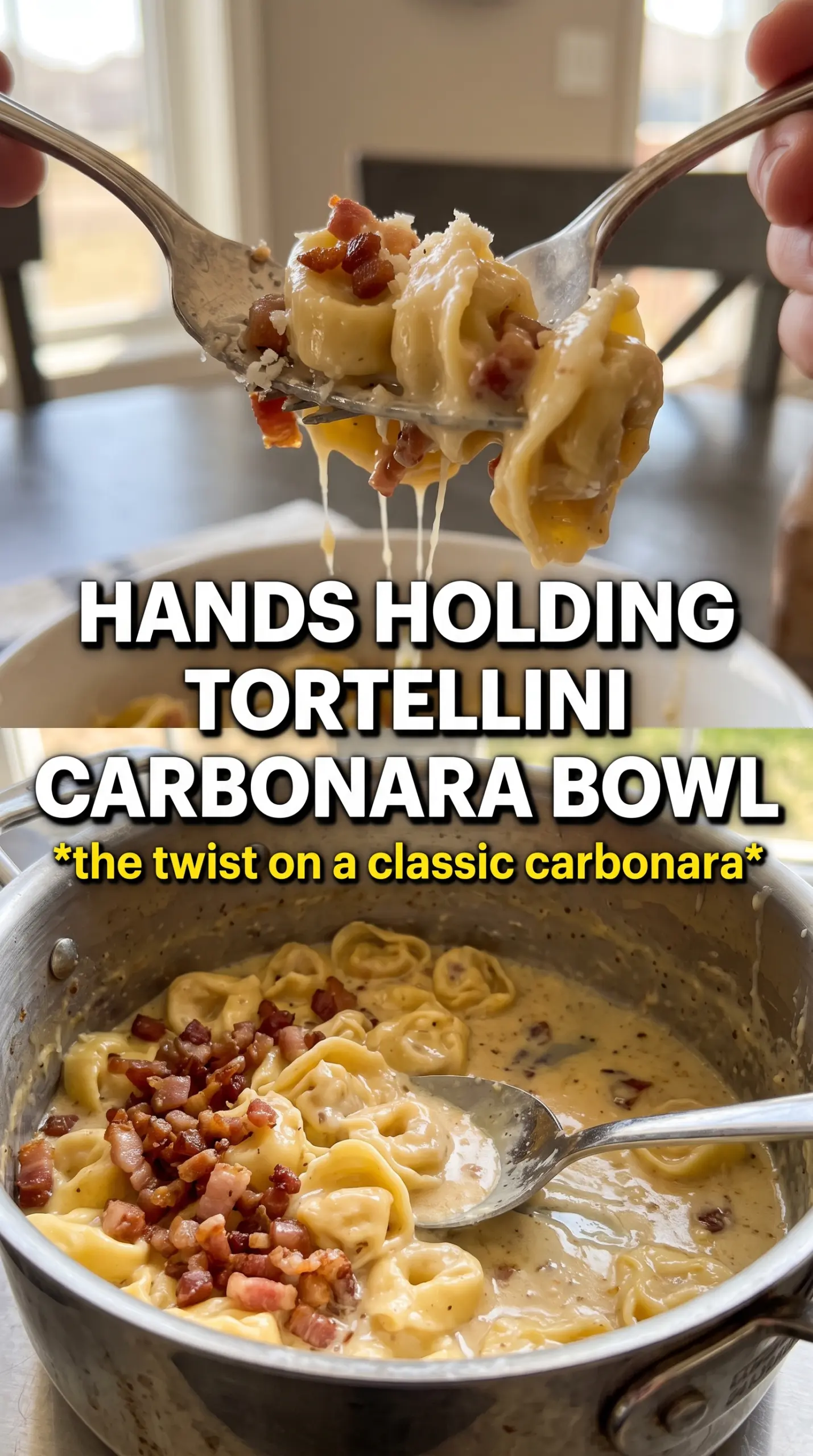
- Refrigerated cheese tortellini — This is what makes the dish feel substantial without extra work. Fresh-filled tortellini cooks quickly and brings its own savory, cheesy base, so the sauce can stay simple. Frozen tortellini works in a pinch, but it usually needs a little more cooking water and a gentler toss so it doesn’t split apart.
- Pancetta or thick-cut bacon — Pancetta gives you a cleaner, saltier pork flavor and renders nicely into the pan. Bacon is the easier substitute and still works well, but it’s smokier and can push the dish in a different direction. Dice it evenly so the fat renders before the meat overcooks.
- Egg yolks plus one whole egg — The yolks bring richness and body, while the whole egg keeps the sauce from becoming too heavy. That balance gives you a creamier finish than yolks alone. Whisk them until smooth before they touch the heat; streaky eggs won’t meld as well.
- Finely grated parmesan — This is the cheese that makes the sauce taste like carbonara instead of just buttery pasta. Use the fine side of a grater so it melts quickly and blends into the egg mixture. Pre-grated parmesan from a canister often turns clumpy and grainy here.
- Pasta water — This is not filler. The starch helps the sauce cling to the tortellini and keeps the whole thing from feeling dry or greasy. Reserve more than you think you need, then add it in splashes so you can control the texture.
How to Build the Sauce So It Stays Silky
Render the Pancetta Until the Pan Has Flavor
Cook the diced pancetta over medium heat until the fat has rendered and the pieces are crisp at the edges. If the heat is too high, the outside burns before the fat has a chance to melt out, and you lose both texture and flavor. Add the garlic at the end and cook it just until fragrant, about a minute, because garlic burns fast in rendered fat. Pull the pan off the heat before you move on.
Whisk the Egg Mixture Until It Looks Uniform
Combine the yolks, whole egg, parmesan, nutmeg, and plenty of black pepper in a bowl and whisk until the mixture looks thick and even. The cheese should be fully distributed so it melts into the sauce instead of forming clumps later. Nutmeg stays in the background here; it rounds out the richness without tasting obvious.
Toss Off Heat and Add Water Slowly
Drop the hot tortellini into the pancetta pan, then immediately add the egg mixture while the pan is off the burner. Toss fast so the pasta starts coating before the eggs can set. Add reserved pasta water a splash at a time until the sauce loosens into a glossy coating that moves with the pasta instead of sitting like paste at the bottom of the skillet. If it starts looking too thick, another spoonful of water usually fixes it right away.
Finish With Pepper, Salt, and Herbs
Taste before salting hard, because pancetta and parmesan already bring a lot of salt. Fresh parsley at the end brightens the richness and keeps the bowl from feeling one-note. A final shower of parmesan and extra black pepper makes the whole dish taste finished, not just assembled.
How to Adapt This for a Different Pantry or a Bigger Crowd
Make it gluten-free with gluten-free tortellini
Use a refrigerated gluten-free tortellini if you can find one, since it holds its shape better than many dry pasta substitutes. The sauce itself is already gluten-free, so the main adjustment is cooking the pasta gently and watching the timing closely. Gluten-free tortellini can soften quickly, and overcooking makes the final toss mushy.
Skip the pork and keep the same creamy finish
For a vegetarian version, leave out the pancetta and cook the garlic in olive oil instead. The dish loses some smokiness, so add an extra pinch of black pepper and a little more parmesan to keep it bold. It won’t taste like classic carbonara, but it still lands in the same rich, silky lane.
Use bacon when that’s what you have
Thick-cut bacon gives you a smokier, slightly sweeter version of the dish. Render it the same way you would pancetta, but watch the salt at the end because bacon can be much saltier depending on the brand. If it releases a lot of fat, spoon off a little before tossing the tortellini so the sauce doesn’t turn greasy.
How to scale it up for six
The sauce scales cleanly, but the toss gets harder with a crowded pan. If you’re making more than the recipe calls for, use a large skillet or a warm pasta bowl so the tortellini can move freely while you add the egg mixture. More pasta usually means you’ll need a little extra reserved water to keep the sauce loose and glossy.
Storage and Reheating
- Refrigerator: Store leftovers in an airtight container for up to 3 days. The sauce will thicken and tighten as it chills.
- Freezer: I don’t recommend freezing this one. Egg-based sauces and filled pasta both take a hit in texture after thawing.
- Reheating: Warm it slowly in a skillet over low heat with a splash of water or milk, stirring often. High heat will scramble the eggs and make the sauce separate before the tortellini is hot through.
Questions I Get Asked About This Recipe
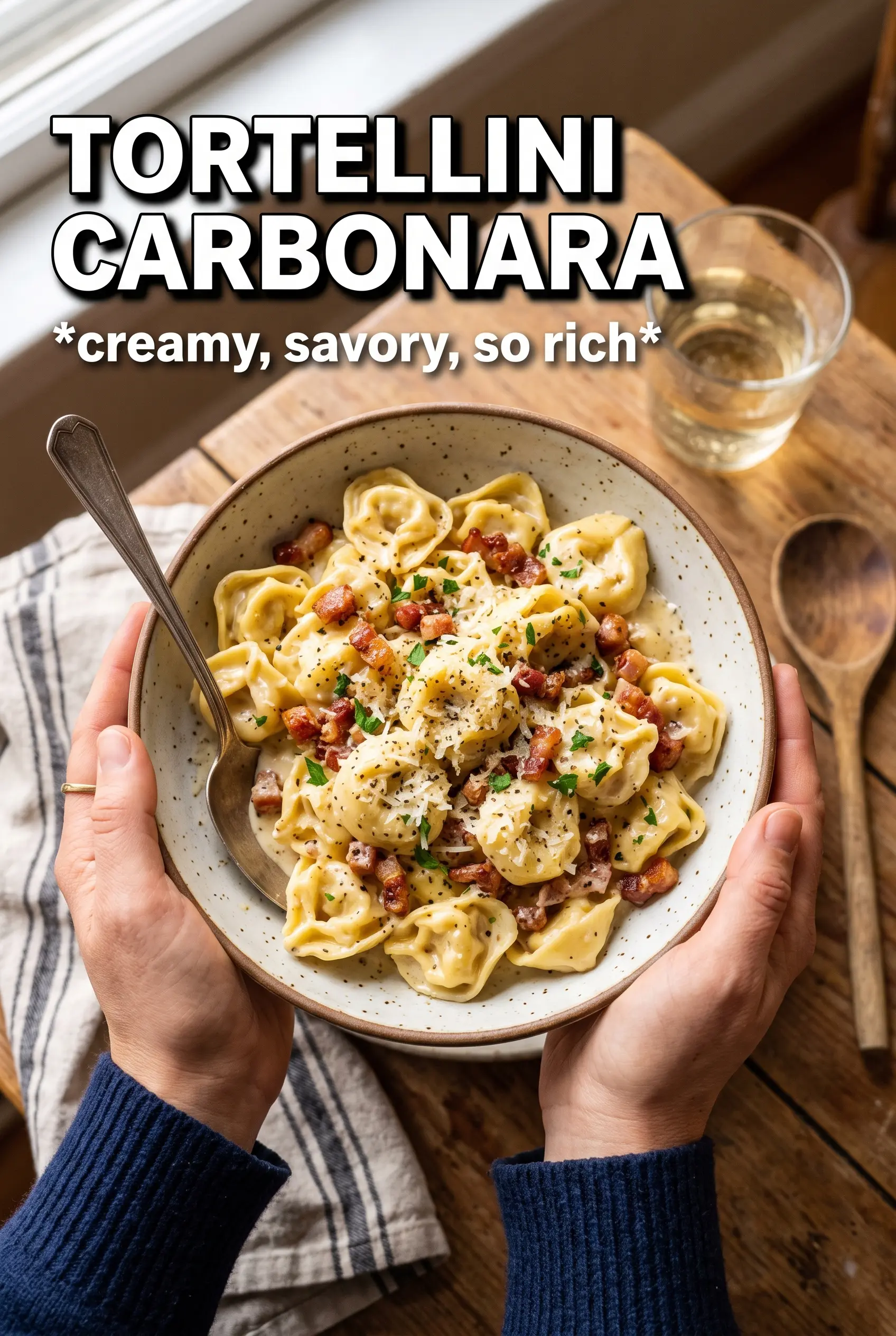
Tortellini Carbonara
Ingredients
Equipment
Method
- Bring a well-salted pot of water to a boil and cook the refrigerated cheese tortellini until tender, then reserve 1 cup cooking water for the sauce.
- Cook the diced pancetta until crispy in a cast iron skillet, then add the minced garlic and cook for 1 minute, turning off the heat right after.
- Whisk the egg yolks, whole egg, finely grated parmesan, nutmeg, and generous black pepper until smooth and well combined.
- Add the hot tortellini to the pancetta pan off heat, then quickly pour in the egg mixture.
- Toss vigorously for 30–60 seconds, adding pasta cooking water a splash at a time until the sauce turns silky and creamy and clings to every piece.
- Season with salt to taste, then top with fresh parsley and extra parmesan right before serving.