Pillowy tortellini and carbonara are a natural fit. The stuffed pasta gives you a softer, richer bite than spaghetti, and the sauce slides into every fold instead of just coating the outside. When it’s done right, each piece comes out glossy, peppery, and full of salty bacon flavor without turning heavy.
The trick is treating this like a delicate egg sauce, not a cream sauce. The hot pasta and a little reserved water do the work, while the eggs and parmesan stay just warm enough to thicken into silk. That’s what keeps the sauce from scrambling or clumping in the pan. The pancetta fat brings depth, but it’s the starchy pasta water that pulls everything together.
Below, I’ve included the small timing details that matter, plus the one move that keeps the sauce smooth even if you’re nervous about working with eggs.
The sauce turned silky the second I tossed in a splash of pasta water, and the tortellini held onto it beautifully. The crispy bacon on top kept every bite from feeling too rich.
Save this tortellini carbonara for a fast pasta dinner with silky egg sauce, crisp bacon, and lots of black pepper.
The Part That Keeps Tortellini Carbonara from Turning Scrambled
Carbonara fails fast when the pan is too hot. With tortellini, that risk goes up because the pasta carries more heat into the sauce than plain spaghetti does. The answer is simple: pull the skillet off the burner before the egg mixture goes in, then toss continuously so the eggs thicken from residual heat instead of setting in streaks.
That’s also why the pasta water matters here more than in a lot of other pasta dishes. A splash at a time loosens the sauce just enough to keep it glossy, and the starch helps the parmesan and egg emulsify instead of separating into grains and yolky bits. If the sauce looks tight or dry, it needs more water, not more heat.
- The tortellini should be just shy of fully tender when it hits the skillet. It finishes in the sauce.
- The pan needs to be hot enough to keep everything warm, but not actively cooking the eggs. Off the heat is the right place to start.
- Freshly grated parmesan melts more smoothly than the pre-shredded stuff. Pre-grated cheese often has anti-caking agents that make the sauce less silky.
- Lots of black pepper belongs in the egg mixture, not only on top. It blooms into the sauce and tastes rounder that way.
What Each Ingredient Is Actually Doing in This Dish
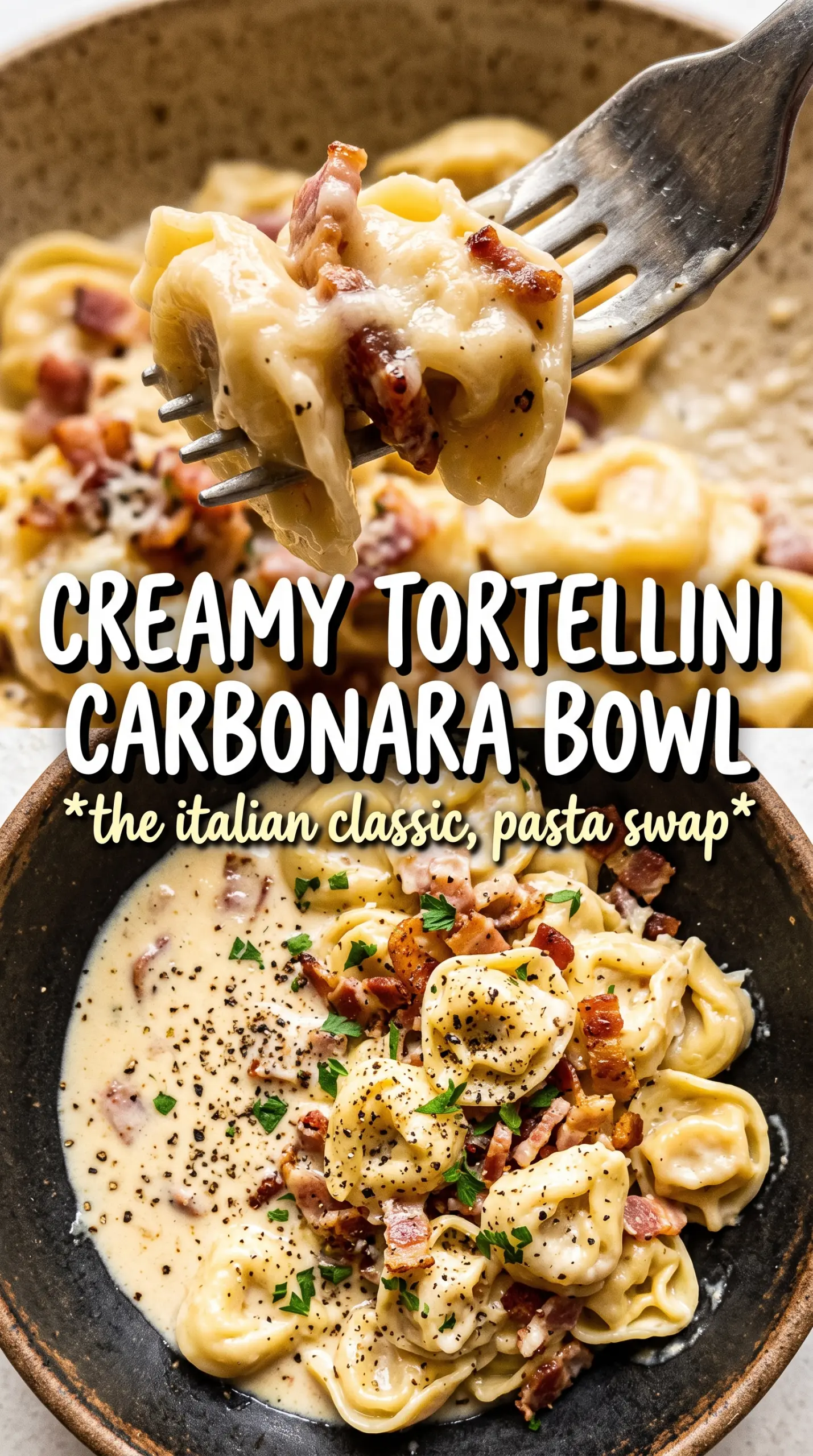
- Refrigerated cheese tortellini — This is what makes the dish feel lush and substantial without needing a long sauce simmer. Fresh tortellini cooks quickly and holds onto the carbonara better than dried pasta because of the little ridges and folds. Frozen tortellini can work too, but cook it only until just tender so it doesn’t split when tossed.
- Pancetta or thick-cut bacon — This gives you the salty backbone and the rendered fat that carries the garlic. Pancetta tastes a little cleaner and more classic; bacon adds a smokier edge. Use what you have, but keep the pieces thick enough to stay crisp instead of disappearing into the sauce.
- Eggs plus one yolk — The extra yolk is what makes the sauce feel richer and more stable. Whole eggs alone still work, but the yolk gives you a little more insurance against a thin sauce.
- Finely grated parmesan — This is not the place for chunky shreds. Fine grating helps the cheese melt into the egg mixture instead of settling in little clumps.
- Garlic — It only needs a quick kiss in the warm bacon fat. If it browns, it turns bitter fast, so keep that step short and off the direct flame.
Building the Sauce Around the Pasta, Not Against It
Cooking the Tortellini Just Right
Drop the tortellini into well-salted boiling water and cook until just al dente. You want it tender but still a little firm at the center, because it will keep softening once it hits the skillet. Reserve a full cup of pasta water before draining; that water is part of the sauce, not a leftover.
Crisping the Bacon Without Burning It
Cook the pancetta or bacon over medium heat until the fat renders and the pieces are crisp at the edges. If the heat is too high, the outside scorches before the fat has time to melt out, and you lose both texture and flavor. Remove the bacon with a slotted spoon, but leave the fat in the pan.
Turning Eggs and Cheese into Silk
Whisk the eggs, extra yolk, parmesan, and plenty of cracked black pepper in a bowl until it looks like a thick, grainy paste. That thick texture is what you want. When the hot tortellini goes into the skillet, pour the mixture over and toss without hesitation, adding pasta water in small splashes until the sauce loosens and turns glossy. If it looks curdled, the pan was too hot; pull it off the heat immediately and toss in a little more pasta water to slow things down.
Finishing and Serving Fast
Once the sauce clings to every tortellini, fold in most of the crisp bacon and pile the rest on top. Add extra parmesan and parsley, then serve right away. Carbonara waits for nobody; if it sits, the sauce tightens and loses that silky sheen.
Three Practical Ways to Change This Without Losing the Point
Make it gluten-free with GF tortellini
Use a gluten-free refrigerated tortellini if you can find one, and cook it gently so the pasta doesn’t split. The sauce logic stays the same, but gluten-free pasta can release less starch, so don’t be shy with the pasta water if the mixture feels tight.
Make it bacon-free with olive oil and extra parmesan
Skip the pancetta and warm the garlic gently in good olive oil instead. You’ll lose the smoky saltiness, so lean harder on black pepper and parmesan for depth. It won’t taste like classic carbonara, but it still lands in the same creamy, peppery lane.
Use a lighter hand for a less rich bowl
Cut the parmesan back slightly and use just the whole eggs, not the extra yolk. The sauce will still coat the tortellini, but it will feel a little less plush. That’s the tradeoff, and it’s a good one if you want the pasta to feel lighter on the plate.
Storage and Reheating
- Refrigerator: Store leftovers for up to 3 days. The sauce will thicken and lose some gloss, but it still reheats well.
- Freezer: I don’t recommend freezing this. Egg-based sauces and filled pasta both turn grainy and soft after thawing.
- Reheating: Warm it gently in a skillet over low heat with a splash of water or milk, tossing until loosened. High heat will scramble the eggs and dry out the tortellini.
Answers to the Questions Worth Asking
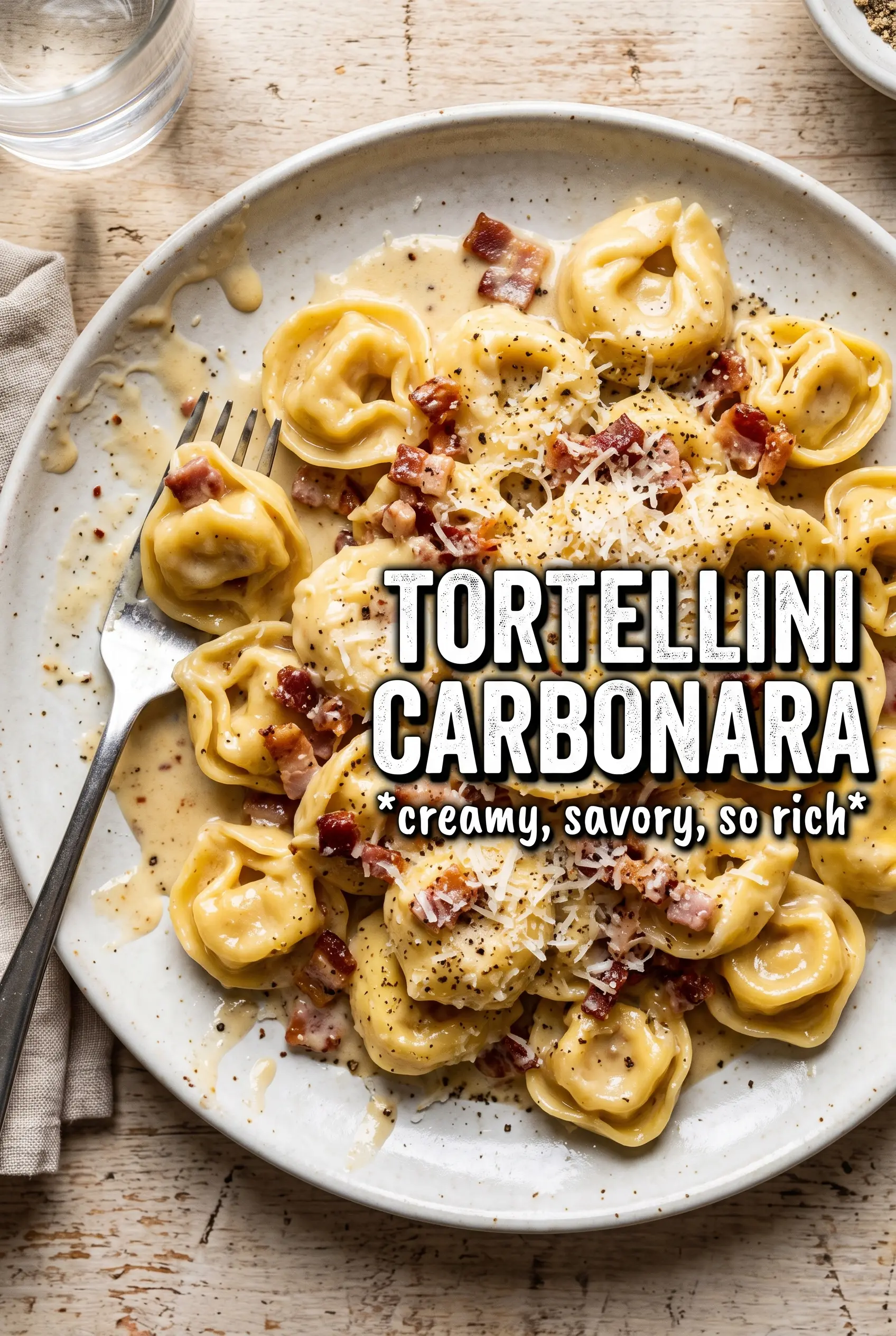
Tortellini Carbonara
Ingredients
Equipment
Method
- Bring a pot of salted boiling water to a boil and cook refrigerated cheese tortellini until just al dente, then reserve 1 cup pasta water and drain.
- Keep the drained tortellini ready so you can transfer them right away for a smooth egg-based coating.
- Cook diced pancetta or thick-cut bacon in a large skillet over medium heat until crispy, then remove with a slotted spoon and leave the fat in the pan.
- Add minced garlic to the remaining fat and cook for 30 seconds off heat (pan still warm) to perfume without browning.
- Whisk the large eggs, egg yolk, and finely grated parmesan with plenty of cracked black pepper in a bowl until smooth and thickened slightly.
- Add hot tortellini to the skillet off the heat, pour the egg mixture over, and toss quickly to coat.
- Add reserved pasta water a splash at a time, tossing constantly until the sauce is silky and clings to every tortellini.
- Top with crispy pancetta, extra parmesan, and fresh parsley, then serve immediately while the egg cream sauce pasta coating is glossy.