Blush-pink watermelon sangria is the kind of pitcher drink that disappears before the ice has a chance to melt. The watermelon keeps it bright and fresh, the wine gives it body, and the citrus slices and mint make every glass taste like it was mixed on purpose, not just dumped together. It looks festive, but what makes it worth making is how clean and balanced it tastes after a proper chill.
The trick is starting with fresh watermelon juice instead of relying on chunks alone. Blending and straining part of the melon gives the sangria a smoother, more saturated flavor without turning it pulpy. A dry rosé or white wine keeps the drink from getting syrupy, and the sparkling water goes in at the very end so the whole pitcher still has lift when you serve it.
Below, I’ll show you the exact point where the fruit should go in, when to add the bubbles, and how to adjust the sweetness if your melon is extra ripe. That’s the difference between a sangria that tastes flat and one that tastes crisp and layered.
The watermelon flavor came through beautifully and the sangria stayed crisp even after chilling. I loved that the sparkling water went in at the end — it still had that nice little fizz when we poured it.
Love the blush-pink color and fresh watermelon bite? Save this watermelon sangria for your next patio night or brunch pitcher.
Why This Sangria Stays Bright Instead of Turning Flat
Most sangria recipes lean on fruit alone and hope the wine carries everything else. That works for a while, but watermelon is subtle and can fade fast once it sits in alcohol. Blending a portion of the melon and straining it first gives you real watermelon flavor in the base, not just watered-down fruit floating around the top.
The other thing that matters here is timing. If the sparkling water goes in too early, the bubbles disappear before the pitcher reaches the table. Add it right before serving and the drink keeps its lift, which makes the whole thing taste colder and fresher than it actually is.
- Fresh watermelon juice — This gives the sangria its core flavor. Bottled juice is usually sweeter and duller, and it won’t taste as clean after chilling.
- Dry rosé or white wine — Use something crisp, not sweet. A sweeter wine can make the drink taste heavy once the honey and triple sec are added.
- Vodka — Watermelon vodka boosts the fruit flavor, but plain vodka works if that’s what you have. The recipe needs the clean alcohol backbone, not a fancy flavored spirit.
- Triple sec — This adds citrus depth that plain vodka can’t give. It rounds out the watermelon and keeps the sangria from tasting one-note.
- Honey or simple syrup — The amount you need depends on how ripe the watermelon is. Start with less if your melon is super sweet, because the wine and triple sec already bring enough softness.
- Fresh mint — Don’t stir it in hours ahead. Add it as garnish so it stays fragrant instead of muddy.
What Each Ingredient Is Actually Doing in This Recipe
- Primary ingredient (the star) — Quality matters most. Choose the best you can find.
- Cooking medium (oil, butter, or broth) — This carries flavors and prevents dryness.
- Seasonings (salt, pepper, spices, herbs) — Layer flavors so nothing overpowers. Build depth gradually.
- Aromatics (garlic, onion, herbs) — Cook with fat to bloom flavors. Become the foundation.
- Supporting ingredients — Complement the main ingredient without overpowering it.
- Sauce or liquid (if applicable) — Brings flavors together. Balance richness with acid.
- Acid (lemon, vinegar, wine, or other) — Brightens and prevents flat-tasting results.
- Final finish (garnish, glaze, or sauce) — Prevents one-dimensional taste and adds visual appeal.
Building the Pitcher Without Losing the Fizz
Make the Watermelon Base First
Blend half of the watermelon until smooth, then strain it through a fine mesh sieve. Press it gently with a spoon to get the juice through, but don’t force pulp into the pitcher or the sangria gets cloudy and heavy. You want about one cup of juice, bright red and clean, with no foam left floating on top.
Stir the Wine, Spirits, and Sweetener Together
Combine the watermelon juice, wine, vodka, triple sec, and honey in a large pitcher and stir until the honey disappears. If you see streaks of syrup at the bottom, keep stirring; that sweetness won’t distribute itself later. This is also the point to taste the base if your melon was especially bland, because once the citrus and fruit go in, the balance is harder to correct.
Add the Fruit and Let It Chill
Stir in the remaining watermelon cubes, lime slices, and lemon slices, then cover and refrigerate for at least two hours. The fruit needs time to soften the edge of the alcohol and let the citrus oils work into the wine. If you serve it too soon, it tastes like separate ingredients instead of a true sangria.
Finish With the Sparkling Water Right Before Serving
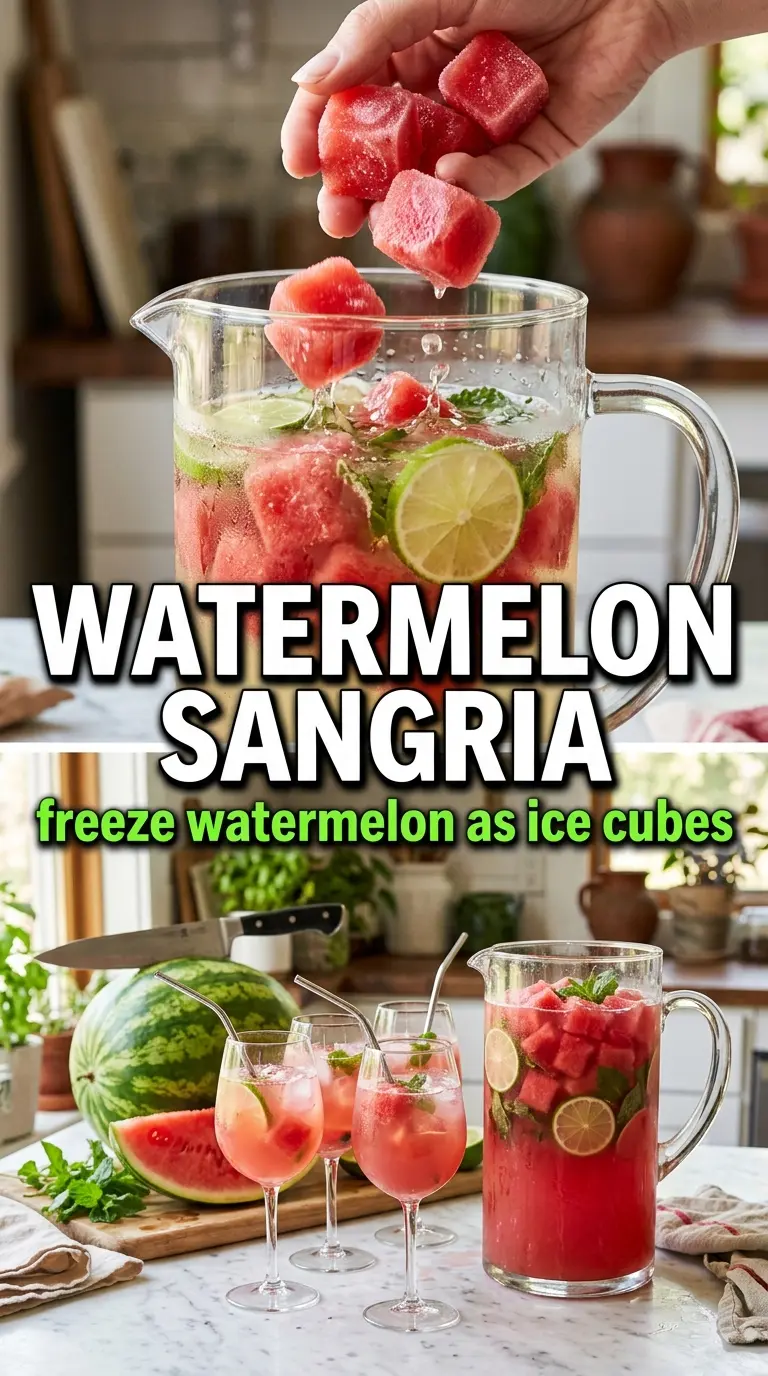
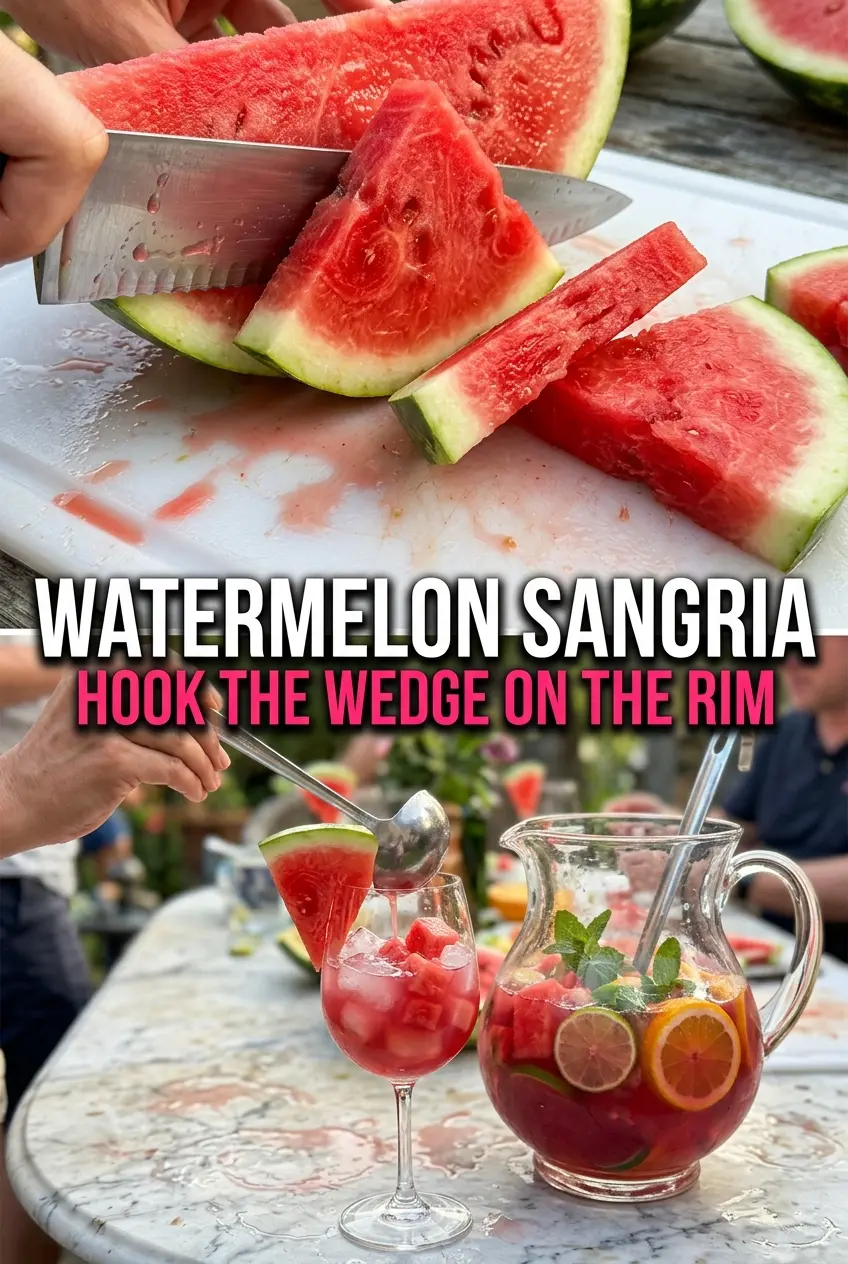
Pour in the sparkling water or club soda just before you’re ready to serve and stir once or twice, gently. Too much stirring knocks out the bubbles and makes the drink feel flat in the glass. Serve it over ice with mint sprigs, and if you want the best presentation, add a few fresh watermelon cubes to each glass after pouring.
How to Adjust This Watermelon Sangria for Different Crowds
Make It Lighter and More Sessionable
Use half the vodka and top the pitcher with a little extra sparkling water. You’ll keep the same bright fruit flavor, but the drink becomes easier to sip over a long afternoon without losing the sangria character.
Make It Sweeter for a Dessert-Style Pour
Add an extra tablespoon of honey or simple syrup and use a ripe rosé instead of a bone-dry wine. The result is softer and more fruit-forward, but it loses some of the crisp edge that keeps the original version balanced.
Make It Nonalcoholic
Swap the wine for white grape juice or a dry white sparkling beverage, use watermelon juice in place of the vodka and triple sec, and finish with club soda. You’ll get the same chilled fruit-and-citrus feel, just without the boozy finish.
Make It Ahead for a Party
Mix the sangria base, fruit, and citrus up to a day ahead, then keep it chilled without the sparkling water. Add the bubbles right before serving so the pitcher still tastes lively instead of muted.
Storage and Reheating
- Refrigerator: Keep leftover sangria covered for up to 2 days. The watermelon will soften and the wine will mellow, but the flavor stays pleasant.
- Freezer: Don’t freeze the finished sangria. The wine and sparkling water don’t thaw well, and the texture turns awkward.
- Reheating: This drink isn’t meant to be reheated. If it loses some sparkle, top each glass with a fresh splash of club soda before serving.
Questions I Get Asked About This Recipe
Watermelon Sangria
Ingredients
Equipment
Method
- Blend 2 cups of the fresh watermelon cubes until smooth, then strain through a fine-mesh sieve to get about 1 cup of fresh watermelon juice.
- Keep the strained watermelon juice aside while you assemble the sangria base.
- Add the watermelon juice, dry rosé or white wine, watermelon vodka (or plain vodka), triple sec, and honey (or simple syrup) to a large pitcher and stir to combine.
- Add the remaining watermelon cubes, thinly sliced lime, and thinly sliced lemon to the pitcher.
- Cover and refrigerate for at least 2 hours so the flavors meld and the sangria chills thoroughly.
- Right before serving, top the pitcher with the sparkling water (or club soda), stir gently, and pour into ice-filled glasses.
- Garnish each glass with fresh mint sprigs and serve immediately.