Fresh pico de gallo should taste sharp, juicy, and alive, with each spoonful landing somewhere between crisp salad and salsa. When it’s made well, the tomatoes hold their shape, the onion brings bite, the jalapeño gives clean heat, and the lime pulls everything together without turning the bowl watery. That balance is what makes it worth keeping in the fridge and on the table all week.
The trick is starting with Roma tomatoes and draining off the excess seeds and juice before anything else goes in. That keeps the salsa chunky instead of soupy. A short rest after mixing matters just as much; the salt draws out just enough liquid to season the vegetables and soften the onion without collapsing the texture.
Below you’ll find the small details that make this version taste clean and bright instead of muddy. There’s also a quick note on how to adjust the heat, what to do if your tomatoes are extra juicy, and how long this holds after it’s mixed.
The tomatoes stayed chunky and the lime didn’t make it watery. I let it sit the full 15 minutes and it tasted like the pico from my favorite taqueria.
Keep this pico de gallo recipe handy for tacos, chips, and anything that needs a bright, chunky tomato salsa.
Why This Pico de Gallo Stays Chunky Instead of Turning Watery
Most soggy pico starts with tomatoes that were cut and left sitting around with their seeds intact. Roma tomatoes solve half the problem because they have a meatier center and less juice than big slicing tomatoes, but they still need a little help. Removing the excess seed gel before mixing keeps the bowl crisp from the start.
The second thing that matters is timing. Salt pulls moisture out of the tomatoes and onion, which is exactly what you want after the first mix, not before. If you salt the tomatoes and walk away for too long, you’ll end up with a puddle. Fifteen minutes is the sweet spot: enough time for the flavors to marry, not enough time for the vegetables to slump.
- Roma tomatoes — These hold their shape better than softer, juicier tomatoes. If yours are very ripe, seed them a little more aggressively and let them drain in a bowl first.
- White onion — It gives the clean, sharp bite that makes pico taste authentic. Red onion can work in a pinch, but it brings a sweeter edge and a softer look.
- Jalapeños — They add fresh heat without taking over. For less spice, remove the seeds and white ribs; for more, leave some in.
- Fresh lime juice — Bottled lime juice tastes flat here. Fresh juice brightens the tomatoes and keeps the whole bowl tasting lively.
What Each Ingredient Is Doing in the Bowl
Every ingredient in pico de gallo has a job. The tomatoes carry the bulk of the texture, the onion adds crunch and bite, the jalapeño brings heat, cilantro gives the familiar fresh herb note, and lime juice ties it all together. If one element is off, you notice it immediately because there’s nowhere for it to hide.
Salt matters more than most people think. It doesn’t just season the salsa; it helps the tomatoes release a little juice so the flavors blend into one spoonable mix. Black pepper is subtle, but it rounds out the sharp edges and keeps the salsa from tasting one-note.
Dial the Heat Up or Down
Use both jalapeños with the seeds and ribs removed for a mild version. Keep some seeds in if you want a sharper bite, or swap one jalapeño for serrano peppers if you like a hotter pico. The rest of the ingredients stay the same, so the texture and freshness still read as classic pico de gallo.
Cilantro-Free Version
If cilantro tastes soapy to you, leave it out and add a little extra onion and lime instead. You’ll lose that classic herbal note, but the salsa still works because the tomatoes, jalapeño, and citrus carry the freshness on their own.
Extra-Juicy Tomato Rescue
If your tomatoes are especially soft, salt them lightly first and let them sit in a strainer for 5 minutes before mixing. That gives you a better texture than trying to fix watery pico after the fact. Drain the bowl before adding the onion and jalapeño if liquid collects at the bottom.
Storage and Reheating
- Refrigerator: Store for up to 2 days. After that, the tomatoes soften and the mixture turns looser.
- Freezer: Don’t freeze it. The tomatoes and onion lose their fresh crunch and the texture turns mushy when thawed.
- Serving: Give it a stir before serving and drain off any extra liquid if needed. The most common mistake is serving it straight from the fridge without tasting again; a squeeze of fresh lime and a pinch of salt often wake it right back up.
Questions I Get Asked About This Recipe
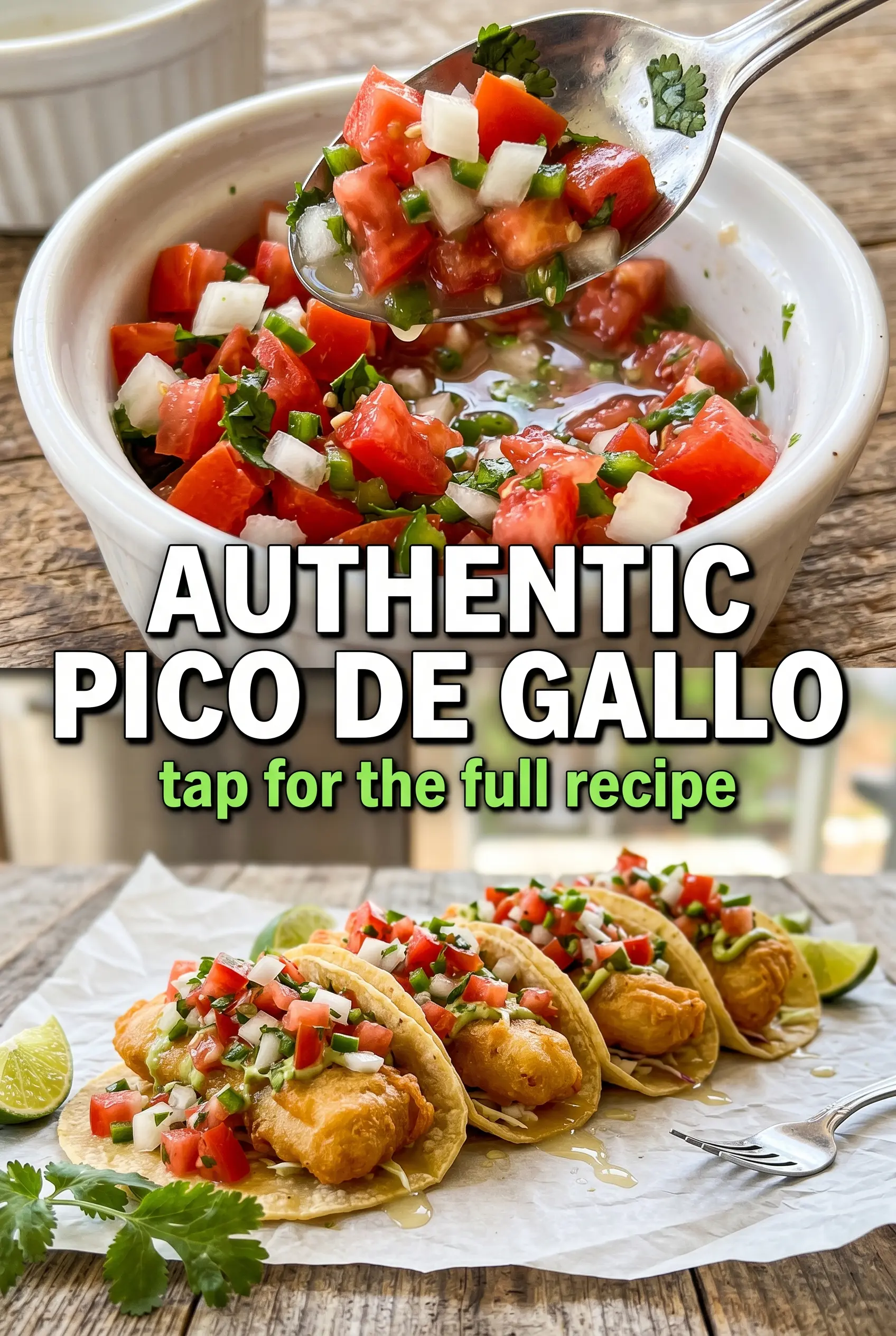
Authentic Pico de Gallo
Ingredients
Method
- Dice the Roma tomatoes, removing excess seeds and juice, then place them in a bowl. This keeps the pico chunky and prevents it from getting watery.
- Finely dice the white onion and add it to the tomatoes. Aim for small pieces so every bite has a mix of tomato and crunch.
- Minice the jalapeños and cilantro, then add them to the bowl. Fold in gently so the jalapeño pieces stay intact.
- Squeeze fresh lime juice over the mixture and sprinkle with salt and black pepper. Stir just enough to evenly distribute the seasoning.
- Gently toss all ingredients together until the tomatoes are coated. Keep tossing light to preserve the diced texture.
- Let the pico de gallo sit for 15 minutes before serving to allow flavors to meld. Keep it at cool room temperature during the rest, then serve.
- Serve the pico de gallo as a condiment with tacos, chips, or eggs. Use immediately for the brightest flavor and crunch.