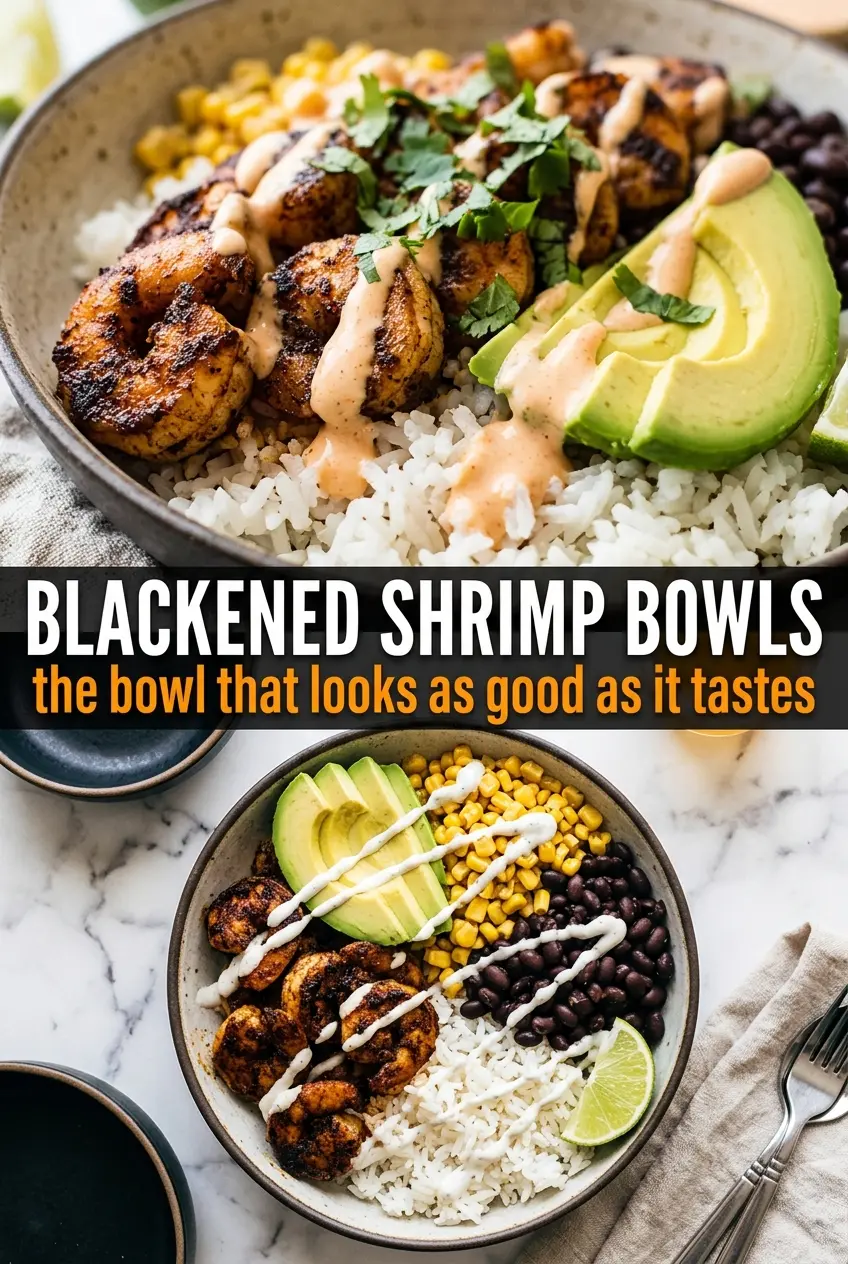
Blackened shrimp bowls hit the table fast, but they still taste like there was some thought behind them. The shrimp come out smoky, crusted with spice, and just tender in the center, then they land on fluffy rice with cool avocado, sweet corn, and sharp red onion to keep every bite moving. It’s the kind of bowl that doesn’t need a lot of extras because the seasoning does the heavy lifting.
The key is getting the shrimp dry before the spice mix goes on and using a pan that can actually hold heat. A cast-iron skillet gives you that dark, fragrant crust instead of a pale, steamed coating, and the butter helps the spices bloom and cling without burning the second they hit the pan. The rice underneath matters too; it catches the drippings and softens the heat.
Below, I’ve included the small details that keep the shrimp juicy instead of rubbery, plus a few ways to adjust the bowl if you want it milder, dairy-free, or easier to prep ahead.
The shrimp got that smoky crust in minutes, and the lime on top pulled the whole bowl together. I was worried they’d be too spicy, but over rice with avocado it was just right.
Love the smoky crust and bright bowl toppings? Save these blackened shrimp bowls for a fast dinner with bold spice and almost no cleanup.
The Secret to Blackened Shrimp That Crusts Instead of Steaming
Blackening works when the pan is hot enough to toast the spice mix before the shrimp overcook. If the skillet isn’t smoking and the shrimp go in damp, the seasoning turns muddy and the surface softens instead of forming that dark, aromatic crust. That’s the difference between a true blackened shrimp bowl and shrimp with spice sprinkled on top.
Large shrimp matter here because they can take the heat and still stay juicy. Smaller shrimp cook too fast and don’t give you enough time for the crust to set. The other thing people miss is spacing: crowded shrimp throw off moisture, and moisture is the enemy of char.
- Dry shrimp — Patting them dry is not optional. Water turns the spice blend into paste and keeps the edges from browning.
- Cast-iron skillet — This recipe wants a pan that holds heat steady. Thin pans cool down fast and you lose the blackened crust.
- Butter — It carries the spices and helps them cling, but it also browns quickly, so the heat needs to stay at medium-high, not higher.
What Each Bowl Ingredient Is Doing Here
Because this bowl is built from just a few parts, each one has a job. The spice mix gives the shrimp its smoky heat and color, but paprika and cayenne need fat and high heat to bloom properly. The rice isn’t filler; it soaks up the seasoned butter and calms the spice without dulling it. Avocado cools the heat and adds a creamy finish, while corn and red onion keep the bowl from tasting flat.
- Paprika — This is the backbone of the blackened coating. Use standard paprika for a balanced smoky-sweet crust, or smoked paprika if you want a deeper campfire note.
- Cayenne — It brings the heat. Reduce it to 1 teaspoon if you want a gentler bowl, but don’t remove it completely or the seasoning loses its edge.
- Butter — It helps the spices toast in the pan. If you need a dairy-free version, use a high-heat oil like avocado oil, but expect a slightly less rich crust.
- Rice — Warm, freshly cooked rice gives the best base. Cold rice works if you reheat it first; otherwise, the bowl feels disjointed and dry.
- Avocado, corn, and red onion — These toppings add contrast. Avocado cools, corn adds sweetness, and onion brings sharp bite so the shrimp doesn’t carry the whole bowl alone.
Getting the Shrimp From Spiced to Properly Blackened
Mix the Spice Coating First
Stir the paprika, garlic powder, onion powder, cayenne, thyme, oregano, and black pepper in a shallow bowl until the color looks uniform. That matters because any clumps of cayenne or paprika will burn in one spot and leave another piece underseasoned. The mix should look dark brick red and smell fragrant before it ever hits the shrimp.
Press the Seasoning Onto Dry Shrimp
Pat the shrimp dry with paper towels, then toss them in the spice mix until every curve is coated. A thin, even layer gives you the best crust; a thick, dusty layer falls off in the pan and scorches. If the shrimp seem wet after coating, the seasoning won’t grab well enough, so give them another quick pat before they go in.
Let the Pan Get Hot Enough to Smoke
Melt the butter in a large cast-iron skillet over medium-high heat and wait until it starts to smoke lightly. That smoke tells you the pan is hot enough to blacken the spices fast. If the butter foams and sits there without movement, the pan is still too cool and the shrimp will steam before they sear.
Cook Fast and Stop While They’re Just Done
Add the shrimp in a single layer and cook for 2 to 3 minutes per side until the exterior is dark and the centers turn opaque. Pull them as soon as they curl into a loose C; a tight O shape usually means they’re overcooked. The biggest mistake here is leaving them in the pan just because the crust looks good. Shrimp go from tender to rubbery in a hurry.
Build the Bowls While the Shrimp Are Hot
Spoon the rice into bowls first, then top with shrimp, avocado, corn, and red onion. Finish with cilantro and lime wedges right at the end so the citrus stays bright. The hot shrimp will slightly warm the toppings and make the whole bowl taste more unified.
How to Adjust These Blackened Shrimp Bowls for Different Nights
Make it milder without losing the blackened crust
Cut the cayenne in half and keep the paprika, garlic, onion, thyme, and oregano exactly the same. You’ll still get the dark, smoky coating, just with less heat at the back of the throat. The bowl stays balanced because the lime and avocado still bring brightness and creaminess.
Dairy-free version that still browns well
Swap the butter for avocado oil or another neutral high-heat oil. You’ll lose a little of the round, rich flavor butter gives, but the shrimp will still blacken cleanly if the skillet is hot. Keep the oil light; too much fat softens the spice crust.
Low-carb bowl with the same topping structure
Replace the rice with cauliflower rice or shredded cabbage sautéed just until tender. Cauliflower rice catches the seasoning nicely, while cabbage adds a little more bite and holds up better under the hot shrimp. Either one keeps the bowl light without changing the blackened shrimp at the center.
Storage and Reheating
- Refrigerator: Store the shrimp and toppings separately for up to 3 days. The shrimp hold up well, but the avocado should be sliced fresh if you can manage it.
- Freezer: The cooked shrimp freeze well for up to 2 months, though the texture is best when eaten fresh. Freeze them in a single layer first, then move to a container so they don’t clump together.
- Reheating: Rewarm the shrimp in a skillet over low heat just until heated through. Microwaving too long makes them tough, and that’s the fastest way to ruin the texture you worked for.
Questions I Get Asked About This Recipe
Blackened Shrimp Bowls
Ingredients
Equipment
Method
- In a shallow bowl, mix paprika, garlic powder, onion powder, cayenne pepper, dried thyme, dried oregano, and black pepper until evenly combined.
- Set the spice mixture aside so it coats the shrimp uniformly.
- Pat the shrimp dry, then coat them evenly with the blackening spice mixture.
- Melt butter in a large cast-iron skillet over medium-high heat until smoking.
- Add the shrimp in a single layer and cook for 2-3 minutes per side until charred and cooked through, watching for dark blackened spots.
- Divide the cooked white rice among four bowls.
- Top each bowl with blackened shrimp, avocado slices, corn, and sliced red onion.
- Garnish with fresh cilantro, then serve with lime wedges for squeezing over top.