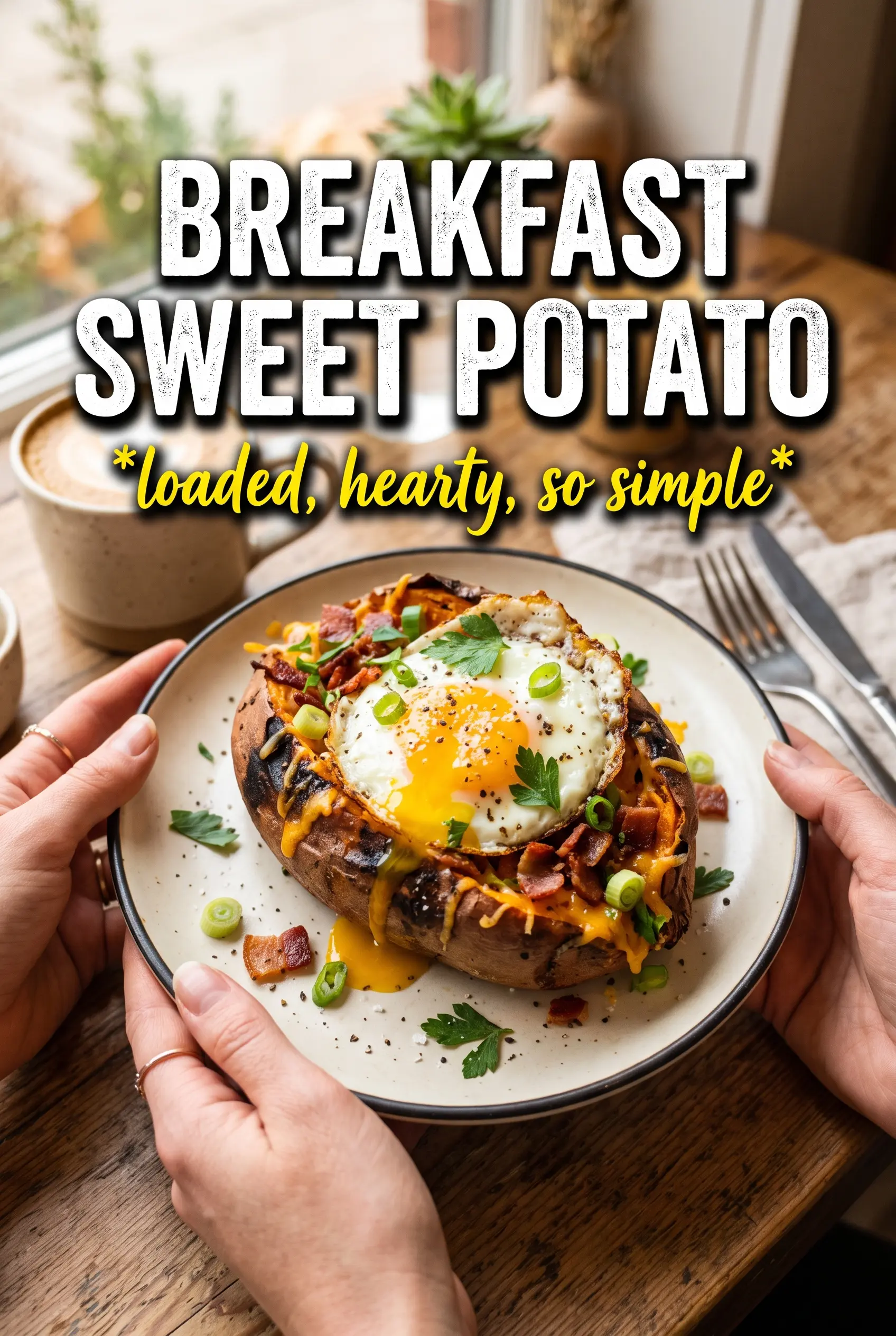
Split-open sweet potatoes make a breakfast that feels hearty without getting heavy. The flesh turns soft and almost custardy in the oven, then it catches all the good stuff on top: buttery scrambled eggs, sharp cheddar, crisp bacon, and a little heat from hot sauce. Every bite has contrast, which is what keeps this from tasting like a plain baked potato in disguise.
The trick is giving the sweet potatoes enough time to go fully tender before you touch them. If they’re even a little underbaked, they won’t fluff properly and the filling slides off instead of settling into the warm center. Scrambling the eggs separately keeps them soft and prevents the whole dish from turning watery, and a small handful of cheddar melts into the eggs just enough to bind everything together.
Below you’ll find the timing that keeps the potatoes fluffy instead of dense, plus a few ways to change up the toppings if you’re working with what’s already in the fridge.
The sweet potatoes baked up soft all the way through, and the scrambled eggs stayed fluffy instead of getting soggy under the bacon and cheese. My husband ate his standing at the counter and asked if we could do them again tomorrow.
Save these loaded breakfast sweet potatoes for mornings when you want baked sweet potato, fluffy eggs, bacon, and cheddar all in one handheld plate.
The Part That Keeps the Sweet Potato from Going Mushy
The biggest mistake with a breakfast sweet potato is rushing the bake. You want the skin to hold its shape and the center to be fully soft, not just warm in the middle. If the potato resists a knife, it’s not ready yet, and that’s when the filling starts sliding around instead of sinking into a fluffy base.
Pricking the skin matters here. It lets steam escape so the potato cooks evenly instead of splitting unpredictably in the oven. Once it’s done, slice it open right away and rake the flesh with a fork so the steam loosens it up before the eggs and bacon go on top.
- Sweet potatoes — Look for large ones with similar size so they bake at the same pace. Smaller potatoes work, but they won’t give you as much room for toppings.
- Eggs — Scrambling them separately keeps the texture light. Don’t cook them all the way through in the pan; pull them when they’re still soft, because they’ll finish from residual heat and stay tender.
- Bacon — Crisp bacon gives you the salty crunch this dish needs. Turkey bacon works in a pinch, but it won’t give you the same richness or rendered fat flavor.
- Sharp cheddar — Sharp cheese stands up to the sweet potato instead of disappearing into it. Pre-shredded is fine, but freshly shredded melts faster and cleaner.
What Each Topping Is Doing on the Plate
- Butter — A little butter in the skillet gives the eggs a softer finish than oil does. It also helps carry the salt evenly through the scramble.
- Sour cream — This adds a cool, tangy finish that cuts through the bacon and cheese. Plain Greek yogurt works if you want a higher-protein swap, but it tastes a touch sharper.
- Green onions — These are more than garnish. They add freshness and a mild bite that keeps the dish from feeling too rich.
- Hot sauce — A few dashes wake everything up. Use your favorite bottle; the acidity helps the sweet potato and cheddar taste brighter.
The Bake, the Fluff, and the Finish
Baking Until the Center Collapses Easily
Set the oven to 400F and give the sweet potatoes 45 to 50 minutes, depending on their size. They’re done when a knife slides through the center without resistance and the skin looks slightly wrinkled. If they still feel firm, keep baking; underdone sweet potatoes never taste as good here because they can’t hold the toppings properly.
Scrambling the Eggs Gently
Cook the eggs in butter over medium-low heat and keep them moving with a spatula. You want soft curds and a glossy finish, not dry crumbles. If the pan runs hot, pull it off the burner for a few seconds and stir; eggs go from tender to chalky fast, and that texture makes the whole bowl feel heavy.
Building the Loaded Top
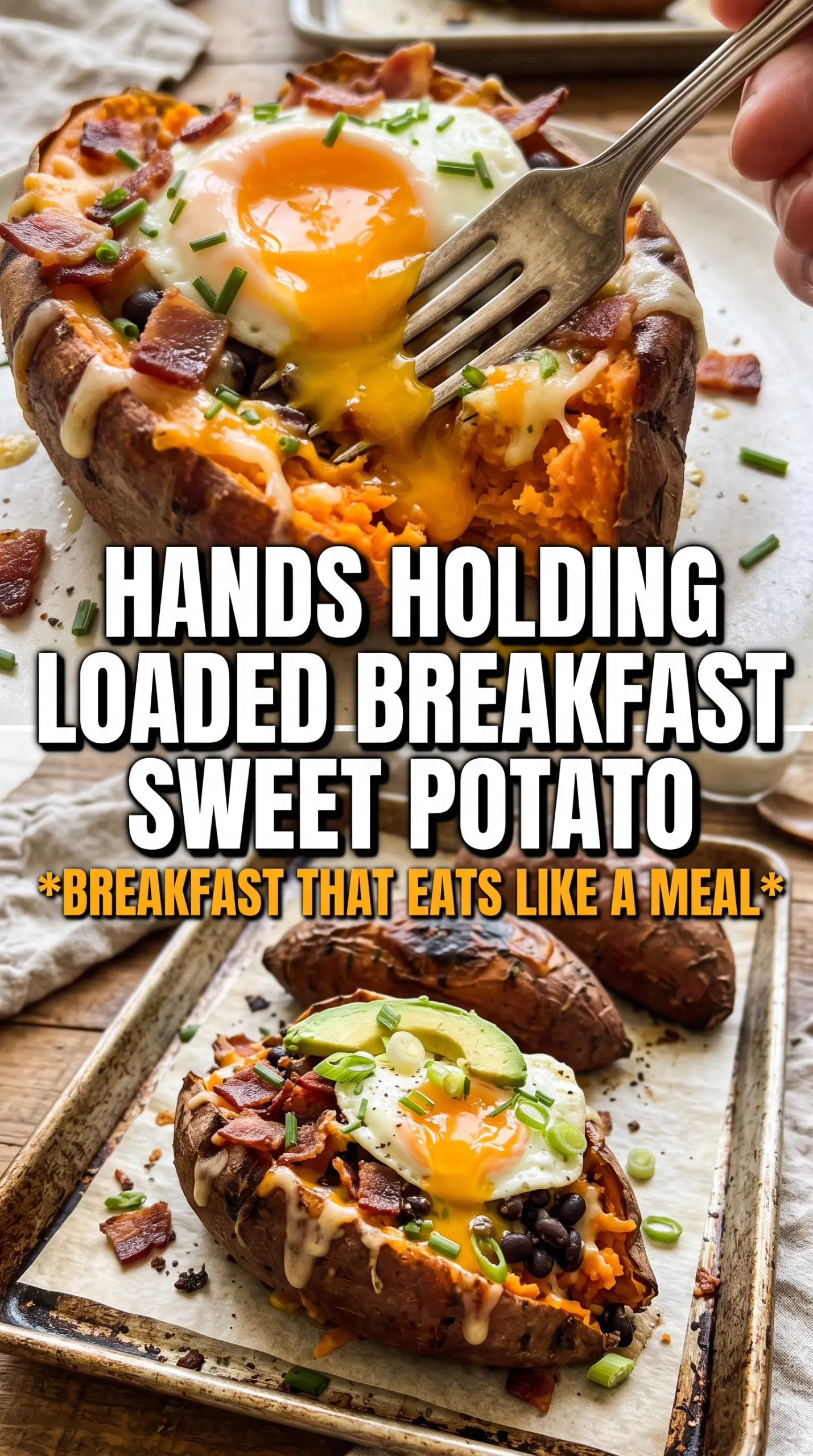
Slice each sweet potato open and fluff the inside with a fork so it makes a little bed for the eggs. Spoon the scrambled eggs into the center, then add bacon, cheddar, and green onions while everything is still hot enough to soften the cheese. Finish with sour cream and hot sauce at the very end so the cold, tangy bite stays distinct.
How to Change It Without Losing the Point
Make It Vegetarian
Skip the bacon and add sautéed mushrooms, spinach, or black beans. You’ll lose the smoky saltiness, so lean harder on cheddar and hot sauce to keep the filling bold.
Dairy-Free Version
Use olive oil instead of butter, skip the sour cream, and top with avocado or a dairy-free yogurt. The eggs will still work, but the final dish will taste a little cleaner and less rich.
Swap the Bacon for Ham or Sausage
Diced ham gives a milder, saltier bite, while cooked breakfast sausage makes the dish fuller and more savory. Either one works well, but they bring a softer texture than crisp bacon.
Storage and Reheating
- Refrigerator: Store leftovers for up to 3 days. The sweet potato softens a bit more, but it still reheats well.
- Freezer: The baked sweet potatoes freeze well, but the eggs don’t. If you want to freeze ahead, freeze the potato halves plain and add fresh eggs after reheating.
- Reheating: Warm the potato in the oven or air fryer until hot, then add the eggs and toppings. Microwaving the finished dish works in a pinch, but it makes the eggs rubbery and the cheese greasy.