Fiesta lime shrimp bowls hit the table fast, but they eat like something you put a little thought into. The shrimp stay plump and juicy, the rice catches every bit of garlicky lime juice, and the beans, corn, and crisp vegetables keep each bite moving between bright, savory, and fresh. It’s the kind of bowl that disappears without much conversation because there’s always one more good forkful waiting.
The trick is keeping the shrimp from sitting in the lime too long. Citrus starts changing the texture of seafood quickly, so the marinade here is short and the skillet stays hot enough to give the shrimp a quick sear instead of a slow steam. That’s what keeps them tender instead of rubbery. The rest of the bowl is all about contrast: warm rice, creamy avocado, cool cilantro, and a little crunch from the vegetables.
Below, you’ll find the timing that matters most, the ingredient swaps that still keep the bowl balanced, and a few fixes for the little things that can throw shrimp off. Once you’ve made it once, the whole thing becomes second nature.
The shrimp stayed tender and the lime-garlic pan juices pulled everything together. I loved that the beans and corn warmed through without turning mushy, and my husband kept going back for more of the shrimp.
Save these fiesta lime shrimp bowls for the nights when you want a bright, one-pan shrimp dinner with rice, beans, corn, and fresh avocado.
The Shrimp Need a Hot Pan, Not a Longer Marinade
With shrimp, the most common mistake is trying to force more flavor by marinating longer. Lime juice is aggressive. Give it enough time to coat the shrimp and season the surface, then get them into the skillet while they’re still firm and glossy. If they sit too long, the texture goes chalky before they even hit the heat.
The pan matters just as much as the marinade. A medium-high skillet gives the shrimp enough heat to sear quickly and turn pink in minutes. If the pan is too cool, they release liquid and start steaming in their own juices. That’s when you lose the clean, snappy texture that makes this bowl work.
- Shrimp — Large shrimp hold up best here because they stay juicy through the quick cook. Smaller shrimp can work, but they overcook in a hurry, so keep a close eye on the color change.
- Lime juice — Fresh lime gives the sharp, bright finish that bottled juice can’t match. If you use bottled in a pinch, the bowl will still work, but the flavor lands flatter.
- Olive oil — It helps carry the garlic and spices and keeps the shrimp from sticking. Don’t skip it or the marinade won’t cling as well.
- Rice — Warm rice is the base that ties everything together. Cold rice can work, but it needs a quick reheat so it doesn’t cool the shrimp down too fast.
Building the Bowl So Every Bite Stays Bright
Combine the lime juice, olive oil, garlic, cumin, and chili powder first so the shrimp get evenly coated before they hit the heat. The garlic and spices need that oil to spread across the shrimp instead of clumping in spots. Toss just until everything looks glossy, then stop.
Heat the skillet before the shrimp go in. You want to hear a steady sizzle the second they touch the pan. Cook them in a single layer and turn them once when the bottoms are pink and the edges look opaque. The second side cooks fast, and once the shrimp curl into a loose C shape, they’re done. Overcooked shrimp tighten into a hard O and lose that tender bite.
Warm the beans and corn just enough to take the chill off before building the bowls. Then layer in the rice, vegetables, and shrimp. Drizzle any juices from the pan over the top right before serving. That little spoonful carries the garlic, lime, and spice all the way through the bowl.
How to Adapt These Fiesta Lime Shrimp Bowls
Make It Gluten-Free Without Changing the Bowl
The bowl is naturally gluten-free as written, as long as your spice blend and canned beans are plain and not seasoned with anything containing wheat. Serve it over rice, and you’ve got a clean, satisfying dinner with the same bright, fresh finish.
Swap the Rice for Cauliflower Rice
Cauliflower rice keeps the bowl light and low-carb, but it won’t soak up the pan juices the same way regular rice does. Cook it separately until tender and dry, then spoon the shrimp and toppings over it so the bowl doesn’t turn watery.
Use Chicken Instead of Shrimp
Thin-sliced chicken breast or thigh works well if shrimp isn’t your thing. It needs a longer cook, so season it the same way and cook until the center is no longer pink and the juices run clear. You’ll lose the quick-cook snap of shrimp, but you’ll keep the lime-garlic profile.
Storage and Reheating
- Refrigerator: Store the shrimp and bowl components separately for up to 2 days. The shrimp stay best when they aren’t buried under the toppings, and the avocado should be added fresh.
- Freezer: The shrimp and rice freeze well, but the fresh vegetables and avocado don’t. Freeze only the cooked shrimp and rice in airtight containers for up to 2 months.
- Reheating: Reheat the shrimp gently in a skillet over low heat with a splash of water or extra lime juice. High heat will toughen them fast, so just warm them through instead of cooking them again.
Questions I Get Asked About This Recipe
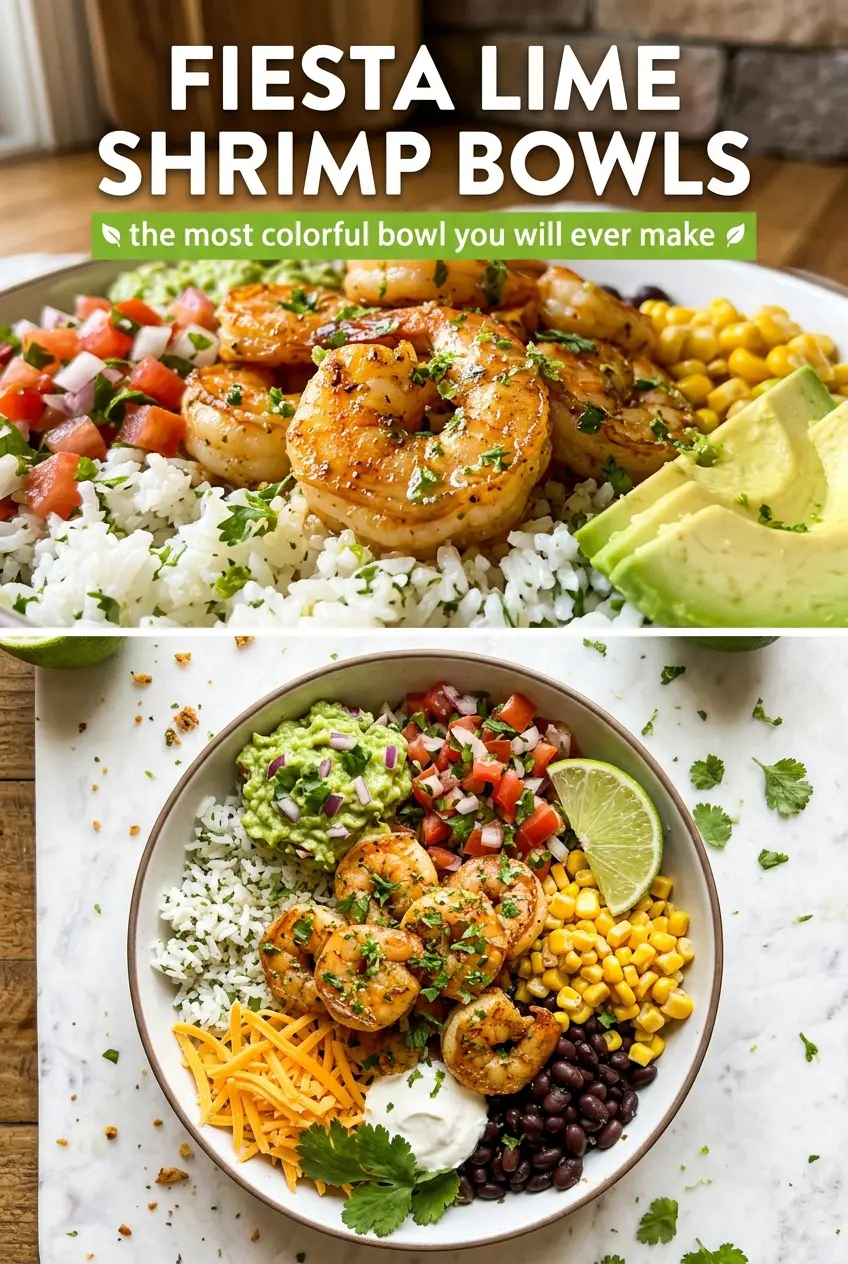
Fiesta Lime Shrimp Bowls
Ingredients
Equipment
Method
- Combine lime juice, olive oil, garlic, cumin, and chili powder in a bowl and stir until evenly mixed. Toss the shrimp in the marinade so every piece looks coated.
- Heat a large skillet over medium-high heat until hot, then add the shrimp in an even layer. Cook for 2-3 minutes per side until pink and cooked through, flipping once, with lightly browned edges as the visual cue.
- Divide the cooked rice into 4 serving bowls and spread into an even base. Top with warm black beans, corn, red bell pepper, and red onion so the colors are visible.
- Arrange the cooked shrimp over each bowl and drizzle with any remaining pan juices. Garnish with fresh cilantro, sliced avocado, and lime wedges before serving.