French onion chicken orzo casserole lands in that sweet spot between comfort food and a one-pan dinner that actually feels worth the effort. The onions turn jammy and deeply savory, the orzo cooks right in the broth so it soaks up every bit of flavor, and the Gruyere on top bakes into a bronzed crust that cracks under the spoon. It eats like a cozy casserole but finishes with the kind of rich, oniony depth you usually only get from a long-simmered soup.
What makes this version work is patience with the onions and restraint with the liquid. If the onions don’t get dark enough before the broth goes in, the whole dish tastes flatter than it should. And because orzo cooks fast, the oven time has to be just long enough for the pasta to soften without turning the chicken dry or the sauce gluey. The cream cheese gives the filling body without making it heavy, which keeps the casserole spoonable instead of stiff.
Below, I’ll walk through the onion caramelization, the broth balance, and the best way to keep the topping browned without overcooking the center. There’s also a couple of practical swaps if you need to work around what’s in the fridge.
The onions turned deep and sweet, and the orzo held its shape perfectly instead of getting mushy. My husband went back for seconds before I even sat down.
Save this French Onion Chicken Orzo Casserole for the nights when you want caramelized onions, creamy orzo, and a browned Gruyere topping in one pan.
The Part Most Casseroles Skip: Building Real Onion Flavor
The onions are the backbone here, not a background note. They need enough time to lose their sharp bite and pick up a deep brown color, because that is where the French onion flavor comes from. If you rush this stage, the casserole still works, but it tastes like chicken and pasta with onions, not French onion chicken orzo. Keep the heat at medium and stir often enough to prevent scorching on the edges, especially once the pan starts to look dry.
Butter gives the onions a rounder flavor than oil alone, and the leftover browned bits in the pan are part of the sauce, not something to scrape away and discard. The wine loosens those bits and adds brightness, while the Worcestershire quietly pushes the broth toward that savory, almost beefy depth you want in a French onion-style dish. Once the broth goes in, the goal changes from browning to absorption.
What Each Ingredient Is Doing in the Pan
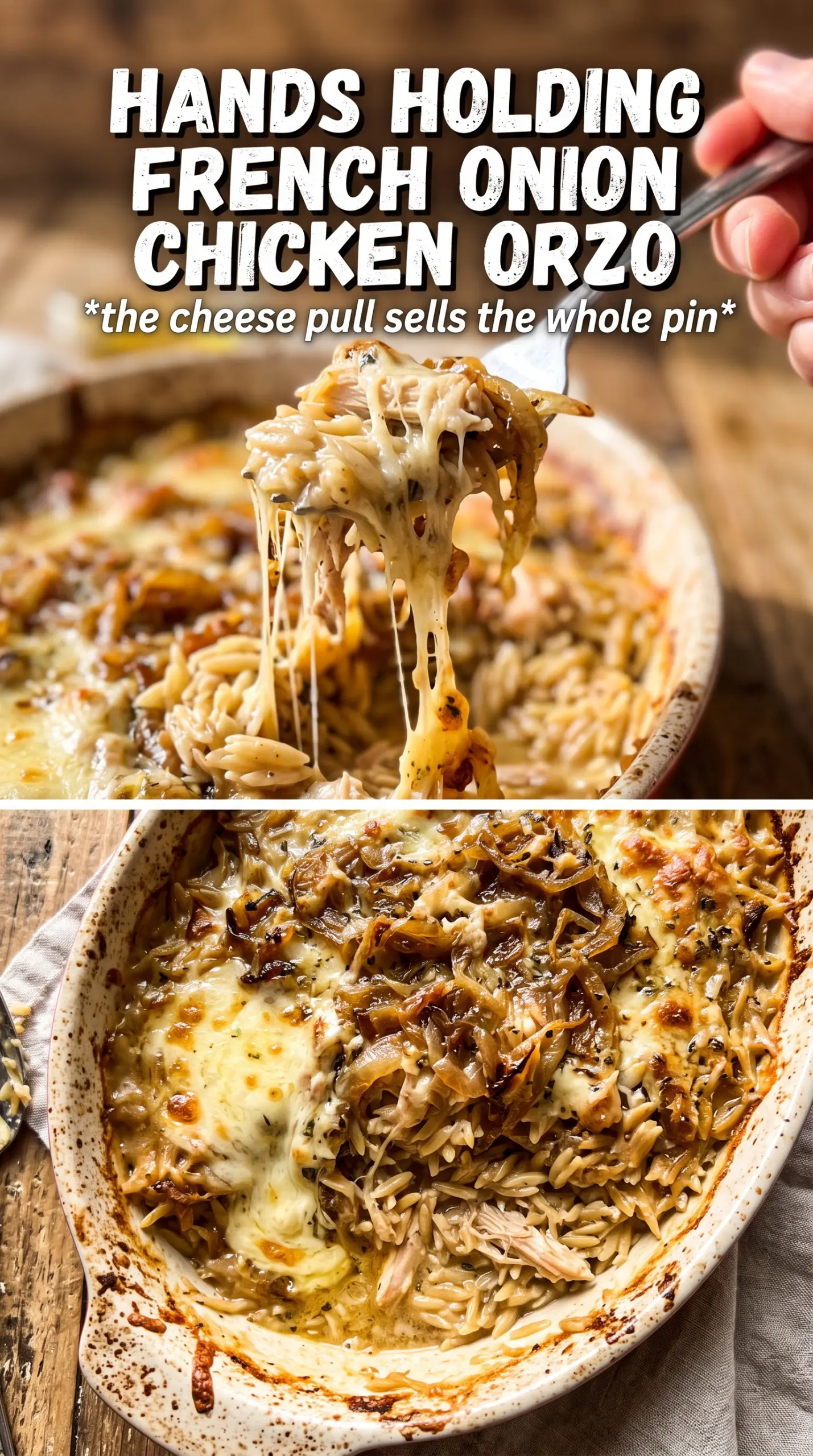
- Chicken breast — Diced chicken cooks quickly and stays tender inside the casserole. Cut it into even pieces so it finishes at the same time as the orzo. Thighs will work too if you want a little more forgiveness and a richer result.
- Orzo — This is the pasta that makes the dish feel like a casserole instead of a soup. It drinks in the broth and thickens the pan as it bakes, but it will go soft if you overbake it. If you use a different small pasta, you may need a little more liquid and a longer bake.
- Gruyere — Gruyere melts smoothly and gives you that nutty, onion-soup finish on top. Swapping in mozzarella makes the topping stretchier but blander; Swiss is the closest backup if Gruyere is hard to find.
- Cream cheese — This is what turns the broth into a creamy sauce without needing a separate roux. Cube it so it melts evenly into the simmering liquid. Cold blocks tossed in whole take longer and can leave little lumps behind.
- Dry white wine — The wine lifts the browned flavor from the pan and keeps the sauce from tasting heavy. Use something dry and drinkable, not sweet. If you need a nonalcoholic swap, use extra broth plus a splash of white wine vinegar at the end.
The Timing That Keeps the Orzo Creamy, Not Mushy
Caramelizing the Onions
Start with a large oven-safe skillet so the onions have room to cook instead of steam. They’ll look like a lot at first, then collapse down as they release moisture. You want deep golden-brown edges and a soft, jammy texture before the garlic goes in. If the onions start to catch before they’ve turned dark, lower the heat and add a small splash of water to loosen the pan.
Loading the Pan With Liquid and Pasta
Once the wine has cooked down, add the broth, Worcestershire, orzo, and chicken together. Stir well so the orzo isn’t sitting in a dry mound at the bottom, because that’s how you end up with unevenly cooked pasta. The mixture should look loose and soupy before it goes into the oven. It thickens as the orzo cooks, so don’t try to “fix” it by reducing the liquid too far on the stove.
Finishing in the Oven
The cream cheese should melt into the hot liquid before the Gruyere goes on top. If it looks streaky, keep stirring over low heat for another minute or two rather than rushing to bake it. Bake until the chicken is cooked through, the orzo is tender with a little bite, and the top is browned in spots. If the cheese browns before the center is done, cover the dish loosely with foil for the last few minutes.
Dairy-Free Version With the Same Savory Base
Use a dairy-free cream cheese and a melty plant-based shredded cheese, but expect a softer top and a slightly less rich finish. The onions, broth, and Worcestershire still carry most of the flavor, so the dish stays satisfying even without the dairy. Add the non-dairy cream cheese slowly so it melts smoothly into the broth.
Swap in Chicken Thighs for a Richer Casserole
Boneless chicken thighs stay juicier than breast meat and give the casserole a deeper, more forgiving texture. They’ll add a little more richness to the sauce, which plays nicely with the onions and Gruyere. Dice them the same size as the breast so the bake time stays close.
Gluten-Free Adjustment That Still Feels Like the Original
Swap the orzo for a gluten-free small pasta with a similar cook time, and watch the liquid closely near the end of baking. Gluten-free pasta can go from tender to soft faster than wheat-based orzo, so check it a few minutes early. The sauce will still come together, but it may need an extra stir before serving to keep the texture even.
How to Make It Ahead Without Drying It Out
Caramelize the onions and cook the chicken base earlier in the day, then add the orzo and finish baking right before dinner. Fully baked orzo dishes tighten up as they sit, so the best make-ahead move is stopping before the pasta is cooked through. That keeps the final texture creamy instead of starchy.
Storage and Reheating
- Refrigerator: Store covered for up to 4 days. The orzo will absorb more sauce as it sits, so the casserole firms up a bit.
- Freezer: It freezes, but the texture softens after thawing. For the best result, freeze in portions and expect the sauce to be a little looser after reheating.
- Reheating: Warm covered in a 325F oven with a splash of broth to loosen the sauce. Microwaving works for small portions, but stop as soon as it’s hot through or the chicken can dry out and the pasta can turn gummy.
Questions I Get Asked About This Recipe

French Onion Chicken Orzo Casserole
Ingredients
Equipment
Method
- Preheat oven to 375F.
- Melt butter in a large oven-safe skillet over medium heat, then add onions and cook 30-35 minutes until deeply caramelized, stirring occasionally.
- Add garlic and thyme and cook 2 minutes until fragrant.
- Add wine and cook 2 minutes, scraping up any browned bits.
- Stir in beef broth, Worcestershire sauce, and uncooked orzo, then add diced chicken.
- Bring the mixture to a simmer, then stir in cream cheese until fully melted and creamy.
- Season with salt and pepper to taste.
- Scatter Gruyere over the top in an even layer.
- Bake 25-30 minutes until the orzo is cooked, the chicken is done, and the cheese is golden.
- Garnish with fresh thyme and rest briefly before serving for clean slices and less runniness.