Glossy honey pepper chicken earns its place in the weeknight rotation because the sauce clings instead of sliding off, and the pepper keeps the sweetness from turning flat. You get pan-seared chicken with browned edges, then a sticky glaze that settles into every slice without feeling heavy. It eats like takeout comfort food, but the pan does most of the work.
The key is building the sauce in the same skillet after the chicken comes out. Those browned bits left behind add depth, and the honey, soy sauce, vinegar, and brown sugar balance each other so the glaze tastes rounded instead of one-note. A little cornstarch slurry thickens it fast, but only if the sauce is simmering when it goes in.
Below you’ll find the small details that matter here: how to keep the chicken juicy, how much pepper gives the sauce a real kick without overpowering it, and how to adapt the dish if you want a milder or gluten-free version.
The glaze thickened up right when you said it would, and the cracked pepper gave it that little kick without taking over. I served it over rice, and my husband went back for seconds before I even sat down.
Save this honey pepper chicken for the nights when you want sticky glazed chicken with bold pepper and almost no cleanup.
The Reason the Glaze Sticks Instead of Slipping Off
The sauce only behaves if the chicken is seared first and the pan stays hot enough to reduce the glaze. If you rush the browning, the chicken releases water and the sauce thins out before it can coat anything. Pound the breasts to an even thickness so the center cooks at the same pace as the edges; otherwise, you end up with dry outer slices and an underdone middle.
The other thing that matters is acid. The apple cider vinegar keeps the honey from feeling syrupy, and the soy sauce gives the glaze its backbone. If your sauce tastes one-dimensional, it usually means the pepper was added too late or the vinegar was cut too far back.
What the Honey, Soy, and Pepper Each Bring to the Pan
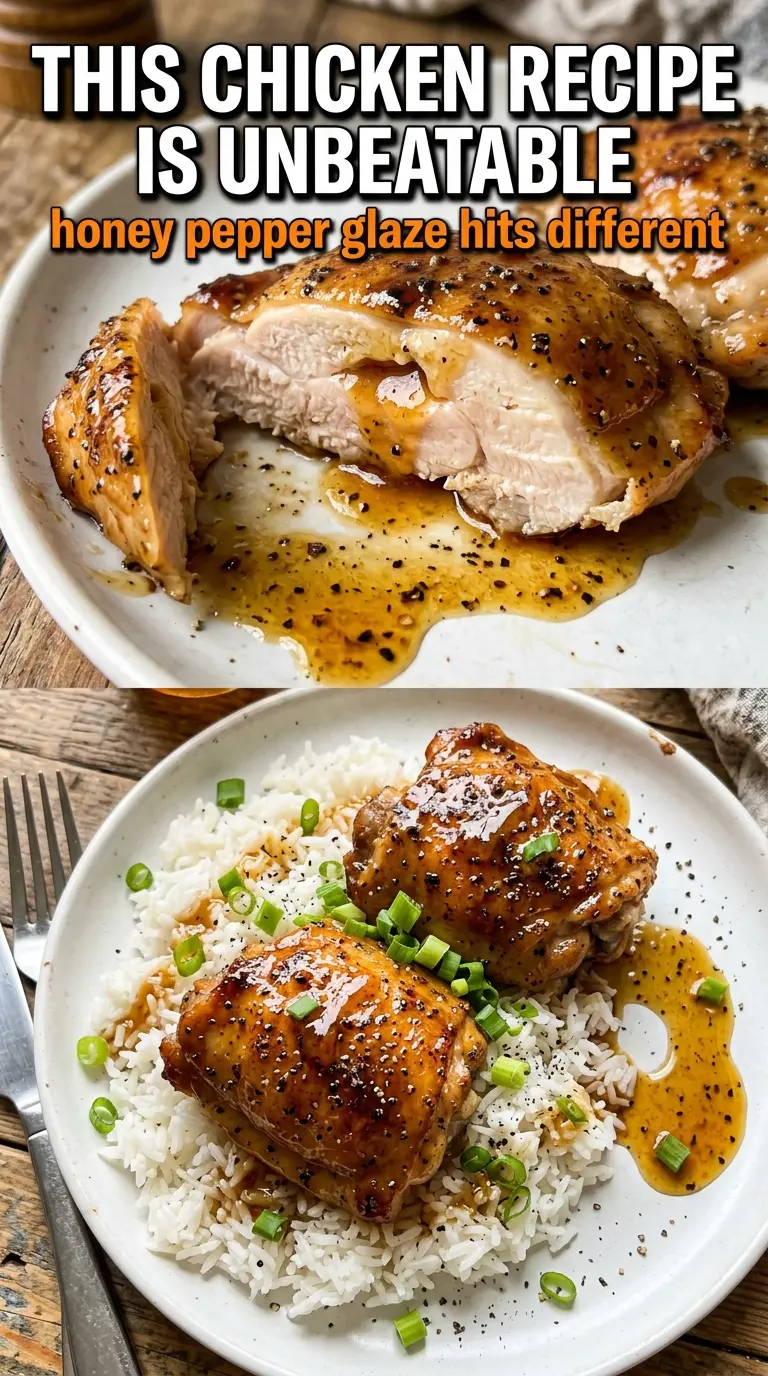
- Honey — This gives the glaze its shine and that sticky finish that clings to sliced chicken. Use a real honey you like eating, since it sits at the center of the sauce.
- Soy sauce — This adds salt and depth, and it keeps the glaze from tasting like candy. Low-sodium soy works if that’s what you have, but don’t skip the sauce entirely or the dish loses its savory edge.
- Apple cider vinegar — This sharpens the sweetness and helps the sauce taste balanced. White vinegar works in a pinch, but cider vinegar has a softer bite.
- Cracked black pepper — This is the point of the recipe, not just a background seasoning. Freshly cracked pepper gives a warmer, more noticeable heat than preground pepper, which can taste dusty and flat.
- Cornstarch slurry — This thickens the sauce fast without making it cloudy or pasty. Stir it in only after the glaze is simmering, or it can stay thin and glossy instead of tightening up.
Building the Sear Before the Glaze Goes In
Evening Out the Chicken
Lay the chicken breasts between sheets of parchment or plastic and pound them to an even thickness. This keeps the thinner end from drying out while the thicker end finishes cooking. Season both sides generously with salt and cracked black pepper so the first layer of flavor is already in place before the pan hits it.
Getting the Golden Sear
Heat the olive oil over medium-high heat until it shimmers, then add the chicken without crowding the skillet. You want a steady sizzle. If the pan is too cool, the chicken steams instead of browns, and the glaze won’t have those deep savory notes to work with later. Cook until each side is deeply golden and the chicken reaches 165°F in the center, then move it to a plate.
Turning the Pan Juices Into Sauce
Keep the skillet on the heat and whisk in the honey, soy sauce, vinegar, brown sugar, pepper, garlic powder, and cayenne. Scrape the bottom as you stir so the browned bits dissolve into the sauce. Once it starts to bubble, add the cornstarch slurry and keep stirring until the glaze turns glossy and coats the back of a spoon, which usually takes about 2 minutes.
Coating the Chicken Without Overcooking It
Return the chicken to the pan and turn it through the glaze until every side is lacquered. Don’t let it simmer away for long here; the chicken is already cooked, and extra heat only pushes out juices. Slice it right away if you want the sauce to soak into the cuts, or leave it whole for a cleaner plate presentation.
How to Adapt This Honey Pepper Chicken for Different Kitchens
Gluten-Free Version
Use gluten-free soy sauce or tamari and everything else can stay the same. The glaze still thickens the same way, and you won’t lose the sticky finish that makes the dish work.
Milder Pepper Flavor
Cut the cracked black pepper in half and leave the cayenne out. The sauce will still be sweet-savory and glossy, but the heat will sit in the background instead of showing up on the first bite.
Chicken Thigh Swap
Boneless thighs work well if you want richer, juicier meat. They need a few extra minutes in the pan, and they won’t slice as neatly, but they hold up beautifully under the glaze.
Storage and Reheating
- Refrigerator: Store leftovers for up to 4 days. The sauce will thicken more in the fridge, which is normal.
- Freezer: It freezes well for about 2 months if you cool it completely first. Freeze the chicken with plenty of sauce so it doesn’t dry out when thawed.
- Reheating: Warm gently in a covered skillet over low heat with a splash of water. High heat can tighten the chicken and make the glaze sticky in a bad way instead of silky.
Answers to the Questions Worth Asking
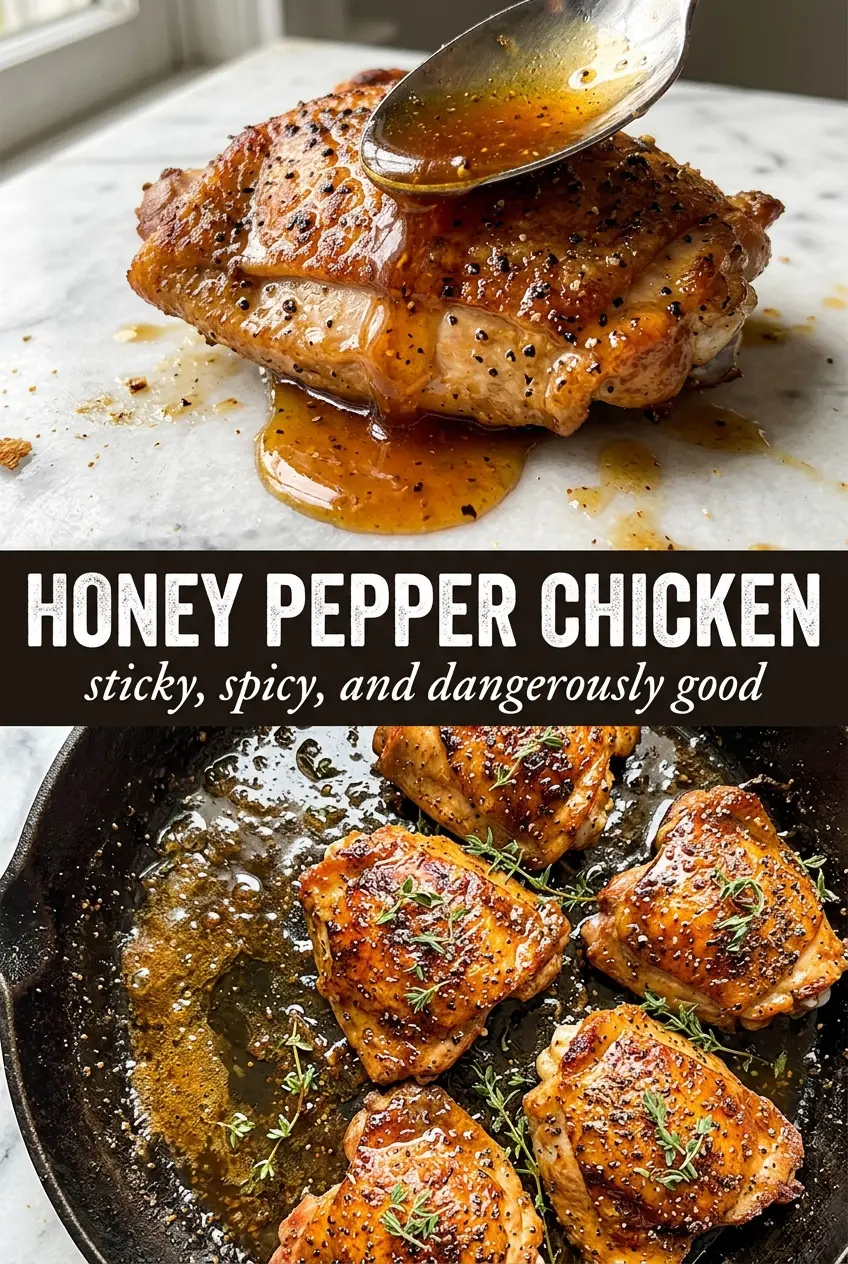
Honey Pepper Chicken
Ingredients
Equipment
Method
- Pound the chicken breasts to an even thickness, then season generously with salt and cracked black pepper for full flavor.
- Heat the olive oil in a skillet over medium-high heat and sear the chicken for 5–6 minutes per side until golden and cooked through; set aside.
- In the same pan, whisk together the honey, soy sauce, apple cider vinegar, brown sugar, cracked black pepper, garlic powder, and cayenne until smooth.
- Bring the sauce to a simmer, then add the cornstarch slurry and stir until thickened, about 2 minutes, until glossy and spoon-coating.
- Return the chicken to the pan and coat it in the honey pepper sauce on all sides until the glaze clings to the surface.
- Serve over mashed potatoes or rice with extra sauce drizzled on top so the glossy glaze pools around the chicken.