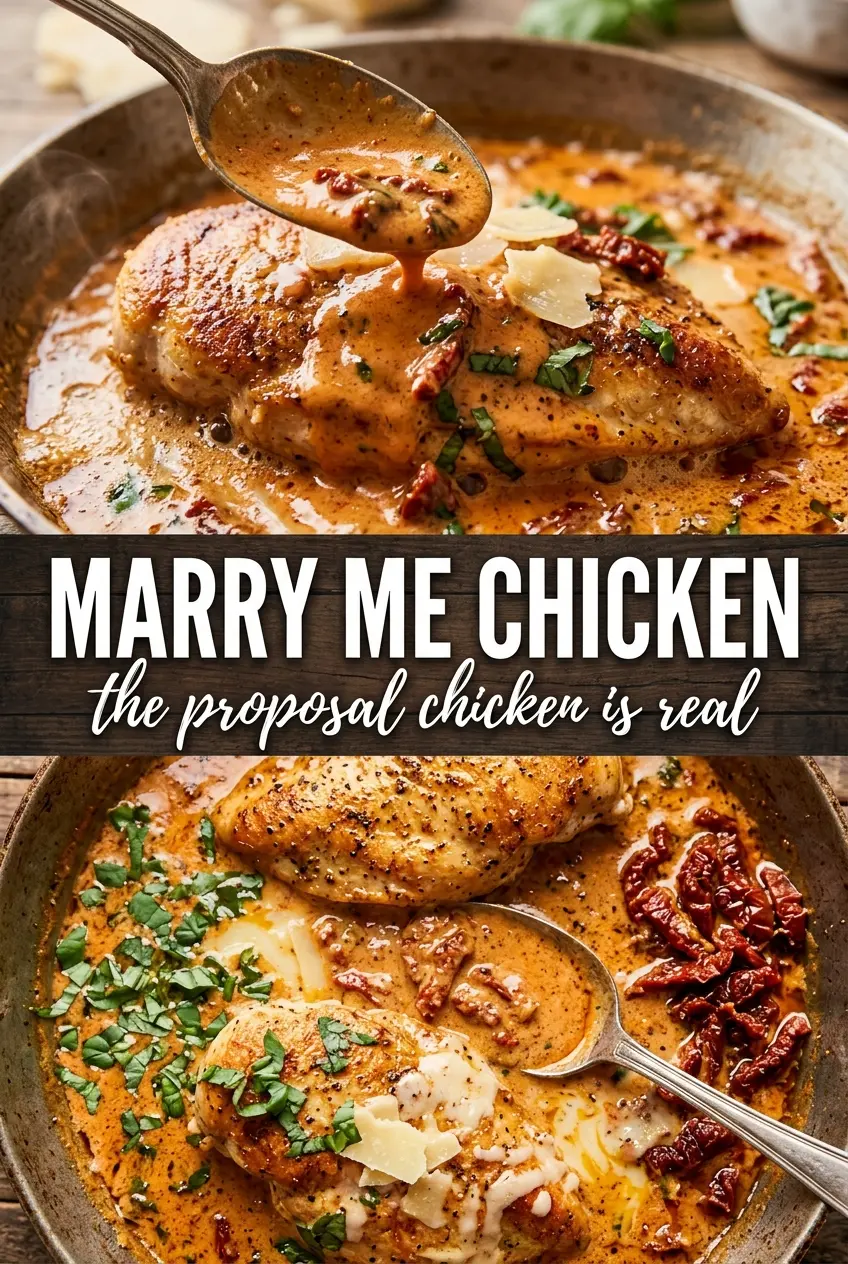
Golden seared chicken breasts in a sun-dried tomato cream sauce earn their reputation fast. The chicken stays juicy, the sauce turns glossy and spoon-coating, and the basil at the end lifts the whole pan so it tastes rich instead of heavy. It’s the kind of dinner that looks like it took more effort than it did, which is exactly why it keeps showing up again and again.
The trick is giving the chicken a hard enough sear to build flavor before the sauce goes in. From there, the garlic and sun-dried tomatoes go into the same pan, so every browned bit gets folded into the cream instead of being left behind. Parmesan thickens the sauce while chicken broth keeps it from turning sticky or overly rich, and a little red pepper flake keeps the sweetness of the tomatoes in check.
Below, I’ve included the part that matters most if you want a sauce that stays silky, plus a few smart swaps for when you need to work with what’s in the fridge. The recipe is straightforward, but a couple of small choices make the difference between good chicken and the version people remember.
The sauce thickened up beautifully and the chicken stayed juicy the whole time. I served it with mashed potatoes, and my husband said it tasted like something from a restaurant.
Creamy Marry Me Chicken with sun-dried tomatoes and basil is the kind of skillet dinner worth keeping close.
The Sear Is What Gives the Sauce Its Depth
The biggest mistake with this dish is rushing the chicken. If the pan isn’t hot enough, the breasts steam instead of sear, and the sauce starts from a pale, flat base. You want a deep golden crust that releases easily from the skillet before you turn the chicken; that’s the flavor you’re building the whole sauce on.
Once the chicken comes out, don’t clean the pan. Those browned bits are the difference between a cream sauce that tastes good and one that tastes like it came from a restaurant. The broth loosens them, the cream pulls everything together, and the Parmesan gives the sauce body without making it gluey.
- Chicken breasts — Boneless, skinless breasts keep the timing simple. If yours are very thick, pound them to an even thickness so the centers don’t lag behind the outside.
- Sun-dried tomatoes in oil — These bring concentrated sweetness and tang. Drain them, but don’t rinse them; a little of that seasoned oil adds more flavor to the pan.
- Heavy cream — This is what gives the sauce its velvet texture. Half-and-half can work in a pinch, but the sauce will be thinner and a little less stable.
- Parmesan — Freshly grated Parmesan melts best and keeps the sauce smooth. Pre-shredded cheese often has anti-caking agents that can make the sauce grainy.
- Chicken broth — Broth balances the richness and helps deglaze the skillet. Use a low-sodium version if your Parmesan is salty.
What Each Ingredient Is Actually Doing in This Recipe

- Primary ingredient (the star) — Quality matters most. Choose the best you can find.
- Cooking medium (oil, butter, or broth) — This carries flavors and prevents dryness.
- Seasonings (salt, pepper, spices, herbs) — Layer flavors so nothing overpowers. Build depth gradually.
- Aromatics (garlic, onion, herbs) — Cook with fat to bloom flavors. Become the foundation.
- Supporting ingredients — Complement the main ingredient without overpowering it.
- Sauce or liquid (if applicable) — Brings flavors together. Balance richness with acid.
- Acid (lemon, vinegar, wine, or other) — Brightens and prevents flat-tasting results.
- Final finish (garnish, glaze, or sauce) — Prevents one-dimensional taste and adds visual appeal.
Building the Sauce Without Breaking It
Getting the Chicken Golden First
Season both sides of the chicken generously, then lay it into hot oil and leave it alone long enough to form a crust. If you try to move it too soon, it’ll cling to the pan and tear instead of browning cleanly. You’re looking for a deep golden color and an internal temperature of 165°F at the thickest point.
Using the Same Pan for the Flavor Base
Garlic and sun-dried tomatoes only need about a minute in the skillet. Any longer and the garlic can scorch, which makes the whole sauce taste bitter. Pour in the broth while the pan is still hot and scrape up the browned bits until the bottom looks clean and the liquid smells savory instead of sharp.
Finishing the Cream Sauce the Right Way
Lower the heat before the cream and Parmesan go in. High heat is what causes creamy sauces to split or turn grainy, especially once cheese is involved. Let the sauce bubble gently until it coats a spoon, then return the chicken and spoon the sauce over the top so it can finish warming without overcooking.
Make It Lighter Without Losing the Character
Swap the heavy cream for evaporated milk or half-and-half if you want a less rich sauce. The texture won’t be quite as lush, but it still turns silky if you keep the heat low and give it time to thicken slowly.
How to Make It Gluten-Free
The chicken itself is naturally gluten-free, so the main thing is checking your broth and Parmesan for hidden additives. Serve it with mashed potatoes, rice, or gluten-free pasta and the dish stays every bit as satisfying.
Turn It Into a Chicken Thigh Dinner
Boneless skinless thighs work beautifully and stay even juicier than breasts. They usually need a few extra minutes in the pan, but they’re more forgiving if your heat runs a little high or your pieces aren’t perfectly even.
Make the Sauce a Touch Spicier
Add another pinch of red pepper flakes or a little cayenne with the cream. That extra heat cuts through the richness and sharpens the tomato flavor without changing the creamy texture.
Storage and Reheating
- Refrigerator: Store leftovers in an airtight container for up to 3 days. The sauce will thicken as it chills.
- Freezer: It freezes, but cream sauces can separate a little after thawing. If you do freeze it, cool it completely first and reheat gently from thawed.
- Reheating: Warm it slowly in a covered skillet over low heat with a splash of broth or cream. Microwaving on high is the fastest way to make the sauce split and the chicken turn dry.
Questions I Get Asked About This Recipe
Marry Me Chicken
Ingredients
Equipment
Method
- Season chicken breasts generously on both sides with salt, pepper, garlic powder, Italian seasoning, and smoked paprika to taste.
- Heat olive oil in a large cast iron skillet over medium-high heat, then sear chicken for 5-6 minutes per side until golden.
- Check the thickest part for doneness; cook until internal temperature reaches 165°F, then remove the chicken to a plate.
- In the same pan, cook garlic and sun-dried tomatoes for 1 minute, stirring until fragrant.
- Pour in chicken broth and deglaze the pan, scraping up the browned bits.
- Stir in heavy cream, Parmesan cheese, dried Italian seasoning, and red pepper flakes.
- Simmer for 4-5 minutes, stirring occasionally, until the sauce thickens and looks glossy.
- Return the chicken to the pan and spoon the sauce over each breast.
- Simmer for 2 more minutes so the chicken heats through and the sauce lightly clings.
- Garnish with fresh basil and serve over pasta or mashed potatoes.