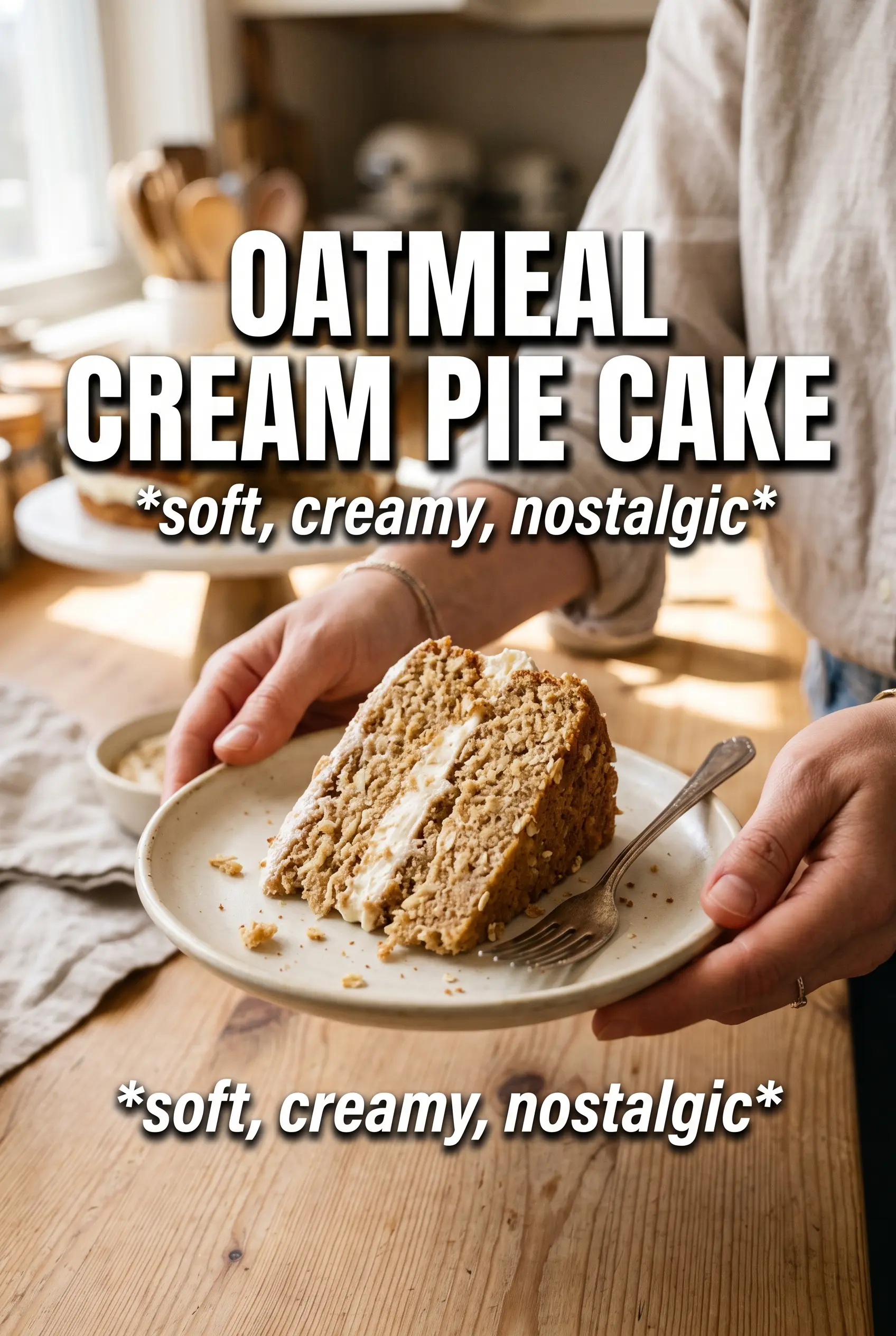
Oatmeal Cream Pie Cake brings the same soft-spiced comfort as the classic snack cake, but in a layer cake that slices cleanly and feels a little more special on the table. The crumb stays tender instead of dry, and the marshmallow cream filling gives each bite that familiar sweet, fluffy center without turning the whole dessert cloying.
The cake layers get their structure from a mix of flour and oats, but the real trick is the sour cream and brown sugar. That combination keeps the crumb moist and gives the cake a deeper, almost caramel note that plays well with cinnamon and nutmeg. The filling is whipped with cream cheese and butter so it holds its shape between the layers and doesn’t squish out the moment you cut into it.
Below, I’ve added the details that matter most: how to keep the cake layers soft, why the filling needs a full whip, and the small changes you can make if you want a stronger spice note or a cleaner finish on the outside.
The cake stayed soft for days and the marshmallow filling whipped up lighter than I expected. I chilled it for 20 minutes before slicing and the layers held together perfectly.
Like this oatmeal cream pie cake? Save it to Pinterest for the days when you want soft spice cake, fluffy marshmallow filling, and a slice that feels nostalgic without being fussy.
The Part That Keeps the Cake Soft Instead of Dry
Oats can make a cake feel hearty, but they can also turn it heavy if the batter is overmixed or the oven runs hot. Here, the oats are folded in with the dry ingredients and the batter is mixed only until the flour disappears, which keeps the crumb tender and even. The sour cream matters just as much as the butter. It adds moisture and a little tang, which keeps the cake from tasting flat against all that brown sugar and spice.
The other thing that matters is pan size. Two 9-inch rounds give you enough surface area for the layers to bake through without the centers staying gummy. If you use deeper pans, the middle can lag behind the edges and the cake will start to dome before it’s fully set. Pull it when the center springs back and a tester comes out with a few moist crumbs, not wet batter.
What Each Ingredient Is Actually Doing in the Cake and Filling
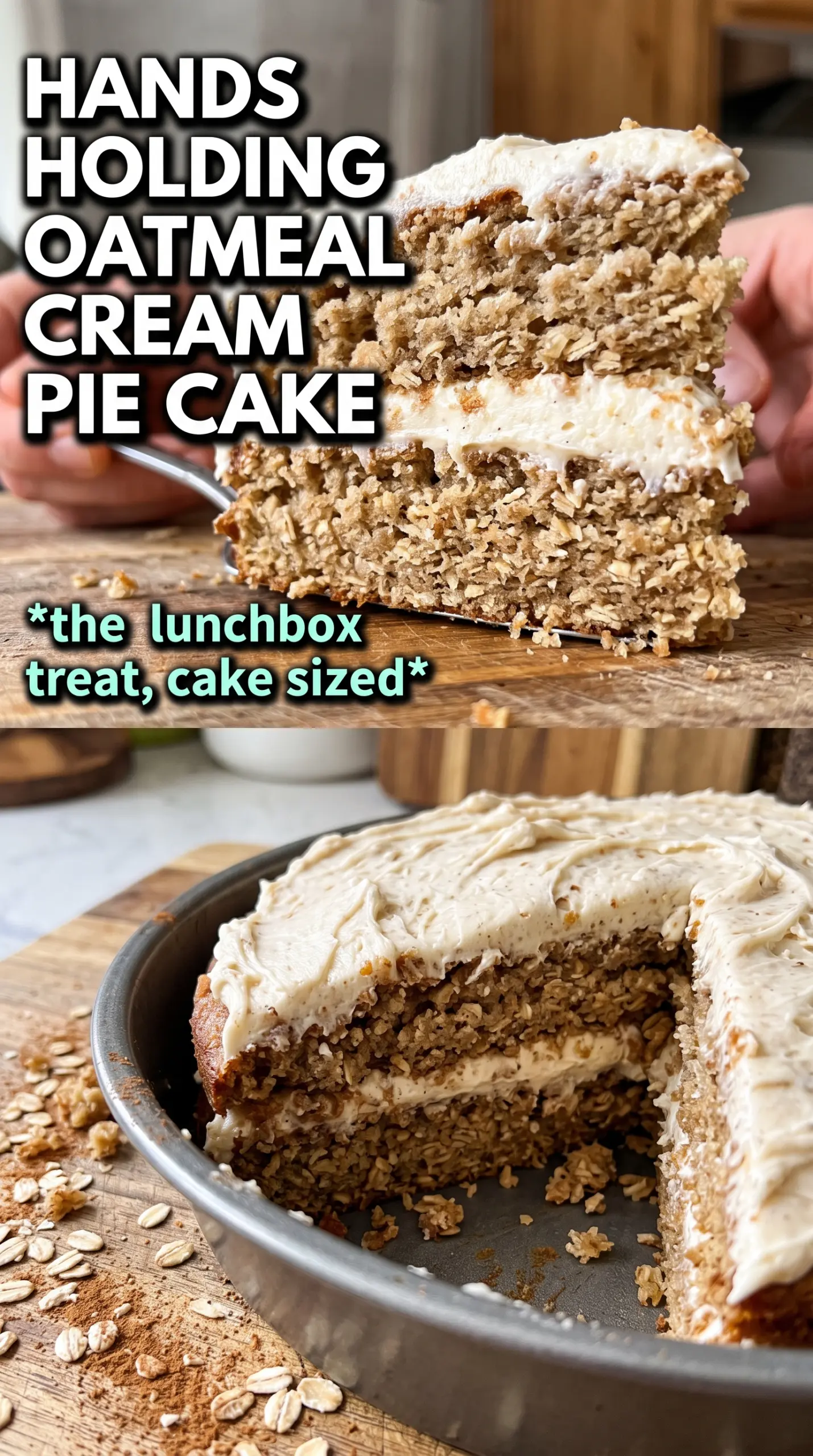
- Rolled oats — These give the cake its oatmeal cookie character without turning it dense. Quick oats will work in a pinch, but they soften more and lose a little of that distinct texture.
- Brown sugar — This is where the cake gets its deep, caramel-like sweetness. Light or dark brown sugar both work; dark brown sugar will push the flavor a little richer and molasses-heavy.
- Sour cream — This keeps the layers plush and helps the cake stay moist for days. Plain Greek yogurt is the best swap if needed, and it should be full-fat for the closest texture.
- Cream cheese in the filling — It steadies the marshmallow creme so the frosting is fluffy but not flimsy. Use it softened all the way through, or you’ll end up with tiny lumps that never beat out.
- Marshmallow creme — This gives the filling that classic pie-cake taste and a light, sticky sweetness. Marshmallow fluff is the right product here; melted marshmallows won’t whip the same way and the filling won’t stay smooth.
Building the Batter and Filling So They Hold Their Shape
Whipping the Butter and Sugar
Start with butter that’s soft enough to press easily but not melting at the edges. Beat it with the brown sugar until it looks paler and a little fluffy; that step traps air and helps the cake rise without feeling heavy. Once the eggs go in, the mixture may look slightly curdled for a moment, but it comes back together once the sour cream and vanilla are added. If it still looks broken, keep mixing before you add the dry ingredients.
Folding in the Dry Ingredients
Add the flour mixture in stages and stop as soon as the batter looks combined. The batter will be thick, and that’s what you want. Overmixing after the flour goes in will make the crumb tight and tough, especially because the oats keep soaking up moisture as the cake sits. Divide it evenly between the pans so both layers bake at the same pace.
Getting the Filling Fluffy Enough to Spread
Beat the butter and cream cheese until there are no streaks left, then add the marshmallow creme, powdered sugar, and vanilla. The frosting should end up light, smooth, and spreadable, not loose or greasy. If it looks soft, chill it for 10 to 15 minutes before assembling. That short rest makes it much easier to spread between the layers without sliding around.
How to Adapt This Cake Without Losing What Makes It Good
Make it gluten-free with a 1:1 baking blend
Use a good 1:1 gluten-free flour blend in place of the all-purpose flour and keep the oats certified gluten-free. The cake will still be soft, but the crumb may be a touch more delicate, so let the layers cool completely before moving them.
Swap in Greek yogurt when you’re out of sour cream
Plain full-fat Greek yogurt gives nearly the same moisture and tang. The cake will bake up a little lighter and less rich, but the texture stays soft and sliceable.
Add a stronger spice note
If you want the cake to lean closer to an oatmeal cookie, add an extra 1/2 teaspoon of cinnamon and a pinch of cloves. That makes the flavor warmer and more bakery-style, but too much clove will crowd out the marshmallow filling, so keep it light.
Storage and Reheating
- Refrigerator: Store covered for up to 4 days. The cake stays moist, and the filling firms up a little, which actually helps it slice neatly.
- Freezer: Freeze individual slices or the unfrosted layers tightly wrapped for up to 2 months. The fully assembled cake can be frozen, but the filling loses some of its fluffy texture after thawing.
- Reheating: Let refrigerated slices sit at room temperature for 20 to 30 minutes before serving. If you warm them too much, the filling softens and the layers can start to slip.