Thick chicken breasts with a crackly Parmesan crust are the kind of dinner that disappears fast because the outside stays crisp while the inside stays juicy. The coating bakes up golden and rugged, with little browned cheese spots that add extra savory crunch. Served with lemon wedges, it lands right in that sweet spot between weeknight practical and company-worthy.
What makes this version work is the panko-to-Parmesan ratio and the rack setup. Panko gives the crust its lift and shatter, while freshly grated Parmesan melts into the crumbs and turns them into a cohesive shell instead of a dusty coating. Baking the chicken on a wire rack lets hot air move around the whole piece, so the bottom doesn’t go soggy before the center is done.
Below, I’ve included the small details that matter most: how to keep the breading from slipping, what to use if you only have pre-grated cheese, and the one step that keeps the crust crisp after baking. Those are the difference between a decent breaded chicken and one you’ll want to make again next week.
The crust actually stayed crunchy all the way through dinner, and pounding the chicken to an even thickness meant it baked evenly instead of drying out at the edges.
Like this Parmesan Crusted Chicken? Save it to Pinterest for a crispy, juicy chicken dinner with a golden Parmesan panko crust.
The Trick to a Crust That Stays Put Instead of Sliding Off
The biggest failure point with breaded chicken is moisture. If the surface is wet, the flour turns paste-like, the egg slips, and the crumbs never get a proper grip. Pounding the breasts to even thickness helps them cook at the same rate, but drying them well before seasoning matters just as much. That first light flour coating gives the egg something to cling to, and pressing the Parmesan-panko mixture firmly onto the chicken helps the crust set into place before it hits the oven.
The rack matters too. If you bake chicken directly on a pan, the underside steams in its own moisture and softens. A wire rack keeps airflow moving, which is what gives you that crisp edge all around instead of a good top and a disappointing bottom.
What the Parmesan, Panko, and Seasoning Are Each Doing Here
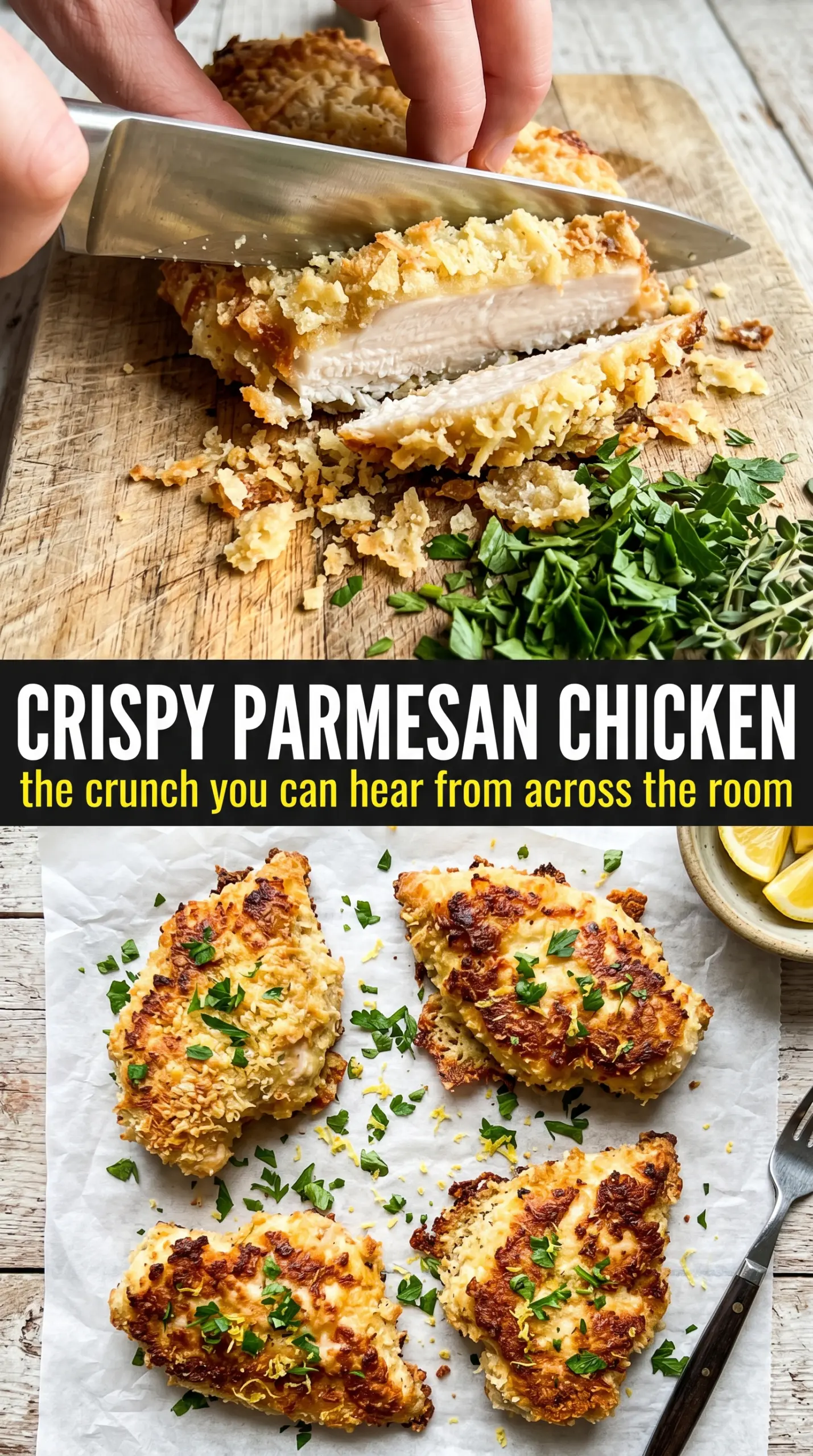
- Chicken breasts — Thick breasts work here because they stay juicy long enough for the crust to turn deeply golden. If one end is much thicker than the other, pound it to an even layer so the thinner edge doesn’t dry out before the center is done.
- Freshly grated Parmesan — This is where the savory, nutty crust comes from. Pre-grated cheese can work in a pinch, but it’s drier and won’t melt into the crumbs as cleanly, so the coating can taste more dusty than crisp.
- Panko breadcrumbs — Regular breadcrumbs make a denser crust; panko gives you the lighter, cracklier texture. If you need a gluten-free swap, use gluten-free panko and keep the rest of the method the same.
- Italian seasoning, garlic powder, and smoked paprika — These season the crust itself, not just the chicken underneath. The paprika adds color and a faint warmth, while the garlic and herbs keep the crust from tasting flat.
- Olive oil — A little oil on top helps the crust brown in the oven and keeps it from baking up dry and chalky. Spray or drizzle it evenly; patchy oil means patchy browning.
Building the Crust in the Right Order
Setting Up the Breading Line
Set out the flour, beaten eggs, and the Parmesan-panko mixture in that order. Keep one hand for dry ingredients and one hand for wet if you want to avoid clumpy fingers and a gummy breading station. The flour layer should be thin, not pasty; shake off the excess before moving to the egg, or the coating gets too thick and can peel during baking.
Pressing on the Coating
Dip the chicken in the egg, then press it firmly into the crumb mixture on both sides and along the edges. Don’t just lay it in the crumbs and flip it once. Use the heel of your hand to really pack the coating on so it bakes into a tight shell. If the crumbs look bare in spots, sprinkle more over those areas and press again.
Baking Until Deep Golden
Place the chicken on the prepared rack and give the tops a light coating of oil. Bake at 425°F until the crust is deep golden and the thickest part hits 165°F, usually 20 to 22 minutes depending on size. If the crust is getting dark too fast before the center is done, tent loosely with foil for the last few minutes. Letting it rest for 3 minutes keeps the juices where they belong instead of running out the second you cut in.
How to Adapt This Chicken for Different Tables and Different Pantries
Gluten-Free Parmesan Crusted Chicken
Swap in gluten-free panko and keep the flour step the same if your flour blend is gluten-free. The crust stays crisp, but some gluten-free crumbs brown a little faster, so watch the last few minutes closely.
Dairy-Free Version
Use a dairy-free Parmesan-style substitute with a firm, dry texture. The coating won’t taste exactly the same, but you’ll still get a savory crust with good crunch as long as the substitute is finely grated and not moist.
Chicken Cutlets for Faster Cooking
Slice the breasts into thinner cutlets or pound them flatter if you want dinner on the table even faster. They’ll bake in less time and brown a little more aggressively, so start checking early to avoid overcooking.
Extra-Herby Crust
Add a tablespoon of finely chopped parsley or basil to the crumb mixture for a greener, fresher crust. Keep the herbs dry and sparse, or they can interfere with browning and make the coating spotty instead of crisp.
Storage and Reheating
- Refrigerator: Store leftovers in an airtight container for up to 3 days. The crust softens a bit in the fridge, but the flavor stays strong.
- Freezer: Freeze after baking if needed, wrapped well and stored in a freezer-safe container for up to 2 months. The crust won’t be quite as shattery after thawing, but it still holds up better than most breaded chicken.
- Reheating: Reheat on a wire rack in a 375°F oven until hot and crisp again, usually 10 to 15 minutes. The mistake to avoid is microwaving, which turns the crust soft and the chicken tough at the edges.
Questions I Get Asked About This Recipe
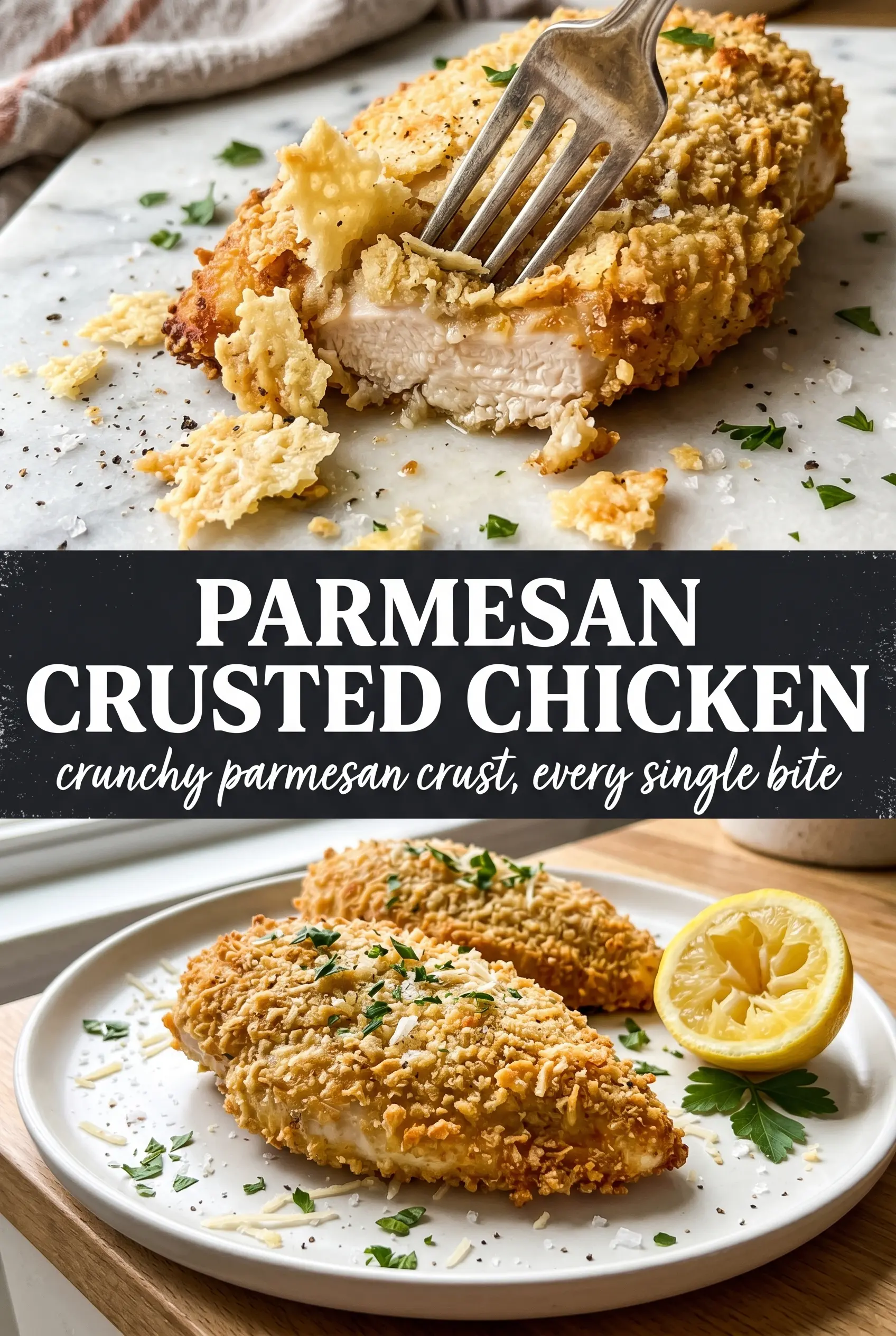
Parmesan Crusted Chicken
Ingredients
Equipment
Method
- Preheat the oven to 425°F and line a baking sheet with a wire rack; spray the rack with cooking spray for easy release.
- Season the chicken breasts with salt, pepper, and garlic powder, then set up a three-station breading line with flour, beaten eggs, and the panko-Parmesan mixture.
- Mix the panko breadcrumbs with Parmesan cheese, Italian seasoning, garlic powder, and smoked paprika until evenly combined.
- Dredge each chicken breast in the all-purpose flour, shaking off excess for better adhesion.
- Dip the floured chicken into the beaten eggs so the crust sticks evenly.
- Press the chicken firmly into the Parmesan panko, coating all sides so the crust bakes up crisp and golden.
- Drizzle or spray the olive oil over the breaded chicken and place it on the prepared rack so hot air browns the crust.
- Bake at 425°F for 20-22 minutes until the crust is deep golden and the internal temperature reaches 165°F, with visible crackly cheese and crisp edges.
- Rest the chicken for 3 minutes to let juices settle, keeping the crust crisp.
- Garnish with fresh parsley and serve with lemon wedges for bright flavor.