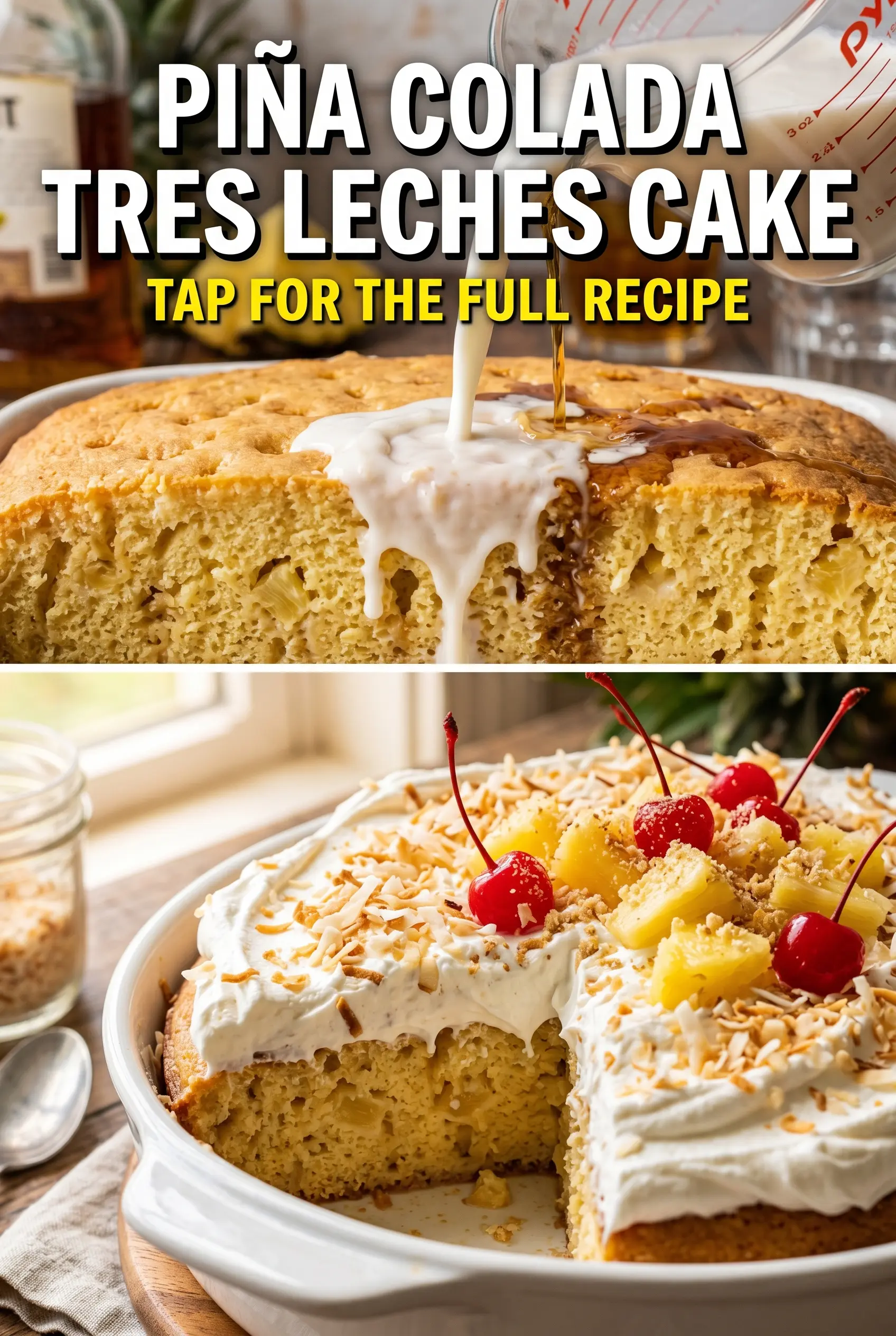
Piña colada tres leches cake has that rare kind of texture that keeps people coming back for a second slice: a fluffy vanilla-coconut sponge that drinks up the milk soak without turning dense, then finishes with a cold cloud of whipped cream, toasted coconut, and bright pineapple on top. Every bite tastes creamy, tropical, and clean, not heavy or cloying.
What makes this version work is the balance. The cake itself starts with separated eggs, so the whites can be whipped and folded in for lift, which gives the crumb enough structure to hold all that soak. Coconut milk goes into the batter for flavor, but not so much that it weighs the cake down. The milk mixture uses sweetened condensed milk, evaporated milk, and either rum or pineapple juice, so you get that classic piña colada feel without the cake tasting like a cocktail gone sideways.
The details matter here: a cooled cake absorbs the tres leches mixture more evenly, and a long chill gives the crumb time to settle into that signature soft, spoonable texture. The notes below cover the one step that keeps the cake from collapsing, plus a few ways to adapt it for different tables.
The cake soaked up the milk mixture perfectly and stayed light instead of soggy. I used pineapple juice instead of rum, and the coconut topping with the whipped cream made it taste like a piña colada in cake form.
Save this piña colada tres leches cake for the next time you want a chilled dessert with coconut, pineapple, and a soft soak that sets up beautifully overnight.
The Trick to Keeping the Coconut Sponge Light After the Soak
The most common mistake with tres leches cake is baking a cake that’s already too heavy before the milk goes in. Once that happens, the soak sits on top instead of disappearing into the crumb, and the whole thing turns leaden. Separating the eggs solves that problem because the whipped whites give the batter lift without needing extra leavening.
Another thing that matters here is the bake itself. You want the cake set and springy, not deeply browned and dry at the edges. A dry cake can absorb a lot of liquid, but it loses the soft, custardy texture that makes tres leches worth making in the first place. A modest amount of coconut milk in the batter adds flavor without throwing off the structure.
- Egg whites — Whipping them to stiff peaks is what gives the cake its airy lift. Fold them in gently and stop as soon as you stop seeing streaks.
- Coconut milk — Use canned coconut milk for the best flavor. The carton version is thinner and won’t taste as rich.
- Rum or pineapple juice — Rum gives a more grown-up, piña colada edge. Pineapple juice keeps it family-friendly and pushes the tropical flavor forward.
- Sweetened condensed milk — This is what gives the soak its body and sweetness. There isn’t a real substitute that behaves the same way.
What Each Ingredient Is Actually Doing in This Cake
Every part of this cake has a job, and the best results come from respecting that. The flour gives the cake enough structure to hold the soak, while the eggs divide the work between richness and volume. Coconut milk flavors the sponge from the inside, which is why the cake tastes like more than just vanilla once it’s chilled.
The topping matters too. Fresh whipped cream keeps the finish light, which is important because the cake underneath is already rich. Toasted coconut flakes add crunch and a deeper coconut flavor, and the pineapple chunks cut through the sweetness with a little juiciness. If you use canned pineapple, drain it well or the top will weep.
- All-purpose flour — Gives you a tender but stable crumb. Cake flour will make it softer, but it can also make the cake a little too delicate once soaked.
- Heavy cream — Whips into a topping that holds its shape in the fridge. Don’t swap in milk or half-and-half; they won’t set the same way.
- Powdered sugar — Sweetens the whipped cream without grittiness. Granulated sugar can work in a pinch, but it takes longer to dissolve.
- Toasted coconut flakes — Toast them until the edges are golden and fragrant, then cool completely before topping. Hot coconut softens fast against the cream.
Building the Cake So It Absorbs Every Drop Without Falling Apart
Whipping the eggs for structure
Start by beating the yolks and sugar until they turn pale and thick enough to leave a ribbon for a second or two. That step builds the base of the cake and helps it bake up tender instead of flat. Once the flour goes in, fold just until combined, then stop. Overmixing here knocks out the air you just worked in, and the cake loses the openness it needs for the soak.
Folding in the whites
The whipped egg whites should look glossy and hold firm peaks that bend only slightly at the tips. Fold them in with a light hand and scrape from the bottom of the bowl so the batter stays even. If you stir aggressively, the whites deflate and the cake bakes up tight. You want the batter airy enough that it looks almost too light for a 9×13 pan.
Soaking and chilling
Cool the cake before piercing it all over with a fork, then pour the milk mixture slowly so it has time to disappear into the holes. If you pour too fast, the liquid pools and the top gets soggy before the middle catches up. Refrigerate for at least 2 hours, but longer is better if you want clean slices and the fullest texture. The cake should feel chilled and plush, not wet on the surface.
Three Ways to Make It Fit the Table in Front of You
Pineapple Juice Instead of Rum
Use pineapple juice in the soak for a fully alcohol-free cake. The flavor turns brighter and sweeter, with a little less depth than rum, but it still reads like a piña colada once the coconut and pineapple toppings go on.
Dairy-Free Version
Swap in full-fat coconut cream for the whipped topping and use a dairy-free sweetened condensed milk alternative if you can find one. The cake base still uses eggs, so the texture stays close to the original, but the finished dessert will taste a little more coconut-forward and slightly less custardy.
Make It Ahead for a Party
Bake and soak the cake a day ahead, then add the whipped cream, coconut, and pineapple a few hours before serving. That keeps the topping fresh and prevents the fruit from bleeding into the cream. Tres leches cake actually improves with a long chill, so this is a smart make-ahead dessert.
Gluten-Free Swap
A 1:1 gluten-free baking blend can work here as long as it contains xanthan gum or a similar binder. The crumb will be a little more delicate, so let the cake cool completely before soaking and slicing. That gives it time to set up instead of crumbling at the first forkful.
Storage and Reheating
- Refrigerator: Store covered for up to 4 days. The cake gets softer each day, but it stays sliceable and the flavor deepens.
- Freezer: Freeze the baked, unsoaked cake only. Wrapped well, it keeps for up to 2 months; thaw in the fridge before adding the milk mixture and topping.
- Reheating: Don’t reheat the finished cake. Tres leches is meant to be served cold, and heat will melt the topping and make the crumb collapse.
Questions I Get Asked About This Recipe
Piña Colada Tres Leches Cake
Ingredients
Equipment
Method
- Preheat the oven to 350°F and grease a 9x13 baking dish. Ensure the dish is evenly coated so the cake releases cleanly.
- Whisk together all-purpose flour, baking powder, and salt. Mix until the dry ingredients look uniform in color.
- Beat the egg yolks with granulated sugar until pale, about 3 minutes. The mixture should thicken slightly and look lighter.
- Add coconut milk and vanilla extract to the yolk mixture. Stir until smooth and glossy.
- Fold the flour mixture into the yolks. Stop when no dry streaks remain to keep the batter airy.
- Beat the egg whites until stiff peaks form and gently fold into the batter. Fold carefully so the foam doesn’t collapse.
- Pour the batter into the greased 9x13 baking dish. Tap the pan lightly to level the top.
- Bake at 350°F for 30 minutes. The cake is done when the center springs back and a toothpick comes out mostly clean.
- Combine sweetened condensed milk, evaporated milk, and rum or pineapple juice. Whisk until the mixture is fully blended and pourable.
- Pierce the cooled cake all over with a fork. Make many holes so the milk mixture distributes evenly.
- Pour the milk mixture evenly over the top of the pierced cake. Add slowly so it soaks down without pooling at the edges.
- Refrigerate for at least 2 hours. Chill until the cake looks set and the liquid is absorbed.
- Whip heavy cream with powdered sugar until stiff peaks form. Stop when trails hold their shape firmly.
- Spread or pipe the whipped cream onto the cooled soaked cake. Cover the surface evenly for a neat finish.
- Top with toasted coconut flakes and fresh pineapple chunks. Add the toppings right before serving or keep chilled briefly.
- Serve chilled. Slice cleanly after the cake is fully cold.