Red, white, and blue fruit kabobs disappear fast because they hit the sweet spot between playful and practical: bright strawberries, juicy blueberries, and a creamy white center that makes every bite feel like a little pattern instead of a random pile of fruit. They look festive on a tray, but what keeps people reaching for them is the clean, crisp snap of cold fruit and the easy-to-eat size.
The trick is keeping the fruit dry and choosing pieces that match in size. Strawberries that are too large make the skewer unstable, and blueberries that are soft or leaking will stain the marshmallows before the tray even hits the table. I like using large marshmallows because they hold their shape and give the kabobs that striped, flag-like look. If you want a version that still looks sharp after sitting out for a bit, there’s a specific way to build and chill them that matters more than people think.
The berries stayed bright and the marshmallows didn’t get soggy, even after sitting on the table for a while. I used grapes on a few skewers too, and they held up perfectly.
Pin these red, white, and blue fruit kabobs for an easy patriotic appetizer that looks neat, stays fresh, and takes just 20 minutes to assemble.
The Small Detail That Keeps Fruit Kabobs Looking Neat
The part that usually goes wrong with fruit kabobs is size mismatch. A huge strawberry next to a tiny blueberry makes the skewer tilt, and once one piece starts sliding, the whole pattern looks sloppy. Cutting the strawberries in half when they’re large gives you a flatter surface and helps them sit close to the marshmallow instead of wobbling around it.
There’s another reason these stay attractive longer than most fruit platters: dry fruit holds its shape better. Rinse the berries and blueberries, then dry them well before you start threading. Extra moisture doesn’t just make the skewers slippery; it also makes the marshmallows tacky and dulls that clean red-white-blue contrast that makes the tray pop.
What Each Ingredient Is Actually Doing in This Recipe
- Primary ingredient (the star) — Quality matters most. Choose the best you can find.
- Cooking medium (oil, butter, or broth) — This carries flavors and prevents dryness.
- Seasonings (salt, pepper, spices, herbs) — Layer flavors so nothing overpowers. Build depth gradually.
- Aromatics (garlic, onion, herbs) — Cook with fat to bloom flavors. Become the foundation.
- Supporting ingredients — Complement the main ingredient without overpowering it.
- Sauce or liquid (if applicable) — Brings flavors together. Balance richness with acid.
- Acid (lemon, vinegar, wine, or other) — Brightens and prevents flat-tasting results.
- Final finish (garnish, glaze, or sauce) — Prevents one-dimensional taste and adds visual appeal.
What Each Ingredient Is Doing On The Skewer
- Strawberries — These bring the red color and the best flavor payoff, but they need to be firm. Soft berries slide around on the skewer and release juice onto the marshmallows, so use berries that still feel snug and fresh. If your strawberries are oversized, halve them so the cut side faces inward for a more stable skewer.
- Blueberries — Blueberries act like the anchor between the bigger pieces because they’re small, round, and easy to repeat. Buy the plumpest ones you can find, since shriveled berries look dry once they’re chilled. If blueberries aren’t available, black grapes can work, but they change the look from bright patriotic to darker and less flag-like.
- Large marshmallows or white grapes — Marshmallows give the soft white contrast and the most classic patriotic look. Grapes are the better choice if you want something less sweet and a little sturdier for sitting out on a buffet. Marshmallows can pick up moisture if they’re assembled too far ahead, so grapes are the smarter swap for a longer party window.
- Wooden skewers or bamboo picks — Use smooth skewers that are long enough to hold at least five to seven pieces without crowding. Short picks make the design cramped and harder to eat. If the tips feel sharp, break off the very end or use shorter appetizer picks for kids.
Threading The Pattern So The Kabobs Stay Balanced
Starting With The Right End Pieces
Begin with a blueberry or strawberry at the pointed end of the skewer so the first piece helps anchor the rest. Push each piece just until it sits snugly against the one before it; if you jam the fruit too hard, the marshmallows split and the strawberries start leaking juice. The pattern should look tight, not compressed.
Building The Red-White-Blue Repeat
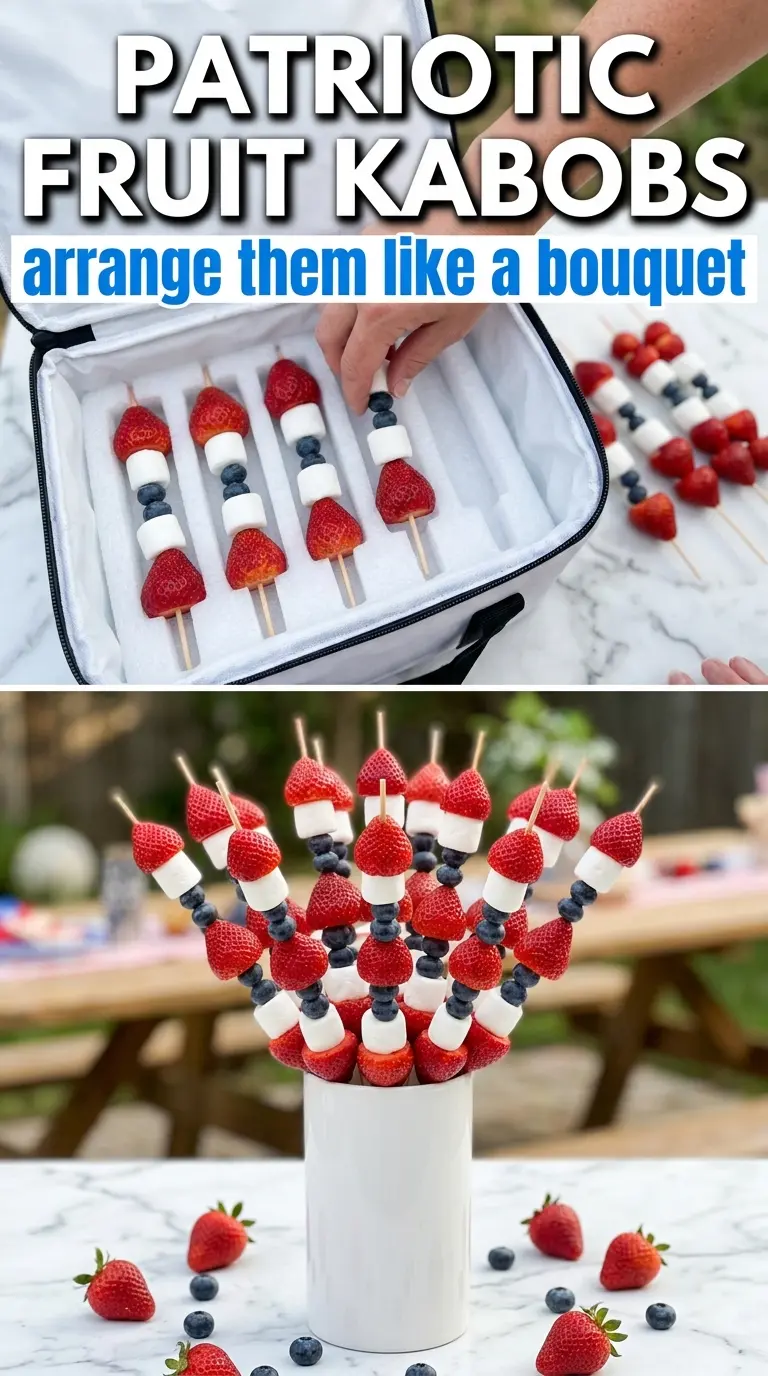
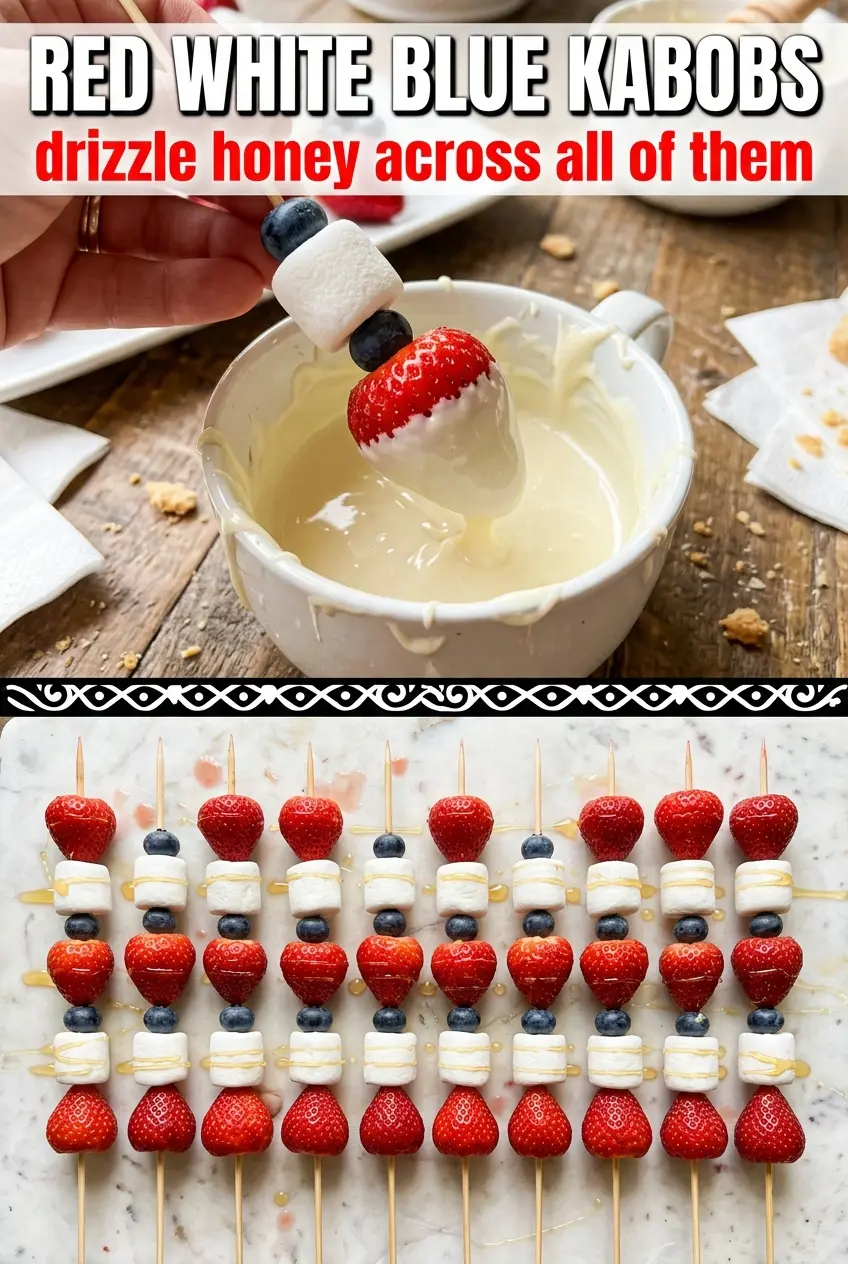
Thread the skewer in a repeating blueberry, marshmallow, strawberry order for the cleanest patriotic look. Keep the pieces consistent from kabob to kabob so the platter looks intentional instead of improvised. If your strawberries are especially large, use one less repeat per skewer rather than forcing the fruit to crowd together.
Chilling Without Flattening The Texture
Lay the finished kabobs in a single layer on a tray and chill them just until serving time. Two hours is the sweet spot; any longer and the marshmallows start to sweat a little, especially in humid weather. If you’re making them ahead, cover the tray loosely so condensation doesn’t bead on top of the fruit.
How To Adapt These Kabobs For Different Crowds
Swap Marshmallows For Grapes For A Less-Sweet Version
If you want these to lean more appetizer than dessert, use white grapes instead of marshmallows. The kabobs lose that soft, pillowy look, but they hold up longer and taste fresher on a hot day. Use seedless grapes and dry them well so they don’t slide on the skewer.
Make Them Gluten-Free And Kid-Friendly Without Any Special Effort
The recipe is naturally gluten-free as written, which makes it an easy party option when you need something everyone can grab. For younger kids, use shorter bamboo picks or even cocktail picks so the fruit is easier to handle and the kabobs don’t feel oversized.
Turn The Kabobs Into A Larger Dessert Tray
For a bigger spread, make the kabobs and fan them around a bowl of yogurt dip, whipped cream, or a light fruit dip. The fruit stays the star, but the dip makes the platter feel more like dessert service than a simple snack tray. Keep the dip separate until serving so the fruit doesn’t weep onto the platter.
Use Other Berries When Strawberries Are Expensive
Raspberries can replace some of the strawberries, but they’re softer and need gentler handling. They work best when tucked between sturdier pieces rather than used alone. The kabobs will look a little more rustic, and they’re best assembled close to serving time.
Storage And Serving Window
- Refrigerator: Assemble up to 2 hours ahead. After that, the marshmallows can get sticky and the berries start to soften.
- Freezer: Don’t freeze these. The texture of the fruit changes too much and the marshmallows collapse when thawed.
- Serving: Keep them chilled until the last minute, then set them out on a cold platter. If the room is hot, replace the tray from the fridge in batches so the kabobs stay fresh-looking.
Answers To The Questions Worth Asking
Red, White & Blue Fruit Kabobs
Ingredients
Equipment
Method
- Wash and prep all fruit by hulling the strawberries and leaving the blueberries whole.
- Halve any large strawberries so each piece threads neatly and looks plump.
- Thread each skewer in a repeating pattern of 1 blueberry, 1 marshmallow, and 1 strawberry.
- Repeat the pattern 2–3 times per skewer depending on skewer length so the sequence stays uniform and patriotic.
- Line completed skewers on a serving platter or tray in a neat row for an even presentation.
- Refrigerate the kabobs until ready to serve, up to 2 hours ahead.
- Serve chilled as a grab-and-go party appetizer or dessert.