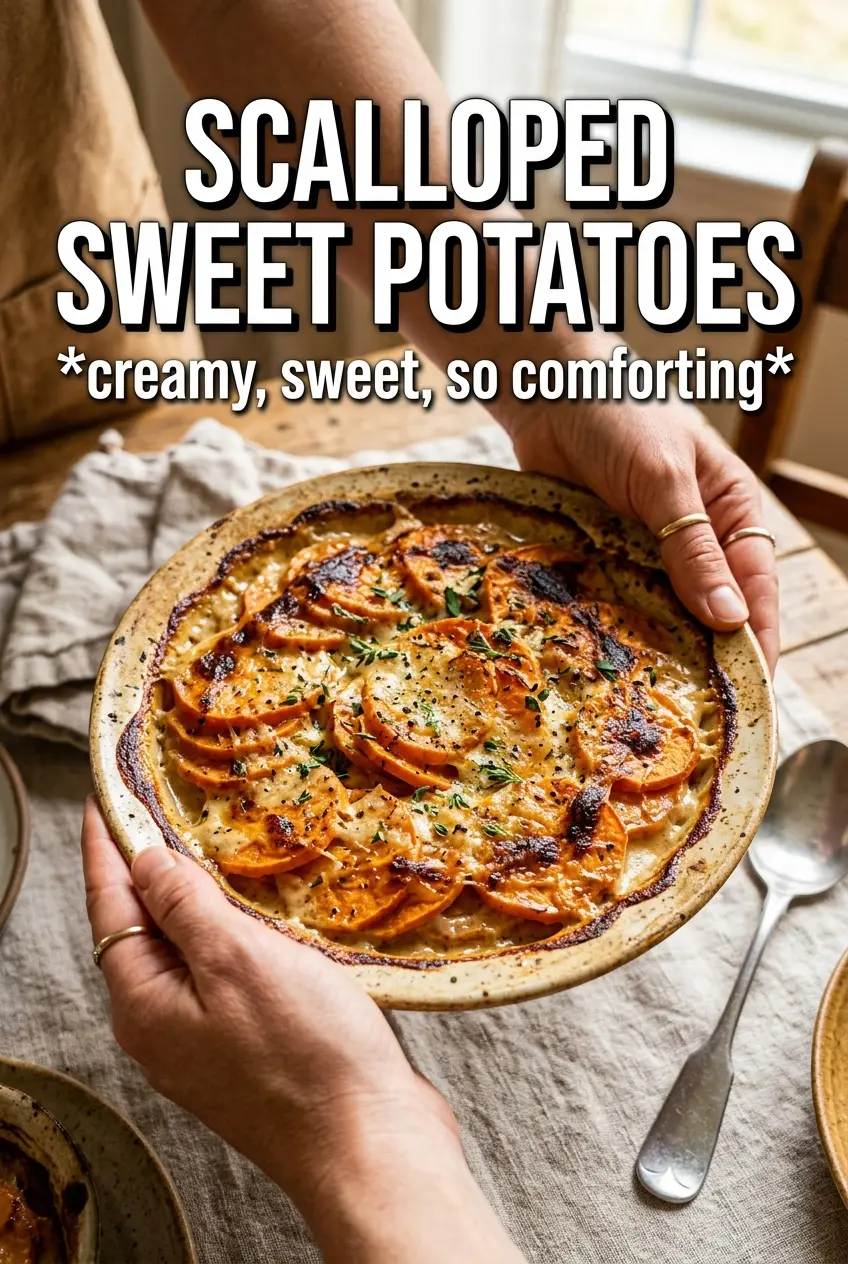
Scalloped sweet potatoes come out silky in the middle, browned and bubbling on top, and just sweet enough to feel special without tipping into dessert. The thin slices soften in the cream and maple mixture until they hold together in tender layers, while the Gruyere and parmesan form a salty crust that cracks a little when you spoon through it.
What makes this version work is the balance. Sweet potatoes bring enough natural sweetness on their own, so the maple syrup is there to round things out, not overpower them. The garlic and thyme keep the dish grounded, and a little cinnamon and nutmeg give it that warm, baked-in depth that makes the whole pan taste layered instead of one-note. If you’ve ever had scalloped potatoes turn watery or bland, this recipe solves both problems with a richer base and a tighter bake.
You’ll also find the little details that matter most here: how thin the slices need to be, why the pan gets covered first, and when to pull off the foil so the cheese browns without drying out the sweet potatoes underneath.
The layers turned perfectly tender and the top got that crisp, cheesy finish without the edges drying out. I loved the little hint of maple with the thyme, and even my brother who usually skips sweet potato dishes went back for seconds.
Save these scalloped sweet potatoes for the nights when you want a golden Gruyere crust, tender layers, and that maple-thyme finish that makes the whole dish stand out.
The Part Most People Get Wrong About Scalloped Sweet Potatoes
Scalloped sweet potatoes fail when the slices are cut unevenly or the pan is rushed out of the oven before the center has finished softening. Sweet potatoes need a little more patience than white potatoes because they start dense and lean sweet, which means the cream has to stay in contact with every slice long enough to do its work. If the layers are too thick, the top will brown before the bottom turns tender.
That’s why the overlapping rows matter. They create a tighter stack so the cream mixture slips between the slices instead of pooling at the bottom of the dish. Covering the pan for the first stretch traps heat and steam, which gets the potatoes moving toward tenderness before the cheese goes on. The uncovered finish is there for color, not for cooking the sweet potatoes from scratch.
What the Cream, Maple, and Cheese Are Each Doing Here
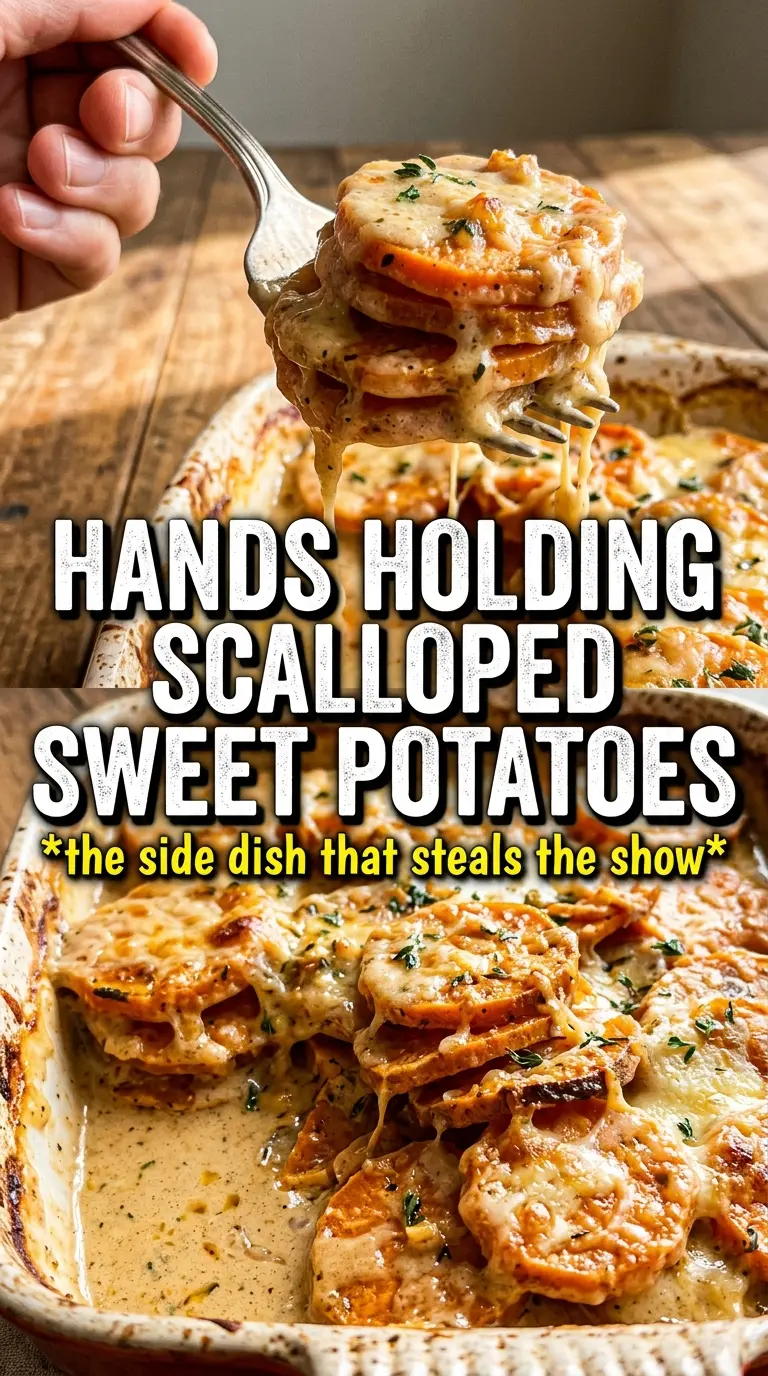
- Sweet potatoes — Look for medium or large potatoes with smooth flesh and no soft spots. Thin, even slices matter more than the exact shape of the potato, and a mandoline makes the job faster if you have one. Aim for slices about 1/8 inch thick so they cook through at the same pace.
- Heavy cream and whole milk — The cream gives the dish body, while the milk keeps it from feeling heavy or greasy. You can swap in all cream if you want a richer pan, but don’t use low-fat milk alone or the sauce will taste thin and can separate more easily in the oven.
- Maple syrup — This adds a gentle sweetness that makes the sweet potatoes taste deeper, not candy-like. Real maple syrup matters here because it brings a round, woodsy note that blends with the thyme and cheese. Honey works in a pinch, but it shifts the flavor in a sharper direction.
- Gruyere and parmesan — Gruyere melts into a stretchy, nutty top, and parmesan adds the salty edge and browning power. Pre-shredded cheese works, but freshly grated melts cleaner and gives you a smoother crust. If you skip one, keep the Gruyere; it does the heavy lifting for texture.
- Thyme, cinnamon, and nutmeg — These are what keep the dish from tasting flat. Thyme cuts through the richness, while the spices echo the natural sweetness of the potatoes without turning the dish into dessert. Fresh thyme is best, but dried thyme will work if you use less.
Building the Layers So the Center Cooks Before the Top Burns
Whisking the Custard Base
Start by whisking the cream, milk, garlic, maple syrup, thyme, cinnamon, nutmeg, salt, and pepper until the mixture looks even and the maple has dissolved. The garlic should be distributed, not clumped, or it can brown in one spot and taste harsh later. This base is what seasons every layer, so taste it before it goes over the potatoes; it should lean savory with just a faint sweetness.
Stacking the Potatoes Tightly
Lay the slices in overlapping rows across the baking dish, keeping the layers snug but not jammed in so hard that the liquid can’t move through. If the slices are all different thicknesses, the thin ones will overcook and the thick ones will stay firm. Pour the cream mixture evenly over the top and gently tap the dish on the counter so the liquid settles into the gaps.
Covered Bake First, Cheese Later
Tight foil is what gets you tender sweet potatoes without scorching the top. Bake covered until the slices are starting to yield when pierced with a knife, then uncover and add the Gruyere and parmesan. If you add the cheese too soon, it can trap steam and slide off before the potatoes have finished cooking.
The Golden Finish and Rest
Once the foil comes off, the top should bubble and turn deeply golden at the edges. The center is done when a knife slips through without resistance and the liquid around the sides looks slightly thickened, not watery. Let the dish rest for 10 minutes before serving so the cream settles and the layers hold together instead of collapsing into a loose casserole.
Ways to Adjust This Dish Without Losing What Makes It Work
Dairy-Free Version
Use full-fat canned coconut milk in place of the cream and milk, and swap in a good melting dairy-free cheese if you want a browned top. The dish will taste a little more coconut-forward and less classic, but the texture stays rich as long as you keep the heat gentle and don’t rush the covered bake.
More Savory, Less Sweet
Cut the maple syrup in half and add a little more black pepper or a pinch of cayenne. That keeps the dish focused on the cheese and thyme, which is the direction I take when I’m serving this next to roast chicken or pork and want the side dish to lean savory.
Gluten-Free by Default
This recipe is naturally gluten-free as written, so long as your cheese and spices are free of additives. It’s a good example of a dish where the technique matters more than the ingredient list, which means you don’t have to change anything to keep it celiac-friendly.
Make-Ahead for a Holiday Table
Assemble the dish up to the point of baking, cover it, and refrigerate it for several hours or overnight. Let it sit at room temperature while the oven preheats, then add a few extra minutes to the covered bake since a cold dish takes longer to heat through in the center.
Storage and Reheating
- Refrigerator: Store covered for up to 4 days. The texture firms up as it chills, but the flavor stays rich.
- Freezer: It freezes, but the cream can separate a bit when thawed. If you freeze it, cool it completely, wrap it well, and thaw overnight in the fridge before reheating.
- Reheating: Warm in a 325F oven, covered with foil, until hot in the center. A microwave will work for small portions, but it softens the top and can make the edges greasy instead of crisp.
Questions I Get Asked About This Recipe
Scalloped Sweet Potatoes
Ingredients
Equipment
Method
- Preheat the oven to 375F and butter a 9x13 baking dish with the unsalted butter. Lightly coat the base and corners so the potato layers release cleanly.
- Whisk the heavy cream, whole milk, minced garlic, maple syrup, fresh thyme, cinnamon, nutmeg, salt, and pepper in a bowl until smooth. The mixture should look evenly speckled with thyme.
- Layer the sweet potato slices in overlapping rows in the baking dish. Aim for an even thickness so they cook tender at the same pace.
- Pour the cream mixture over the sweet potatoes evenly, making sure most slices are moistened. Spoon any pooling liquid back over dry spots.
- Cover tightly with foil and bake at 375F for 40 minutes. The edges should be steaming and the top should look set but not browned.
- Uncover and scatter the Gruyere and parmesan over the top. The cheese should form a thick layer that will melt into a crust.
- Bake uncovered for 20-25 more minutes at 375F until the sweet potatoes are completely tender and the topping is golden and bubbly. Look for browned spots and bubbling around the edges.
- Rest the scalloped sweet potatoes for 10 minutes before serving. This sets the creamy layer so it slices neatly and stays together.