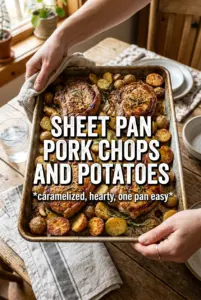
Golden pork chops, caramelized potatoes, and tender green beans all finishing on one pan is the kind of dinner that earns a permanent place in the rotation. The chops stay juicy because they get a quick sear before they ever go into the oven, and the potatoes pick up enough heat early on to develop those crisp edges that make sheet pan dinners worth making in the first place. The garlic butter goes over everything at the end, so the herbs stay fragrant instead of fading into the background.
The part that makes this method work is timing. Potatoes need a head start, pork chops need a hot pan for color, and the green beans only need enough time to soften and catch the butter without turning limp. That order keeps every part of the dinner at its best instead of forcing one ingredient to overcook while another catches up.
You’ll find the timing cues, the best way to avoid dry pork, and a few smart swaps below so this dinner comes out balanced, not rushed. Once you’ve made it once, the pattern is easy to repeat with whatever sturdy vegetable you have on hand.
The potatoes got those crisp edges after the first roast, and the pork came out juicy at 145 without drying out. The garlic butter tied everything together and my husband went back for seconds before I even sat down.
Save these sheet pan pork chops and potatoes for the night you want crisp potatoes, juicy pork, and a garlic butter finish without juggling a pile of pans.
The Trick to Juicy Pork Chops and Crisp Potatoes on One Pan
The mistake most people make with sheet pan pork chops is treating everything like it can go in at once. Potatoes need time to brown and soften; pork chops need high heat for color, but not so long that they dry out; green beans need just enough oven time to lose their raw snap. Split the job up and the whole pan tastes more deliberate.
That first 15-minute roast on the potatoes matters more than it looks. It gives them a head start so they finish with browned edges instead of pale, soft centers. The sear on the pork chops does the same thing for flavor, and it also protects the meat a little by building a crust before the oven finishes the cooking.
- Potatoes — Baby potatoes hold their shape and get those caramelized cut sides fast. Halving them gives you more surface area, which is where the browning happens.
- Bone-in pork chops — The bone helps buffer the meat from overcooking and gives you a little more forgiveness than boneless chops. One-inch-thick chops are the sweet spot here.
- Green beans — They go in late because they only need to soften and pick up the garlic butter. Thicker beans hold up best.
- Smoked paprika and dried herbs — These build a savory crust on the pork and keep the whole pan from tasting flat. Fresh herbs can work, but they’ll be more delicate and should be added at the end.
What Each Ingredient Is Actually Doing in This Pan Dinner
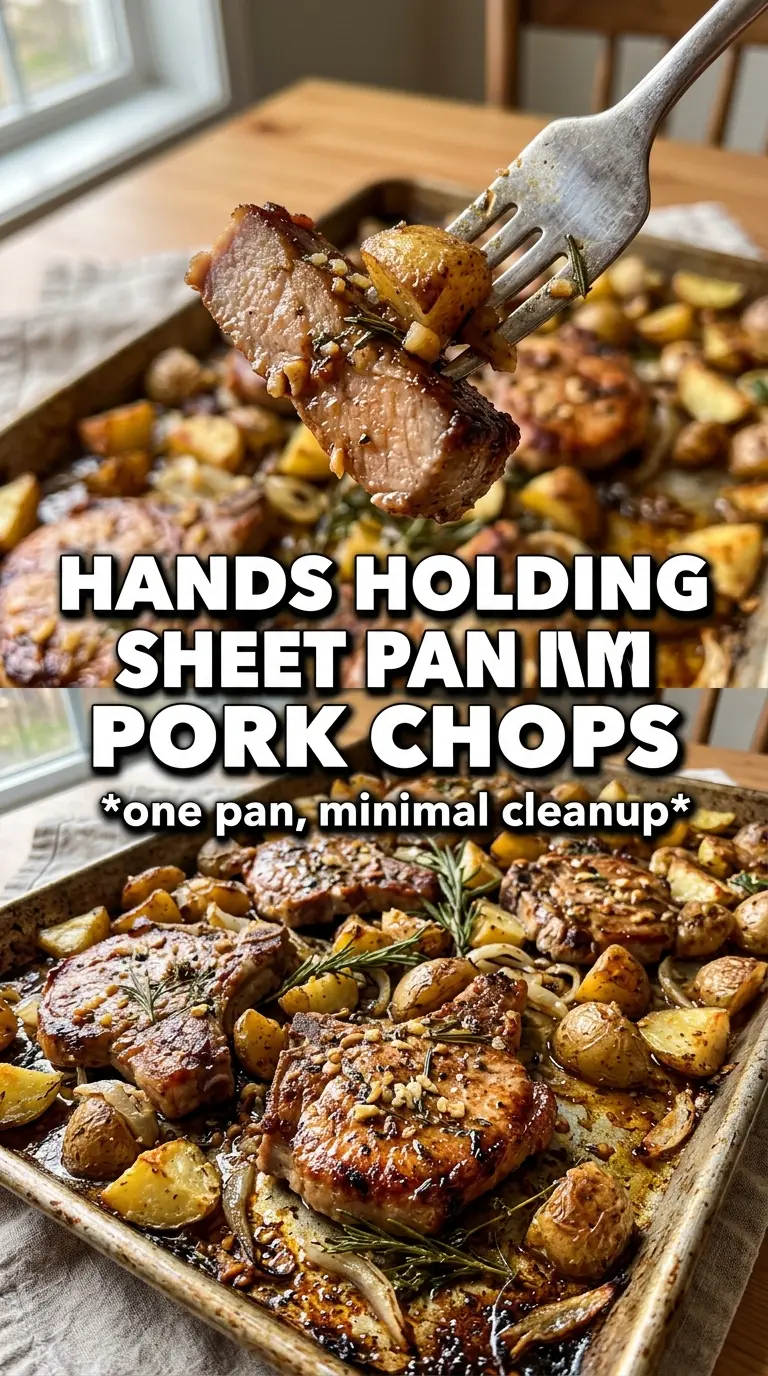
- Olive oil — This helps the potatoes brown instead of steam and gives the pork a good surface for searing. You can use a neutral oil if that’s what you keep around, but olive oil adds a little more flavor.
- Butter — Melted butter carries the garlic and herbs over the finished pan. Don’t swap in more oil unless you need a dairy-free version; the butter gives the final coating a richer, rounder taste.
- Garlic — Fresh minced garlic is worth using here because it perfumes the butter as it hits the hot pan. Garlic powder alone won’t give the same finish, even though it helps season the potatoes earlier.
- Rosemary and thyme — These herbs are sturdy enough to roast without disappearing. If you use fresh instead of dried, use about three times as much and chop them finely so they don’t sit in big woody bits on the potatoes.
- Green beans — They add freshness and a little snap to balance the richness of the pork and butter. If you want a more substantial vegetable, use trimmed asparagus or broccoli florets, but cut the cooking time back if they’re thinner or more tender.
Getting the Sear, Roast, and Finish to Line Up
Starting the Potatoes First
Spread the halved potatoes cut-side down on the lined baking sheet so they can actually brown instead of crowding into a steamy pile. After the first 15 minutes, the edges should be taking on color and the cut sides should look a little dry and set. If they still look pale, leave them in a few minutes longer before adding the pork.
Building Color on the Pork Chops
Heat the skillet until the oil shimmers before the pork goes in. You want an audible sizzle the second the chops hit the pan; that’s what gives you a good crust in two minutes per side. If the pan isn’t hot enough, the pork will gray out before it browns and you’ll lose a lot of the flavor this recipe depends on.
Finishing Everything Together
Once the pork is seared, move it to the pan center and tuck the green beans around the edges. Drizzle the garlic butter over the meat and vegetables, then roast until the pork reaches 145F at the thickest part. Pull the pan when the pork is done and let it rest for a few minutes before serving so the juices stay in the meat instead of running onto the tray.
How to Adapt This Sheet Pan Dinner Without Losing the Balance
Dairy-Free Garlic Finish
Swap the butter for another tablespoon of olive oil. You’ll lose a little of that glossy, rich finish, but the garlic and herbs still carry the dish well, especially if you drizzle the oil over the pan right before the final roast.
Boneless Pork Chops
Boneless chops work, but they cook faster and dry out sooner. Start checking them a few minutes early and pull them as soon as the center hits 145F, because they don’t have the same cushion the bone-in version gives you.
Vegetable Swaps That Roast Well
Broccoli florets, asparagus, or Brussels sprouts all fit here if you cut them to a size that matches the potatoes’ finish time. Softer vegetables like zucchini won’t hold up as well and can turn watery before the pork is done.
Lower-Carb Version
Replace the potatoes with cauliflower florets or halved Brussels sprouts. The pan will be less hearty and the roasting time will be shorter, but you’ll still get the same garlic-herb pork chop setup with a lighter finish.
Storage and Reheating
- Refrigerator: Store leftovers in an airtight container for up to 4 days. The potatoes soften a little, but the flavor holds up well.
- Freezer: The pork chops freeze fine, but the potatoes and green beans lose some texture. Freeze in a sealed container for up to 2 months if you don’t mind softer vegetables after thawing.
- Reheating: Warm in a 325F oven, covered loosely with foil, until heated through. The biggest mistake is blasting the pork in the microwave, which tightens the meat and turns the potatoes gummy.
Questions I Get Asked About This Recipe
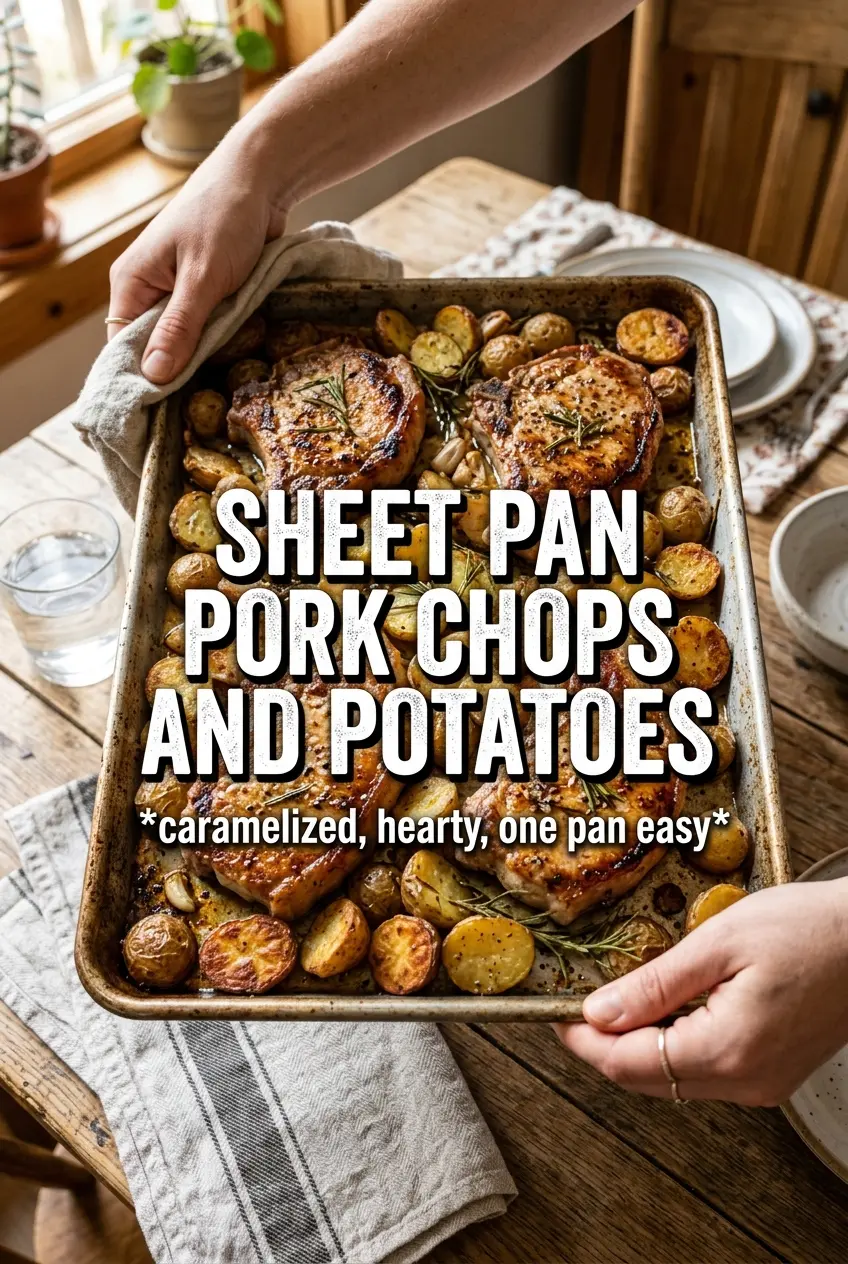
Sheet Pan Pork Chops And Potatoes
Ingredients
Equipment
Method
- Preheat the oven to 425F and line a large rimmed baking sheet with parchment, keeping it ready for an even roast. Place the pan on the counter so you can load it quickly.
- Toss the halved baby potatoes with 2 tablespoons olive oil, dried rosemary, dried thyme, garlic powder, salt, and pepper, then spread them in an even layer on the sheet pan. Aim for cut sides down for better browning.
- Roast the potatoes for 15 minutes at 425F, until they look slightly golden around the edges. Watch for a light color shift before adding the pork.
- Season the bone-in pork chops with smoked paprika, salt, and pepper. Keep seasoning even so each chop browns similarly.
- Sear the pork chops in a hot skillet with the remaining 1 tablespoon olive oil for 2 minutes per side. Stop when the surface is deeply browned.
- Push the potatoes to the edges of the sheet pan and place the pork chops in the center, then add the green beans around them. Arrange with space between items so heat circulates.
- Mix the minced garlic with the melted butter and drizzle it over everything on the pan. Let some butter pool around the chops for a glossy finish.
- Roast for 18 to 20 more minutes at 425F until the pork chops are cooked through to 145F. Garnish with fresh parsley right after roasting, and serve while the butter is still warm.