Caramelized sausage rounds, roasted squash, and Brussels sprouts with sweet edges are the kind of dinner that disappears fast because every bite hits something different. The sausage brings salt and spice, the apple softens just enough to add a little sweetness, and the balsamic-maple glaze pulls everything together without turning the pan sticky or heavy. It’s the sort of meal that feels complete the second it comes out of the oven.
What makes this version work is the way the ingredients are cut and layered. The squash needs to be in small enough cubes to cook at the same pace as the sausage, and the Brussels sprouts need their cut sides facing down so they can actually brown instead of steam. The glaze gets whisked before it touches the pan, which keeps the Dijon and balsamic from clumping in one spot and burning before the vegetables finish roasting.
Below, I’ve included the timing cues that matter most, a few swaps that still keep the sheet pan balanced, and the one reheating method that keeps the sausage from going dry.
The glaze coated everything evenly and the Brussels sprouts got those crisp, browned edges without drying out. My husband kept picking out the sausage slices right off the pan.
Save this sheet pan sausage and fall veggies dinner for the nights when you want caramelized edges, sweet maple-balsamic glaze, and one pan to clean.
The Reason This Pan Roasts Instead of Steams
The biggest trap with sheet pan dinners is crowding. When the vegetables sit too close together, they release moisture and the whole tray goes soft instead of getting those browned edges you want. This recipe avoids that by using a large rimmed pan and keeping everything in a true single layer. If the pan looks packed, use a second one. That small adjustment is the difference between roasted and soggy.
Another thing that matters here is size. Butternut squash takes longer than bell peppers or apple slices, so the cubes need to be small enough to finish in the same window as the sausage. Cutting the Brussels sprouts in half exposes the flat side to the pan, which gives you better color and a deeper, nutty flavor. Once you’ve got those details right, the oven does the rest.
What Each Ingredient Is Actually Doing In This Dish
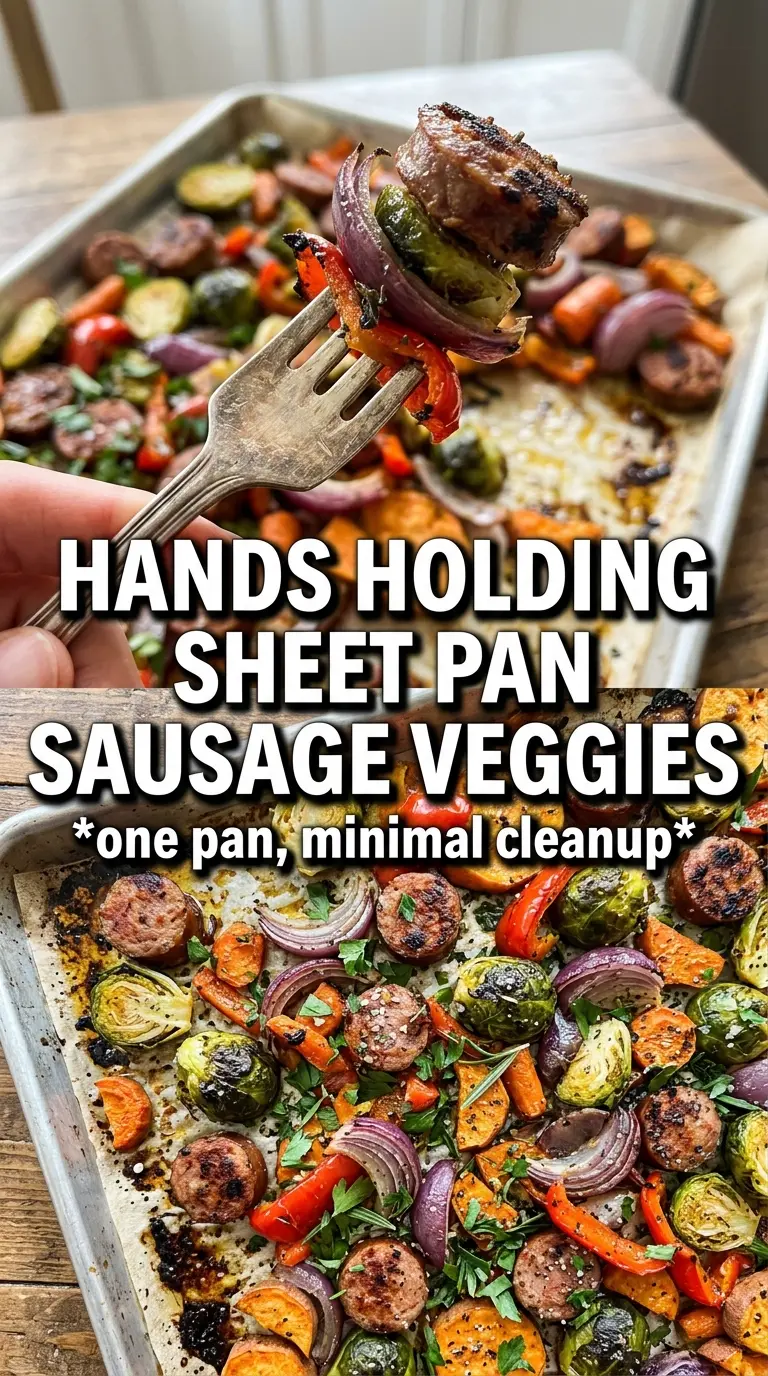
- Italian sausage links — This is the main source of seasoning and fat, so the tray tastes finished instead of like vegetables with something added on top. Slice them into rounds before roasting so the edges brown. Chicken sausage works, but it gives you less pan richness.
- Butternut squash — This brings sweetness and structure. Fresh-cut squash roasts best because the edges dry out enough to caramelize. Precut squash is fine if the pieces are evenly sized; giant chunks stay hard while the sausage is done.
- Brussels sprouts — These need the cut side down against the pan to develop color. That contact is what turns them from vegetal to nutty. Frozen sprouts won’t give the same result because they release too much water.
- Apple — The apple softens into sweet pockets that cut through the savory sausage. Use a firm apple like Honeycrisp or Fuji so it holds its shape. A mealy apple turns mushy before the vegetables finish.
- Balsamic, maple syrup, and Dijon — Together they build a glaze that clings lightly instead of pooling. Dijon keeps the sweetness in check and helps the coating emulsify, so whisking matters. If you skip the mustard, the glaze tastes flatter and less balanced.
- Fresh rosemary — This gives the pan its woodsy, savory edge. Fresh is worth using here because dried rosemary can read dusty in a short roast. If you only have dried, use about one teaspoon and crush it between your fingers first.
How To Get Deep Color Without Burning The Glaze
Whisk The Glaze Before It Hits The Pan
The olive oil, balsamic, maple syrup, Dijon, garlic, rosemary, Italian seasoning, salt, and pepper should be fully combined before anything goes on the vegetables. That keeps the mustard from streaking and the garlic from clumping in one corner of the tray. A smooth glaze coats evenly and browns evenly. If you pour the ingredients on separately, some pieces will burn before others are seasoned.
Arrange For Browning, Not Just Coverage
Spread the sausage and vegetables across the baking sheet in a single layer with a little space between pieces. The Brussels sprouts should land cut side down whenever possible, and the sausage rounds should have some contact with the pan. If everything overlaps, the moisture gets trapped and you lose the roasted edges. The pan should look busy, but not packed.
Stir Once, Then Let The Oven Work
Roast at 425°F for 30 to 35 minutes, stirring once halfway through so the glaze moves around and the squash turns evenly. You’re looking for browned edges, tender squash, and sausage that’s cooked through with lightly crisped spots on the cut sides. If the apple starts to collapse early, that’s normal; it should be soft but not turned to sauce. Finish with a 2 to 3 minute broil only if the vegetables already look mostly done, because broiling too early burns the maple in the glaze.
Make It With Chicken Sausage
Chicken sausage works well if you want a lighter pan, but it won’t render as much fat as pork sausage. The vegetables will still brown, but the overall dish tastes a little cleaner and less rich. If you use it, don’t skip the olive oil in the glaze.
Make It Gluten-Free
This recipe is naturally gluten-free as long as your sausage and Dijon mustard are labeled gluten-free. That detail matters because some sausage brands and mustards use fillers or vinegar sources you wouldn’t expect. The roasting method doesn’t need any adjustment.
Swap The Vegetables For What You Have
Sweet potatoes, carrots, or cauliflower can stand in for the squash if that’s what you have on hand. Keep the pieces close to the same size so they roast in the same time frame. Just avoid watery vegetables like zucchini, which soften too fast and water down the glaze.
Storage and Reheating
- Refrigerator: Store leftovers in an airtight container for up to 4 days. The vegetables soften a little, but the flavor holds up well.
- Freezer: You can freeze it, but the apples and Brussels sprouts lose some texture after thawing. If you do freeze it, cool completely first and pack it in a shallow container for up to 2 months.
- Reheating: Reheat on a sheet pan at 375°F until hot, about 10 to 15 minutes. The microwave works in a pinch, but it softens the vegetables and makes the sausage rubbery.
Questions I Get Asked About This Recipe
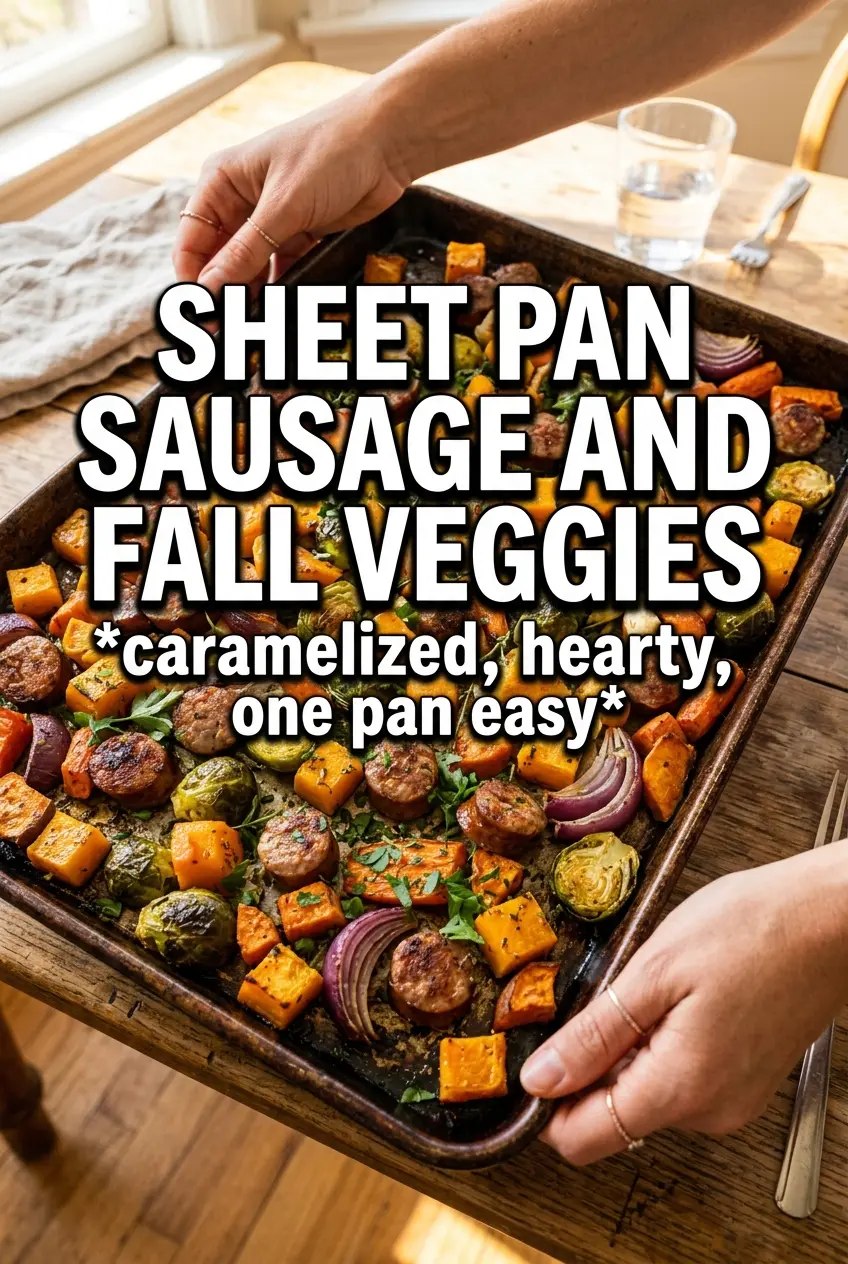
Sheet Pan Sausage and Fall Veggies
Ingredients
Equipment
Method
- Preheat oven to 425°F and line a large rimmed baking sheet with parchment.
- Whisk olive oil, balsamic vinegar, maple syrup, Dijon mustard, garlic, fresh rosemary, Italian seasoning, salt, and pepper until smooth.
- Arrange Italian sausage links, butternut squash, Brussels sprouts, red onion, bell peppers, and apple in an even layer on the sheet pan.
- Drizzle the glaze over everything and toss until the vegetables and sausage are coated.
- Roast at 425°F for 30-35 minutes, stirring once halfway, until vegetables are caramelized and sausage is cooked through.
- Broil for 2-3 minutes to add extra caramelization.