Shrimp fajitas hit the table fast, but what makes them worth repeating is the contrast: sweet, juicy shrimp, peppers that still have a little bite, and a bright lime-spice finish that clings to everything without turning muddy. When the skillet is hot enough, the vegetables soften at the edges and the shrimp take on just enough color before they curl into tender little crescents. It’s the kind of dinner that feels lively the second it starts sizzling.
The trick is keeping the shrimp out of the pan until the peppers and onions have started to lose their raw edge. Shrimp cook in minutes, and if they go in too early they turn rubbery before the vegetables are ready. I also like the spice mixture mixed with lime juice before it hits the pan, because that keeps the seasoning evenly distributed instead of leaving you with one salty bite and one bland one.
Below, I’ve broken down the one part that matters most here: how to keep the shrimp tender while still getting enough heat on the vegetables to build real flavor. There’s also a simple note on swaps and toppings if you want to stretch the skillet a little farther.
The shrimp stayed tender and the peppers still had a little crunch, which is exactly what I was hoping for. I liked that the lime-spice mixture coated everything without making the skillet watery.
Shrimp fajitas with sizzling peppers are a fast dinner worth pinning for nights when you want big flavor in one skillet.
The Key to Keeping Shrimp Tender While the Skillet Stays Hot
Shrimp punish hesitation. If they sit in the pan while the vegetables are still catching up, they tighten fast and lose that clean, juicy bite that makes fajitas worth making. The better move is to give the peppers and onions a head start, then add the shrimp once the pan is already hot and the vegetables have softened at the edges. That way the shrimp cook in the steam and spice coming off the skillet instead of drying out against a weak pan.
The other thing that matters here is timing the lime-spice mixture. Acid is helpful for brightness, but if it goes in too early it can mute the sear and make the pan watery. Add it when the shrimp are nearly done and toss just long enough for everything to get coated. You want a glossy finish, not a puddle.
What the Shrimp, Peppers, and Lime Are Each Doing
- Large shrimp — Bigger shrimp stay tender longer and are easier to keep juicy in a hot skillet. Smaller shrimp cook too fast here and can overdo before the vegetables are ready.
- Bell peppers and onion — This is the backbone of the dish. Red and yellow peppers bring sweetness, while onion adds that savory edge that balances the lime. Slice them evenly so they soften at the same pace.
- Lime juice — This is the bright finish, not the cooking liquid. Fresh lime gives the whole skillet lift at the end, but bottled juice tastes flatter and can make the sauce harsh.
- Chili powder, cumin, and paprika — Together they build the fajita character without needing a long marinade. Chili powder brings depth, cumin adds warmth, and paprika rounds everything out with color and a little sweetness.
- Garlic — It goes in with the shrimp so it perfumes the pan without burning. If garlic is in the skillet too long on its own, it turns bitter fast.
- Olive oil — Just enough oil keeps the vegetables moving and helps the spices bloom. A neutral oil works too, but olive oil gives the pan a little extra body.
Building the Sizzle in the Right Order
Softening the Vegetables First
Heat the skillet until the oil shimmers, then add the peppers and onion. They should hiss the second they hit the pan. Stir them for 4 to 5 minutes until the edges start to brown and the slices lose their raw stiffness but still hold shape. If the pan is too cool, they’ll steam and go limp instead of getting those browned corners that make fajitas taste cooked, not just heated.
Letting the Shrimp Cook Fast
Push the vegetables to the side and add the remaining oil to the open space in the pan. Add the shrimp and garlic together so the garlic hits the hot oil and turns fragrant right away. The shrimp need only about a minute before you pour in the lime-spice mixture, and the color should change from gray to mostly pink. If they’re already curling into tight O-shapes before the sauce goes in, they’re getting close to overcooked.
Coating and Finishing
Once the lime-spice mixture goes in, toss everything just until the shrimp are opaque and the vegetables are coated. The liquid should cling lightly, not pool at the bottom. Pull the skillet off the heat the moment the shrimp are done; carryover heat will finish the last bit, and leaving them on the burner too long is the fastest way to lose that tender texture. Serve right away with warm tortillas so the filling stays juicy and hot.
How to Adapt These Fajitas Without Losing What Makes Them Good
Make Them Dairy-Free
The skillet itself is already dairy-free. Skip the sour cream topping and use guacamole, extra cilantro, or a spoonful of salsa instead. You lose the creamy cool contrast, but the shrimp and peppers still taste complete because the lime and spices carry the dish.
Use Corn Tortillas for a Gluten-Free Version
Swap the flour tortillas for warm corn tortillas and keep the filling exactly the same. Corn tortillas are a little more delicate, so warm them well in a dry skillet or over a flame until flexible. The flavor turns a little earthier, which actually fits the shrimp and spice nicely.
Turn It Into a Chicken Fajita Base
If you want to use chicken instead, cut it into thin strips and cook it before the vegetables are fully done. Chicken needs more time than shrimp, so it changes the rhythm of the pan and gives you a deeper sear. The result is heartier, but you lose the quick, juicy finish that makes shrimp stand out.
Storage and Reheating
- Refrigerator: Store the shrimp and vegetables in an airtight container for up to 2 days. The peppers soften a bit more as they sit, but the flavor stays good.
- Freezer: I don’t recommend freezing this one. Shrimp can turn chewy after thawing, and the peppers lose their texture.
- Reheating: Rewarm gently in a skillet over medium-low heat just until hot. The common mistake is blasting it in the microwave until the shrimp get tough and the vegetables collapse.
Questions I Get Asked About This Recipe
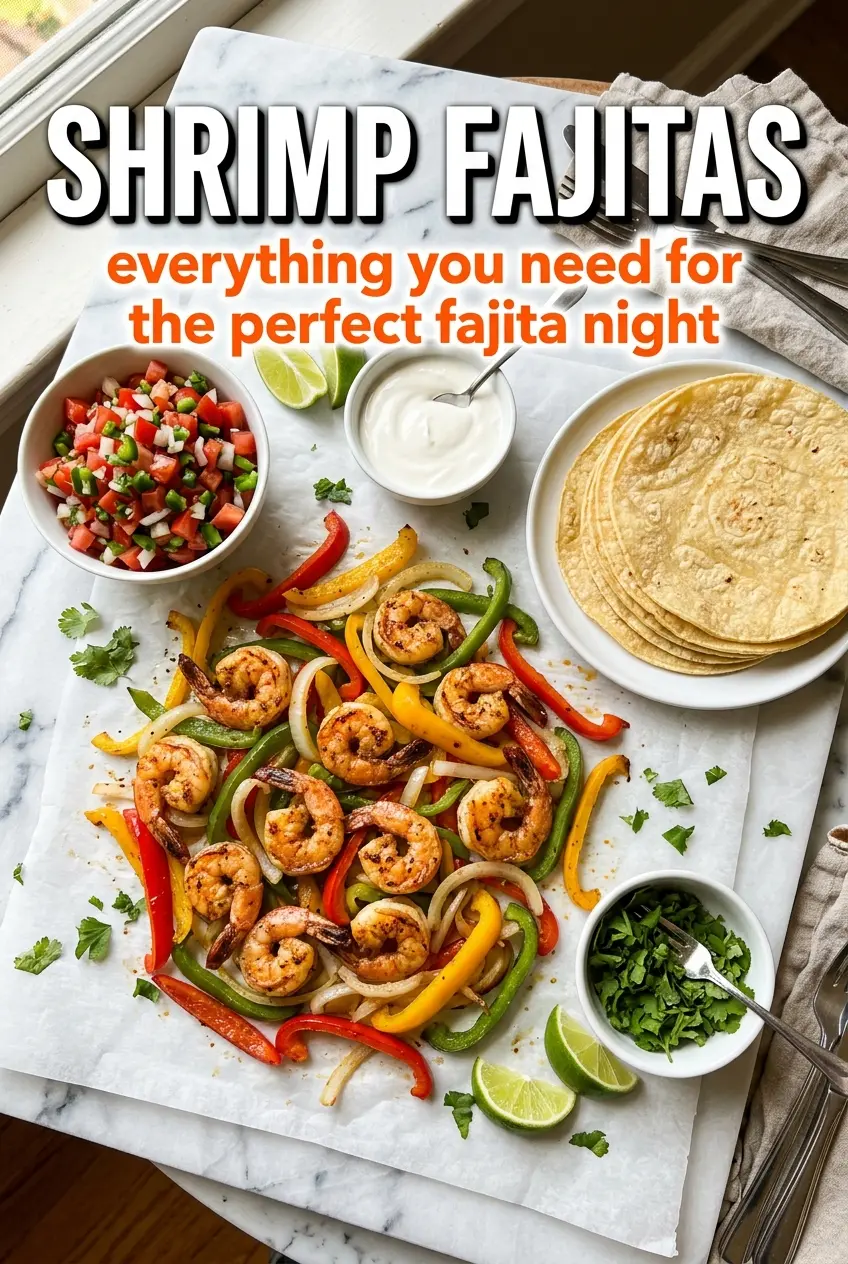
Shrimp Fajitas
Ingredients
Equipment
Method
- In a small bowl, combine lime juice, chili powder, cumin, paprika, salt, and pepper until evenly mixed.
- Set the bowl aside so the seasoning is ready to pour when the shrimp and vegetables are cooking.
- Heat 2 tablespoons of olive oil in a large skillet over medium-high heat until shimmering.
- Add bell peppers and onion and cook for 4-5 minutes until slightly softened.
- Push the vegetables to the side and add the remaining oil to the empty side of the skillet.
- Add shrimp and garlic to the center of the skillet and cook for 1 minute until fragrant.
- Pour the lime-spice mixture over the shrimp and vegetables, tossing to combine.
- Continue cooking for 5-6 minutes until shrimp are pink and cooked through.
- Serve immediately with warm tortillas and desired toppings such as sour cream, guacamole, cilantro, and lime wedges.