Pink shrimp over fluffy rice with a good swipe of spicy mayo is one of those bowls that disappears fast because every bite hits something different: tender rice, garlicky shrimp, creamy heat, and a little pop from the garnishes. It’s fast enough for a weeknight, but it still feels like a meal you assembled on purpose instead of scraping together whatever was left in the fridge.
The key is treating each part like it matters. The shrimp cook in minutes, so the pan has to be hot enough to give them a little color before they turn tight and rubbery. The spicy mayo is more than a topping — it cools the heat, helps the rice feel richer, and pulls the whole bowl together when it hits the warm shrimp.
Below, you’ll find the one move that keeps the shrimp tender, the ingredients that actually need good-quality versions, and a few smart swaps if you want to change the bowl without wrecking the balance.
The shrimp stayed juicy and the spicy mayo balanced the whole bowl without making it heavy. I liked that the sauce clung to the rice instead of sliding off, and the nori strips made it taste like takeout in the best way.
Save these shrimp rice bowls with spicy mayo for the nights when you want a fast dinner with creamy heat, glossy shrimp, and almost no cleanup.
The Shrimp Need Heat Before They Need Sauce
Shrimp turn from tender to bouncy fast, and the mistake most people make is crowding the pan or letting the sauce do the work too early. The shrimp need direct contact with the hot skillet first so they pick up a little color and stay juicy inside. If the pan is lukewarm, they’ll steam in their own moisture and taste flat no matter how good the sauce is.
The soy sauce and sriracha go in at the very end because they’re only there to glaze the shrimp, not braise them. That short toss gives you a shiny coating without overcooking the seafood. Once the shrimp curl into a loose C shape and turn opaque with pink edges, they’re done. If they tighten into a tight O, they’ve stayed on the heat too long.
What Each Ingredient Is Actually Doing In This Bowl
- Shrimp — Large shrimp hold up best here because they stay plump during the quick cook. Smaller shrimp overcook in a blink, and the bowl loses that juicy, restaurant-style bite.
- Sesame oil — This brings the nutty base flavor that makes the whole bowl taste intentional. A neutral oil works for the actual sear if that’s what you have, but the sesame oil gives the dish its distinct edge, so I’d keep it in the sauce and in the pan if possible.
- Soy sauce — Use a regular soy sauce for the most balanced glaze. Low-sodium works fine if that’s what you keep, but don’t skip the final toss because that salty-savory layer is what keeps the shrimp from tasting one-note.
- Mayonnaise — This is what gives the spicy mayo its body and cling. Japanese-style mayo is especially good here because it’s richer and a little tangier, but any full-fat mayo will work if you whisk it until smooth.
- Lime juice — The acid keeps the mayo from feeling heavy and cuts through the richness of the shrimp. Fresh juice is worth using because bottled lime can taste dull and flatten the sauce.
- Rice — Warm, fluffy rice matters more than people think. Cold rice makes the bowl taste separated; freshly cooked rice absorbs the shrimp juices and spicy mayo so every spoonful tastes complete.
Building the Bowl Without Overcooking the Shrimp
Whisking the Spicy Mayo
Start with the mayo, sriracha, lime juice, and sesame oil in a small bowl and whisk until the sauce turns smooth and loose. It should drizzle easily but still hold a ribbon on the spoon. If it looks broken or oily, the mayo was too cold or the mixture was rushed; a few extra stirs usually bring it back together. Set it aside so the flavors can settle while you cook the shrimp.
Waking Up the Garlic and Ginger
Heat the sesame oil in a large skillet over medium-high heat, then add the garlic and ginger for about 30 seconds. You want them fragrant, not browned. If they start turning dark before the shrimp go in, the heat is too high and the garlic will taste bitter. The goal is a warm, savory base that perfumes the oil.
Cooking the Shrimp Fast and Hot
Add the shrimp in a single layer and let them sit long enough to pick up a little color before flipping. Two to three minutes per side is usually enough for large shrimp, but the visual cue matters more than the clock: opaque flesh, pink edges, and a little spring when pressed. Pour in the soy sauce and sriracha near the end, toss for about 30 seconds, and pull the pan off the heat as soon as everything looks glossy.
Assembling the Bowls
Divide the rice into bowls while it’s still warm, then arrange the shrimp on top instead of dumping them in a pile. That keeps the bowl looking clean and helps the sauce hit the rice in the right places. Drizzle the spicy mayo generously, then finish with green onions, sesame seeds, and nori strips for crunch, freshness, and a little briny depth.
Three Ways to Change the Bowl Without Losing the Point
Make it gluten-free
Swap the soy sauce for tamari or a certified gluten-free soy sauce. The flavor stays close, but tamari usually tastes a little rounder and less sharp. Check your sriracha too, since some brands include additives that aren’t gluten-free.
Make it dairy-free and lighter
This bowl is naturally dairy-free as written, so the main tweak is using a lighter mayo if that’s your preference. The sauce will be a little thinner and less rich, which can be nice if you want the shrimp to stay front and center. Add the lime slowly so the lighter mayo doesn’t turn watery.
Turn it into a lower-carb bowl
Serve the shrimp over cauliflower rice or shredded cabbage instead of white rice. Cauliflower rice gives you a softer, more neutral base, while cabbage adds crunch and holds up well under the warm shrimp and mayo. Just cook the cauliflower rice briefly so it doesn’t turn soggy under the sauce.
Add more crunch
Thin cucumber slices, shredded carrot, or quick-pickled red onion all work well here. They add freshness and snap that balance the creamy mayo and soft rice. Keep the topping light so the shrimp still taste like the star.
Storage and Reheating
- Refrigerator: Store the shrimp and rice separately for up to 2 days. The shrimp are best on day one, but the bowl still holds up if you keep the sauce off until serving.
- Freezer: I don’t recommend freezing the assembled bowls. Cooked shrimp and mayo both lose texture after thawing, and the rice turns soft in a way that takes away from the dish.
- Reheating: Reheat the shrimp gently in a skillet over low heat or in short microwave bursts, just until warmed through. High heat makes shrimp tough fast, and the mayo should stay cold and be added after reheating so it keeps its creamy texture.
Answers to the Questions Worth Asking
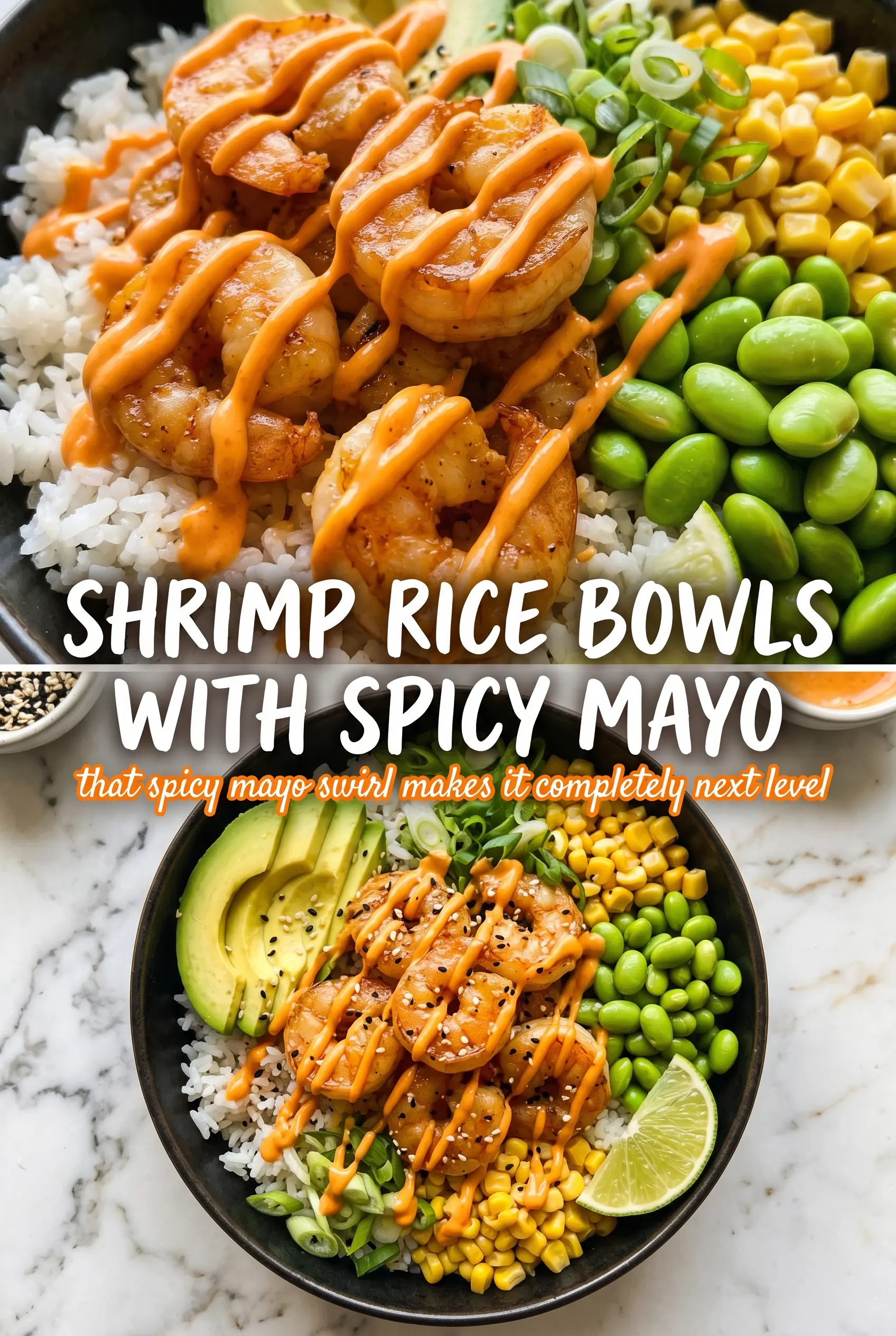
Shrimp Rice Bowls with Spicy Mayo
Ingredients
Equipment
Method
- Combine mayonnaise, sriracha, lime juice, and sesame oil in a small bowl to create the spicy mayo. Stir until smooth and vibrant, with a thick, pourable consistency.
- Heat sesame oil in a large skillet over medium-high heat until shimmering. Add minced garlic and minced ginger and cook for 30 seconds until fragrant, stirring so it doesn’t brown.
- Add shrimp to the skillet in a single layer and cook for 2-3 minutes per side until pink and cooked through. Turn once only when the bottoms are opaque.
- Pour soy sauce and sriracha over the shrimp and toss to coat. Cook for another 30 seconds so the glaze clings to the shrimp.
- Divide cooked rice into four serving bowls. Spread it into an even base so each bowl has a similar height.
- Top each bowl with cooked shrimp and arrange neatly. Place shrimp toward the center for a stacked, colorful look.
- Drizzle generously with spicy mayo and garnish with sliced green onions, sesame seeds, and nori strips. Serve immediately so the mayo stays creamy and the shrimp remain warm.